In 2026, the most unsettling truth about memory decline mechanisms is that up to 65% of dementia cases may be preventable when people address 18 modifiable risk factors. That means memory loss is not just something that happens to you, it is often something you can actively slow, reshape, or even avoid.

Key Takeaways
| What’s going on | Why it matters for memory decline mechanisms | What to do in practice |
|---|---|---|
| Hippocampus shrinkage and neural wiring changes | Less capacity to encode and retrieve new memories | Structured cognitive training that targets memory networks |
| Inflammation and stress biology | “Noise” in brain signaling reduces learning efficiency | Sleep, movement, and stress-regulation habits, guided by data |
| Sleep disruption and impaired clearance | Less overnight “brain-to-body cleanup” related processes | Protect consistent sleep routines and pacing of brain load |
| Hearing and vascular risk | Higher risk to memory networks through reduced input and circulation | Treat hearing loss early and support cardiovascular health |
| Functional vs structural plasticity | Functional changes can show in weeks, structural usually needs months | Correct dosing of cognitive challenge with hands-on guidance |
- Memory decline mechanisms are not one single switch, they are a system of brain changes, lifestyle drivers, and risk factors that interact.
- Modern brain health programs work best when they combine assessment, measurable goals, and correct dosing of cognitive challenge.
- We do not promise to “reverse ageing.” We use evidence over enthusiasm to build cognitive reserve and slow decline.
- For deeper context on how we measure change, see our MoCA to MMSE score conversion framework.
- If you are curious about brainwave-based training for attention and executive function, read neurofeedback for executive function in 2026.
Quick answers people ask (and we agree with):
Q: Are memory decline mechanisms only about aging? A: No. Aging influences them, but modifiable factors like sleep, hearing, and stress biology can meaningfully shift outcomes.
Q: Do brain apps fix memory decline mechanisms? A: Some can help practice, but many lack adaptive dosing and measurement, which are crucial for structural change.
What memory decline mechanisms actually mean (and why it’s more than “old age”)
When we talk about memory decline mechanisms, we mean the biological and functional changes that make it harder for the brain to encode new information, store it, and retrieve it under real-world pressure. This includes changes in brain network efficiency, neural plasticity, and the balance between protective and damaging processes.
Many people hear “brain aging” and assume it is automatic. In 2026, we know better. Memory is shaped by what you repeatedly challenge, what you protect, and what you let disrupt your system. That is why the same person can show stable memory in some situations and dramatic drop-offs in others (fatigue, stress, poor sleep, too much digital overload).
A key practical distinction is functional vs structural plasticity. Functional changes are often noticeable in weeks. Structural plasticity typically requires 3 to 6 months of consistent, deliberate practice. If your goal is to influence memory decline mechanisms at a deeper level, you need both the right intervention and the right timeline.
The first memory decline mechanisms: hippocampal changes and neural connectivity
The hippocampus is a memory workhorse, especially for forming new episodic memories and supporting recall. With age and risk factors, we often see reduced capacity for efficient encoding, plus changes in connectivity between the hippocampus and the prefrontal systems that organize attention and retrieval.
In real life, this can look like “I know what I know, I just can’t pull it up quickly,” or “I can follow a conversation, but I cannot remember the key details afterward.” Those patterns align with network efficiency, attention control, and how well learning is consolidated during recovery periods.
Here is where structured cognitive training matters. When exercises are adaptive and targeted, the brain does not just practice. It gets the kind of threshold-of-ability challenge that supports learning instead of boredom or overload. We emphasize that intensity and form matter, not just the fact that you “did something.”
If you want a simple filter for fit, ask whether a program has an assessment step and an objective way to track cognitive markers. That is the difference between entertainment and brain training that meaningfully targets memory decline mechanisms.
Inflammation, stress biology, and the “signal-to-noise” problem
Another set of memory decline mechanisms involves brain chemistry shifts tied to inflammation and chronic stress. When stress hormones and inflammatory signaling remain elevated, it can reduce the brain’s learning efficiency. In plain terms, the brain has a harder time distinguishing what matters from background noise.
This is why sleep quality, recovery pacing, and attention regulation are not “extras.” They directly influence your ability to benefit from cognitive training and learning new information.
In 2026, we also see more clients who are stressed not just mentally, but neurologically, through constant demands and fragmented focus. Digital overload can lower the brain’s baseline readiness, making even well-designed memory tasks feel harder than they should.
That statistic matters because hearing is an input pathway to memory networks. If you are missing auditory detail, the brain has to work harder to decode it, and learning becomes less efficient. Addressing hearing impairment can be one of the most direct ways to influence memory decline mechanisms through everyday brain input.
Sleep disruption and memory decline mechanisms: clearance, consolidation, and consistency
Sleep is where many memory decline mechanisms get either amplified or corrected. During sleep, the brain supports consolidation, meaning newly learned information gets integrated into longer-term storage. At the same time, overnight biological processes support clearance related functions.
In 2026, we are also seeing stronger attention on the idea that sleep supports brain-to-blood clearance of biological “waste” associated with conditions that affect memory. You do not need to become a sleep scientist to act on this. You just need to treat sleep as an active training component, not a passive reward.
In our programs, we also manage “digital load,” because constant stimulation can fragment recovery and reduce the quality of nightly consolidation. If you are trying to improve memory, the timing and pacing of brain demands can matter as much as the memory exercises themselves.
Practical reality check: it is hard to benefit from cognitive training when your sleep is inconsistent. We plan around this, and we measure it when possible.
Vascular risk and brain changes you can influence through health habits
Memory decline mechanisms are not purely “brain-only.” Vascular health, oxygen delivery, and metabolic stability all shape brain function. If circulation and vessel health decline, the brain can experience reduced resilience and impaired support for neural signaling.
This is one reason we treat prevention as a whole-system job. We look at nutrition habits, movement consistency, stress regulation, and medical risk management where appropriate. The goal is not fear, it is control.
Stroke history is a clear example of how vascular events can increase dementia risk. If someone has had a stroke, cognitive support becomes urgent, not optional. In neuro-rehabilitation settings, we focus on restoring function and improving regulation, not just hoping symptoms fade.
If you want a structured overview of evidence-based steps, explore our neurological recovery in 2026 plan. Even when your situation is not stroke-related, the framework helps explain how we think about timing, intensity, and measurable tracking.
Vascular-friendly habits that support memory systems
- Consistent aerobic movement to support circulation and neurotrophic signaling
- Sleep stability to support recovery and metabolic balance
- Stress regulation to reduce chronic cortisol effects on learning and hippocampal function
- Address hearing loss early, because input quality affects learning efficiency
Functional vs structural plasticity timelines (what progress should look like)
One reason people feel frustrated is that they expect immediate memory improvement, then give up when it does not appear fast enough. Memory decline mechanisms operate on timelines. When we set expectations correctly, you are more likely to stay consistent and see results.
Functional plasticity is often quicker. People may notice changes in weeks, such as improved attention control, better executive function, and more reliable recall under normal conditions. Structural plasticity takes longer. That is where the brain builds more durable wiring patterns, typically over 3 to 6 months of consistent deliberate work.
So our “what works” question becomes: are we building only temporary performance gains, or are we also driving structural change? We build for both by combining the right kinds of cognitive challenge with lifestyle supports that help neuroplasticity happen.
If you are comparing coaching formats, remember that correct dosing matters. A generic “do puzzles” approach does not automatically match your threshold-of-ability challenge, especially under stress. That is why we do baseline assessment and then fit the program to the person.
We will not promise to “reverse ageing.” We will help you influence memory decline mechanisms with a measurable, biology-aligned plan that respects how plasticity actually works.
Neurofeedback, 40Hz gamma, and memory training that targets the biology
Once you understand the memory decline mechanisms, the next question is what kinds of interventions best match them. In 2026, we see meaningful options that are biology-aligned, not just “brain games.”
Neurofeedback uses real-time EEG feedback to help the brain self-regulate frequency patterns tied to focus and executive function. In our approach, the aim is not random stimulation. It is training the brain’s control systems using evidence-informed targets. Typical protocols can run 20 to 40 sessions, and people often notice meaningful changes around sessions 6 to 15.
If you want details on training targets and what to look for in a provider, read neurofeedback for executive function: best protocols and training approaches in 2026.
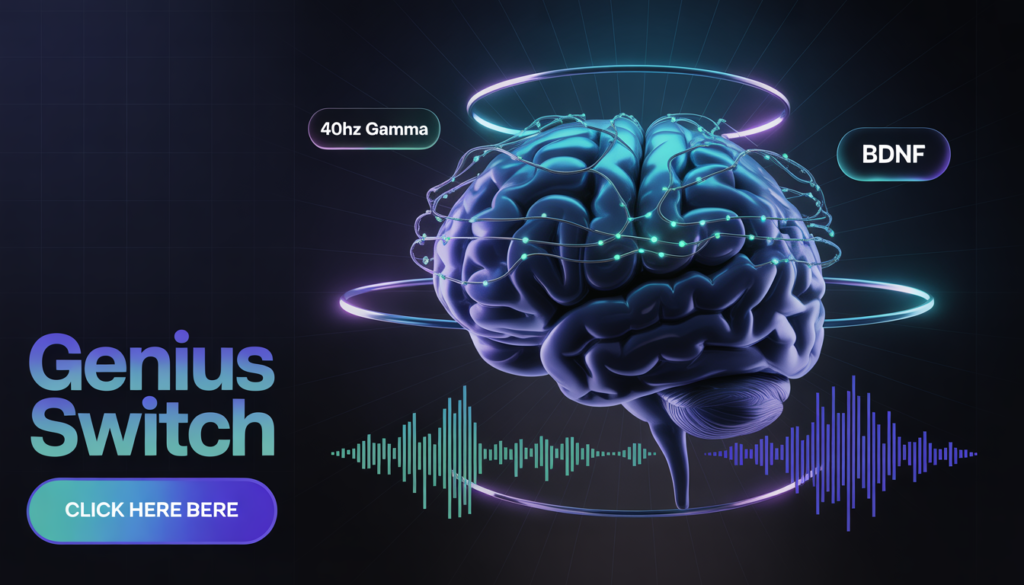
40Hz gamma stimulation is another approach we use to support BDNF-centered planning. BDNF is often described as “Miracle-Gro for your brain,” because it plays a key role in neuroplasticity processes that support learning and memory.
One of our programs, Genius Switch, uses precision 40Hz gamma audio stimulation designed to trigger natural BDNF production. No pills, no prescriptions, and the emphasis stays on consistent practice and paired lifestyle strategy for cumulative effects.
Example pricing: Genius Switch Audio Series is listed at $39. We share pricing like this because we want your decision to be practical, not vague.
To understand how BDNF and the functional vs structural plasticity timelines connect, our longer-form explanation on preventative longevity strategies is a useful companion piece. It clarifies what we mean by preventive longevity as protecting cognition before decline sets in.
Why “memory decline mechanisms” respond better to structured programs than apps alone
A lot of people ask us whether memory decline mechanisms can be addressed using apps. We are not anti-technology, but we are anti-misfit. Many memory apps provide entertainment, not adaptive training with correct dosing.
When training is not adaptive, it often becomes either too easy (no challenge signal) or too hard (overload without learning). Structured cognitive training, by contrast, can adapt in real time and target memory networks in a more consistent way.
On our side, we prioritize structured training for seniors because it aligns with how the brain supports learning. Our page on cognitive training vs memory apps for seniors explains this comparison in plain terms.
One more reason we emphasize hands-on guidance is measurement and pacing. We want objective markers and we want the exercises performed correctly, because the “dose” is not just the time spent. It is the intensity, the form, and the fit to the person’s current capability.
That matters for memory decline mechanisms because it supports a simple truth, your brain usually improves with a system, not a single tactic. If you want measurable change, you need structure across domains.
How our program framework targets memory decline mechanisms (assessment to accountability)
We keep our posture deliberately clinical and cautious. We will not promise to “unlock 100% of your brain” or “reverse ageing.” But we will build and refine plans to influence memory decline mechanisms using research-aligned biology, structured dosing, and objective tracking.
Our workflow is simple:
- Assessment first, so we identify baseline strengths, weaknesses, and goals.
- Fit and dosing, so cognitive challenge lands near the threshold that supports learning.
- Targeted modalities, such as neurofeedback, neuro-rehabilitation style training, or structured cognitive practice.
- Objective tracking, so we can tell whether functional and longer-term structural changes are happening.
If you are a leader or team, our cognitive performance programs are designed with the same logic: assessment, goals, and evidence-informed modalities that support memory, attention control, and emotional regulation. You can explore our cognitive performance neuroplasticity solutions and how we structure different tracks.
And if you are curious about executive-level cognitive support, we also share a specific approach to choosing the right neuro-coaching service for leaders in 2026.
No pressure, no obligation. If you want clarity on whether your current plan matches the memory decline mechanisms you are dealing with, we encourage you to start with a conversation via our contact page.
Conclusion: The best way to influence memory decline mechanisms in 2026
Memory decline mechanisms are a network problem, not a single diagnosis. In 2026, the good news is that these mechanisms are influenced by modifiable factors like sleep quality, stress biology, hearing input, and structured cognitive challenge, supported by measurable follow-through.
If you want a practical path, focus on four pillars: assessment, correct dosing of cognitive challenge, biology-aligned supports (including BDNF-centered planning where appropriate), and objective tracking over timelines that respect functional vs structural plasticity. We can help you do this with evidence over enthusiasm, and without making promises we cannot verify.
Frequently Asked Questions
What are the main memory decline mechanisms in 2026?
In 2026, the most relevant memory decline mechanisms include hippocampal and network connectivity changes, inflammation and stress biology effects on learning, disrupted sleep processes that weaken consolidation, and sensory or vascular risk factors that reduce brain input and resilience. The mechanisms interact, so the best results usually come from multi-domain support.
Can you slow memory decline mechanisms without medications?
Often, yes. Many memory decline mechanisms respond to structured lifestyle and cognitive training changes, especially when sleep, stress regulation, hearing input, and correct dosing of cognitive challenge are addressed consistently. We emphasize measured plans rather than hype.
Are memory apps effective for memory decline mechanisms in seniors?
Some memory apps can help with practice, but they frequently lack adaptive intensity and objective tracking needed to influence memory decline mechanisms at a deeper, structural level. Structured cognitive training is usually a better match because it can target memory systems while adjusting to ability.
How long does it take to see changes in memory decline mechanisms?
Functional changes related to memory decline mechanisms can show in weeks, while structural plasticity usually takes about 3 to 6 months of consistent, deliberate practice. This is why planning, pacing, and adherence matter as much as the exercises themselves.
Does neurofeedback help with memory decline mechanisms?
Neurofeedback can help with certain memory decline mechanisms by training self-regulation of brain activity patterns that support attention and executive function. It is most useful when the protocol is fit to the person and paired with broader lifestyle and cognitive supports.
Is 40Hz gamma stimulation related to memory decline mechanisms?
40Hz gamma stimulation is often used with a BDNF-centered framework, which links to neuroplasticity processes relevant to learning and memory. While it is promising as a tool, we stay cautious and focus on consistent practice and supportive lifestyle habits rather than guaranteed outcomes.
What lifestyle changes most strongly target memory decline mechanisms?
Sleep optimization, stress regulation, exercise, hearing support, and structured cognitive training are among the most actionable levers. Evidence in 2026 continues to support that multi-domain programs can produce measurable cognitive improvement compared to typical decline.