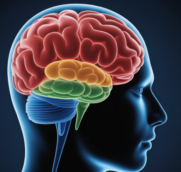

Here’s a number that should reframe how you think about young talent: the human brain develops at a rate equivalent to its fetal growth rate for a full 7 years after birth, making early childhood the single most sensitive neuroplastic window a person will ever experience. That statistic is the biological foundation underneath every conversation happening right now about early-onset excellence, and it’s why the neuroplasticity of the 2026 “prodigy” brain has become one of the most searched, most misunderstood topics in cognitive science.
We are not going to tell you that prodigies are born with magic wiring. We are going to tell you what the published research actually shows, and where the marketing around “boosting brain power naturally” tends to outrun the evidence.
| Question | What the Evidence Shows |
|---|---|
| Is the “prodigy brain” a real neurological category? | No single structure defines it. What’s real is an unusually efficient, well-timed use of adolescent neuroplasticity during a measurable developmental window. |
| What age range matters most? | Brain imaging research points to 9 to 32 as the active “wiring” period, not just early childhood. |
| Does brain development stop at 25? | No. A 4,200-person imaging study across the full lifespan debunked that myth outright. |
| Does early athletic training rewire the brain? | Yes, in measurable ways. Brain development in athletes shows structural changes tied to repetition and timing, not talent alone. |
| Do “manifestation techniques” actually boost brain power naturally? | There’s no clinical mechanism behind manifestation as a standalone method. BDNF-driven training does have one. |
| What’s the clinically grounded alternative to brain-game apps? | Structured, dosed cognitive performance protocols built around measurable difficulty, not passive trivia. |
| Who benefits most from early-onset neuroplasticity training? | Young high performers, student-athletes, and anyone recovering from a neurological event during a developmental window, see neurological recovery protocols. |
Early-onset excellence is a behavioral label. Neuroplasticity is the biological mechanism underneath it.
When we talk about the neuroplasticity of the 2026 “prodigy” brain, we are not describing a fixed trait a child either has or doesn’t have. We are describing a window of heightened structural plasticity, meaning the brain’s physical wiring is unusually responsive to repeated, high-intensity input during a specific stretch of development.
That’s a very different claim than “some kids are just born gifted.” It’s a claim we can measure, dose, and in some cases replicate through clinically grounded training rather than mythology.
For years the assumption was that the brain finished its major construction work somewhere around age 25. That assumption is wrong, and it matters directly for anyone researching adolescent neuroplasticity or early-onset excellence.
Large-scale brain imaging research has now identified the “adolescent” period as running from roughly age 9 to age 32, a stretch during which the brain continues actively building and refining its network wiring rather than simply maintaining it.
Age 32 turns out to be the real turning point, the moment the brain shifts from prioritizing new pathway construction to maintaining the pathways it already relies on most. That reframes early-onset excellence entirely: prodigy-level performance isn’t a childhood miracle so much as a well-timed use of a decades-long construction window.
This is exactly why we treat adolescent neuroplasticity as a clinical target, not a parenting trend.
Athletic prodigies are one of the clearest public examples of early-onset excellence at work. Cavan Sullivan, who broke into professional soccer as a teenager and has been tracked closely alongside the USA soccer roster 2026 buildup, is frequently cited as proof that young athletes can compete at senior levels years ahead of the traditional development curve.
The neuroscience behind that isn’t mysterious once you understand brain development in athletes. Repetitive, high-intensity, skill-specific movement during the active adolescent wiring window drives the same structural plasticity mechanisms we use in clinical rehabilitation, just applied to a soccer pitch instead of a recovery room.
None of this means every young athlete becomes the next standout on a national roster. It means the underlying mechanism, structural plasticity during a defined developmental window, is measurable, and it’s the same mechanism we work with in our own neurological recovery caseload.
If there’s one molecule we come back to over and over, it’s Brain-Derived Neurotrophic Factor.
We treat BDNF as your brain’s repair protein, supported by training, movement, and lifestyle rather than by any single supplement or shortcut. It’s the biological thread connecting adolescent neuroplasticity, athletic development, and clinical recovery into one coherent story.
Higher BDNF activity is associated with stronger synaptic growth, better memory consolidation, and faster motor learning, which is precisely why early-onset excellence shows up more often in environments that naturally elevate BDNF: structured exercise, quality sleep, and cognitively demanding practice repeated at the edge of current ability.
Evidence over enthusiasm. You need measurable progress, not vibes.
Search interest around manifestation techniques, BDNF supplements, and “brainwave” apps promising to boost brain power naturally has climbed right alongside prodigy culture, and we understand why. Parents and high performers alike want a shortcut.
Here’s the clinical reality: manifestation techniques have no established mechanism for altering BDNF expression or structural plasticity. What does have a mechanism is dosed, effortful training performed at the edge of current ability, the kind that actually stresses the neural systems responsible for growth.
If your goal is genuinely to boost brain power naturally, the evidence points toward physical exercise, sleep architecture, and structured cognitive load, not affirmations. We say this even though it’s less exciting than a brainwave app promising overnight results.
Static difficulty, predictable puzzles, and passive scrolling through trivia don’t meet that threshold either, which is exactly why our cognitive performance work is built around adjustable intensity instead of fixed content.
Prodigy culture sells fast. Clinical neuro-rehabilitation moves slower, because it has to be accountable to outcomes rather than engagement metrics.
That gap, between what’s marketed and what’s actually published in peer-reviewed research, is the exact space we were built to close. Modern neuro-rehabilitation in 2026 is no longer guesswork; it is a measurable process built on rigorous evidence, clear dosing principles, and real follow-through.
That number isn’t about prodigies specifically. It’s about what happens when a population, not just an exceptional few, gets access to evidence-based brain training early enough for it to matter.
“Prodigy brain” content tends to speak to parents of gifted children. The underlying neuroplasticity, though, is relevant to a much wider group.

Consumer interest in child-prodigy development, learning tools, and early-excellence programs has skyrocketed in a single tracked period.
One of the more striking findings in this space didn’t come from adolescents at all. Researchers tracking 7,129 participants found that early childhood education was linked to significantly better cognitive function at age 50.
That’s a 45-plus-year gap between the intervention and the measurable outcome, and it’s a strong argument against treating early-onset excellence as a short-term project. The construction happening in a 5-year-old’s brain is still showing up on a scan decades later.
Roughly a third of Americans over 65 currently live with mild cognitive impairment or dementia, which is exactly the kind of long-horizon outcome our preventative longevity protocols are designed to push back against, starting decades before symptoms would ever appear.
We won’t tell you we can manufacture a prodigy. We will tell you what the actual protocol architecture looks like.
Every protocol we deliver is grounded in published research and adapted to the individual in front of us, not a generic profile, not a marketing persona, but a specific person with a specific developmental window and a specific brain.
The neuroplasticity of the 2026 “prodigy” brain isn’t magic, and it isn’t fixed at birth either. It’s a measurable, dosed, well-timed use of a wiring window that runs from roughly age 9 to age 32, supported by BDNF, and built through repetition rather than manifestation techniques or overnight brainwave hacks.
If you’re trying to understand early-onset excellence in your own child, your own athletic training, or your own recovery, the honest answer is the same one we give every client: evidence over enthusiasm, and measurable protocols over vibes.
There’s no single “prodigy” brain structure, but there is measurable, unusually well-timed use of adolescent neuroplasticity during the active 9-to-32 wiring window. The neuroplasticity of the 2026 “prodigy” brain describes a process, not a fixed trait.
No clinical mechanism links manifestation techniques to BDNF expression or structural plasticity. If your goal is to boost brain power naturally, dosed cognitive training and physical activity have far stronger evidence behind them.
Yes. A 4,200-person lifespan imaging study confirmed active brain wiring continues until roughly age 32, well past the old assumption that development stops at 25.
Early, repetitive, skill-specific training during the adolescent plasticity window drives the same structural changes seen across brain development in athletes research, which is one reason young players can reach senior-level competition, including conversations around the USA soccer roster 2026, ahead of the traditional curve.
BDNF acts as the brain’s repair protein, supporting synaptic growth and faster learning when triggered by exercise, sleep, and effortful practice. It’s a central, measurable target in any evidence-based approach to early-onset excellence.
Static apps and passive brainwave content generally don’t provide the dosed intensity required for structural plasticity. Clinically grounded protocols that adjust difficulty to the edge of current ability show far stronger results.
Research places the active adolescent neuroplasticity window between age 9 and age 32, with age 32 marking the shift toward maintaining existing pathways rather than building new ones.