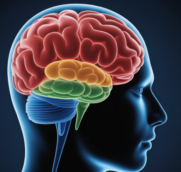

In 2026, more than half of the global workforce is “functioning but fragile,” meaning people can perform day-to-day yet still crack under pressure.
| What we measure | Why it matters in 2026 | What to do next |
|---|---|---|
| Cognitive continuity across transitions | High-stakes work fails when mental resources go offline mid-day. | Track day-to-day drift with simple performance baselines. |
| Stress reactivity signals under load | Your “stress response” should be testable, not guessed. | Use pre/post assessments and consistent tasks. |
| Neuroplasticity markers tied to BDNF support | In 2026, protocols increasingly target dose, challenge, and recovery loops. | Use BDNF-aligned training, movement, and sleep habits. |
| Attention fragmentation (how often you switch) | Context switching increases cognitive load and drains resilience. | Measure your switching patterns, then reduce unnecessary interrupts. |
| Executive function under pressure | Leaders need decisions that stay stable when workload spikes. | Run structured cognitive training, not random “brain games.” |
Reader Q&A (fast answers):
| ||
When we talk about Quantifying resilience: measurable brain training for high-stakes professionals, we are not talking about vibes, journaling, or “just try to relax.” We mean building a system where resilience has inputs, outputs, and a way to verify what changed in 2026.
That’s how we keep high-stakes teams steady, even when decisions matter, calendars are packed, and cognitive continuity is constantly under strain.
In 2026, the workload problem is not only stress, it is fragmentation. Digital work can push attention into rapid switching patterns throughout the day, and that creates measurable cognitive load.
For Quantifying resilience: measurable brain training for high-stakes professionals, the goal is simple: we want to know whether training improves executive function, stress handling, and decision quality when pressure rises.
Here is the mindset shift we recommend for leaders and L&D teams:
One reason we insist on measurability is that high-stakes professionals do not get to avoid pressure. In 2026, pressure is the environment. Resilience training must prove it works inside that environment.
High-stakes work is full of handoffs, context switches, and interruptions, and cognitive continuity is what keeps your most important mental resources online across transitions.
In our approach to Quantifying resilience: measurable brain training for high-stakes professionals, cognitive continuity is treated like a performance system. If training is real, you should see improvements in continuity, not just short-term calm.
In practical terms, cognitive continuity is your ability to:
This is why we prefer protocols anchored in brain science rather than loosely structured programs. The executive-brain framework we follow emphasizes how training supports adaptation through measurable challenge and recovery loops.
If you want the leadership-specific background, we built our training logic around managing cognitive continuity in high-stakes leadership.
If you are building Quantifying resilience: measurable brain training for high-stakes professionals, you need a mechanism you can align with training design. That is where BDNF and structural plasticity come in.
We treat BDNF as your brain’s “repair protein,” and we support it through repeated, progressively appropriate challenge. In 2026, the best programs increasingly focus on the full stack, not just one feature: challenge dose, recovery, and lifestyle support.
What this looks like in real training planning:
This is also why people searching for manifestation manifestation techniques BDNF BrainWave boost brain power naturally often end up disappointed when the plan skips measurement. Even if someone loves the mindset side, resilience still needs proof.
We keep it practical: brain training should show measurable outcomes, and BDNF-supportive training design helps those outcomes stick.
One of the most useful directions in Quantifying resilience: measurable brain training for high-stakes professionals is neurofeedback for executive function. The reason is that neurofeedback can give a training loop that is closer to what is happening in the brain.
Our 2026 view of a neurofeedback protocol is that it should be:
And yes, we see a lot of interest from people who type manifestation manifestation techniques BDNF BrainWave boost brain power naturally alongside questions about neurofeedback, gamma stimulation, and “brain power” without the usual guesswork. We get it. But we still insist on measurement.
In 2026, the simplest rule is this: if the protocol cannot be assessed with repeated tests, it cannot be called “measurable” resilience training.
Here is the workflow we recommend when you want Quantifying resilience: measurable brain training for high-stakes professionals that actually holds up across weeks of real work.
We start with three baselines, then we run training, then we test again with the same tasks.
A program is only truly measurable if it increases challenge appropriately and shows improvements that correlate with dose and consistency.
This is where BDNF-supportive training logic matters. If the challenge is repeated and tuned, then measurable adaptation becomes the expected outcome, not a lucky surprise.
And if you are still trying to connect this to manifestation manifestation techniques BDNF BrainWave boost brain power naturally, we would frame it like this: the mindset part can help consistency, but measurement confirms the training did something.
Not every organization can build a full clinical program in 2026, so we focus on options that are structured and quantifiable. The key is alignment, not novelty.
One relevant tool in our BDNF-centered, brain training ecosystem is:
Genius Switch – 40Hz Gamma Audio is listed at $39 as a non-invasive protocol option centered on BDNF support and gamma stimulation within an executive-brain framework.
Since the research data provided does not include product image URLs, we are keeping the example text-only to avoid using irrelevant or missing visuals.
Here is a simple starting structure we use with teams in 2026 for Quantifying resilience: measurable brain training for high-stakes professionals:
For leaders, we often pair this with the executive-brain concept of cognitive continuity, because measurable resilience should show up as steadier cognition during transitions, not only in a quiet testing room.
When we build Quantifying resilience: measurable brain training for high-stakes professionals programs for 2026, we prioritize the things that keep results stable across time.
We also cut the stuff that looks active but does not provide measurable change.
This is where people searching for manifestation manifestation techniques BDNF BrainWave boost brain power naturally sometimes miss the point. Mindset support can improve follow-through, but resilience gains come from measurable brain training and measurable testing.
In 2026, the best way to protect your time is to run a protocol that produces evidence you can use for decisions, promotions, and team readiness.
Simple 2026 checklist we use before launching a resilience training track:

Just over half of trained professionals showed measurably lower stress responses under pressure.
To make Quantifying resilience: measurable brain training for high-stakes professionals real, we combine two things: a training protocol built for adaptation, and a measurement approach built for decision-making.
Here is how we summarize resilience in a way leadership can act on in 2026:
And if your internal culture includes “personal agency” language, you can still keep it. But we recommend pairing it with manifestation manifestation techniques BDNF BrainWave boost brain power naturally only when the program also includes measurable outcomes and consistent retesting.
That combination is what turns “brain training” into an operational capability for high-stakes professionals.
Quantifying resilience: measurable brain training for high-stakes professionals means treating resilience like performance, not like a feeling. In 2026, that requires consistent baselines, repeated testing under load, and brain training that is designed to support adaptation through BDNF-aligned challenge and recovery.
When we measure stress reactivity, executive function, and cognitive continuity with the same kinds of tasks over time, teams can decide what works, scale it, and stop wasting effort on programs that are busy but not measurable.
It means we track resilience with repeated, measurable assessments before and after training, using consistent tasks that reflect high-pressure decision-making. For Quantifying resilience: measurable brain training for high-stakes professionals, improvements should show up in stress handling and executive performance, not just subjective comfort.
Usually, yes, because cognitive training is dose-based and can be tested against specific outcomes like attention stability and decision quality. Memory apps can help with practice, but they often do not provide the measurable performance link needed for Quantifying resilience: measurable brain training for high-stakes professionals.
We align training design with BDNF support by using repeated, progressively appropriate challenge and pairing it with recovery and lifestyle support. In programs built for Quantifying resilience: measurable brain training for high-stakes professionals, BDNF-aligned design helps make measurable adaptation more likely.
They can help with follow-through and mindset consistency, but measurable results still require structured training and consistent testing. If you mix manifestation manifestation techniques BDNF BrainWave boost brain power naturally with outcome-based measurement, you get a plan that supports both behavior and brain change in 2026.
Neurofeedback can support executive function training by creating a feedback loop that is closer to what the brain is doing during tasks. For Quantifying resilience: measurable brain training for high-stakes professionals, the key is that the neurofeedback protocol must be standardized and linked to measurable task performance.
Some people show measurable movement in mental health and performance with short daily sessions over a sustained period. For Quantifying resilience: measurable brain training for high-stakes professionals, we recommend baselining first, then retesting after a defined training window so you can confirm what changed for your team.
Start with outcome selection and baseline measurement using consistent tasks that mimic real leadership pressure. Then run a structured BDNF-supportive protocol with progression, and retest using the same measures to confirm measurable resilience gains for Quantifying resilience: measurable brain training for high-stakes professionals.