Effective sensory-motor integration tasks for head injury patients are not a peripheral part of recovery. They are the recovery. And the numbers support that position: 84.2% of patients achieved outcomes similar to or better than conventional therapy when using VR-based sensory-motor rehabilitation, a figure that fundamentally changes how we should be thinking about what “standard care” looks like in 2026.
| Question | Answer |
|---|---|
| What is sensory-motor integration in head injury rehab? | It is the coordinated process of synchronising sensory inputs (visual, vestibular, proprioceptive) with motor output, rebuilding the neural pathways damaged by traumatic brain injury or concussion. |
| How long does sensory-motor integration training take to show structural change? | Functional improvements can appear within weeks, but structural plasticity (actual physical changes in brain architecture) typically requires 3 to 6 months of consistent, targeted practice. |
| Which tasks work best for TBI patients? | Balance-based tasks, dual-task walking protocols, VR-guided reach training, gaze stabilisation exercises, and multisensory integration drills are among the most evidence-supported approaches in 2026. |
| Does BDNF play a role in sensory-motor recovery? | Yes. Brain-Derived Neurotrophic Factor (BDNF) acts as a fertiliser for neurons, supporting synaptic reinforcement and new pathway formation during active motor rehabilitation. Aerobic load and gamma stimulation are the two most clinically validated methods for elevating it. |
| Is VR-based sensory-motor training proven? | Yes. The evidence base in 2026 is strong enough that VR-assisted sensory-motor integration is no longer experimental; it is a primary modality in well-resourced neuro-rehabilitation programmes. |
| Can these tasks be done at home? | Some components can, but meaningful neuroplastic change is not a subscription you scroll through on your phone. Physical Proximity and Professional Expertise remain critical, particularly for the assessment and dosing stages. |
| Where can I learn more about neurological recovery programmes? | Our neurological recovery resource hub covers structured protocols for concussion, TBI, and stroke rehabilitation in 2026. |

The term gets used loosely. It deserves precision.
Sensory-motor integration is the brain’s ability to receive incoming sensory data (from the eyes, inner ear, skin, muscles, and joints) and translate it into coordinated, appropriate movement. In a healthy brain, this happens in milliseconds and without conscious effort.
In a head injury patient, that process is disrupted. The neural pathways that once carried those signals cleanly are damaged. The brain still receives the inputs, but it cannot process, prioritise, or respond to them the way it used to.
This is why patients after traumatic brain injury (TBI) or concussion report problems that seem unrelated: difficulty walking on uneven surfaces, motion sickness in cars, clumsiness when reaching for objects, or losing balance when they turn their head. These are all sensory-motor integration failures.
Effective sensory-motor integration tasks for head injury patients are designed to deliberately challenge and retrain these broken feedback loops. The goal is not simply to make a patient stronger or more flexible. It is to force the brain to rewire the signal-processing pathways that were disrupted by injury.
The biological reality is this: neuroplastic change depends on measurable biological processes including BDNF production, synaptic reinforcement, myelination, and cortical reorganisation. Without targeted, repeated activation of the affected pathways, none of those processes are adequately triggered.
Rest does not rewire the brain. Targeted challenge does.
—The early phase of recovery (roughly weeks one through four) is not the time for complex multi-modal tasks. It is the time for controlled, low-threshold activation of the affected pathways.
Here are the tasks with the strongest evidence base for this window:
We are deliberately cautious about claims. These tasks are a starting point, not a complete programme. Dosing, progression, and sequencing require clinical oversight.

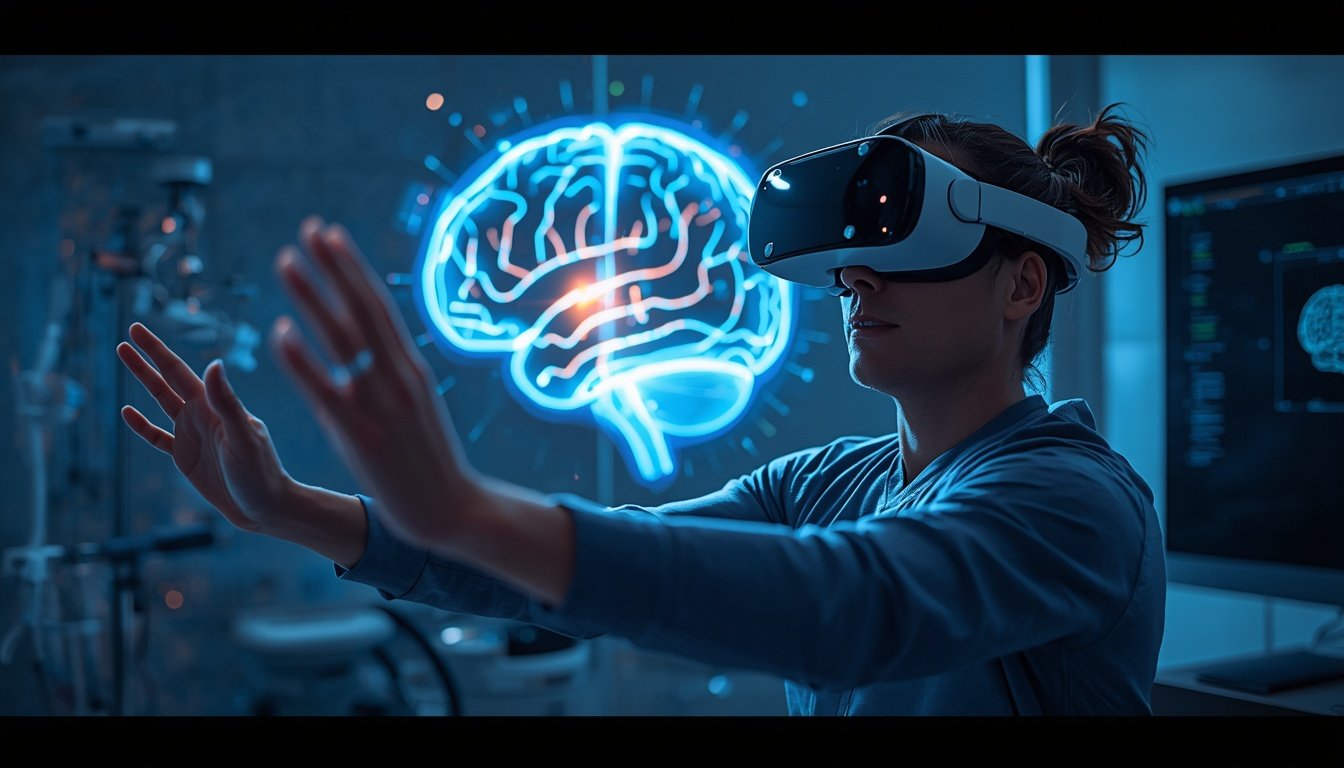
Virtual reality has moved from “promising but preliminary” to a primary rehabilitation modality. The clinical evidence in 2026 is no longer ambiguous on this point.
VR-based sensory-motor integration tasks are particularly effective for three reasons. First, they provide controlled, reproducible multisensory environments that would be impossible or unsafe to replicate in a traditional clinic setting. Second, they generate objective, session-by-session data that clinicians can use to track progress and adjust protocols. Third, they maintain engagement in a way that traditional repetitive exercises simply do not.
The most effective VR-based tasks for head injury patients in 2026 include:
Adherence is the silent killer of head injury rehabilitation. The most perfectly designed protocol fails if the patient stops doing it. Gamified and VR-based sensory-motor integration tasks directly address that problem with measurable results.
—
This is the part most rehabilitation programmes underestimate.
Effective sensory-motor integration tasks for head injury patients do not just mechanically retrain movement. They trigger a cascade of neurobiological changes, and BDNF (Brain-Derived Neurotrophic Factor) sits at the centre of that cascade.
BDNF acts like a fertiliser for your neurons, encouraging the growth of new synapses and protecting existing ones. Without adequate BDNF production, the synaptic reinforcement needed to make new sensory-motor pathways permanent simply does not happen at the rate required for meaningful recovery.
The two most evidence-validated methods for naturally boosting BDNF during a sensory-motor integration programme are:
The Genius Switch BDNF activation protocol explores how gamma audio stimulation can be integrated alongside physical rehabilitation to support neurogenesis and synaptic reinforcement. It is worth reviewing as a complement to the physical task work described in this guide.
We want to be clear about something. BDNF is not a supplement you take to bypass the hard work of sensory-motor integration. It is a biological byproduct of doing the hard work consistently. Manifestation techniques, BrainWave protocols, and BDNF-targeted tools are all more effective when used alongside, not instead of, structured physical rehabilitation tasks.
The brain you have today is not the brain you are stuck with. But rebuilding it requires inputs that go beyond sitting still with headphones on.
—
Most people do not connect working memory to sensory-motor training. They should.
Working memory (the ability to hold and manipulate information in real time) is heavily dependent on the same prefrontal-cerebellar circuits that govern sensory-motor integration. After head injury, both tend to be compromised together, and improving one consistently supports improvement in the other.
Research published in 2024 found that patients undergoing intensive 5-day multisensory integration training showed a 34.30% improvement in working memory accuracy. That is not a marginal effect from a general wellness programme. That is a targeted neurobiological response to the right kind of challenge, delivered at the right dose and frequency.
The most effective sensory-motor integration tasks for working memory rebuilding include:
For a broader view of how cognitive assessment tools track these gains over time, the 2026 MoCA to MMSE score conversion framework provides a useful reference for clinicians and patients tracking working memory improvement across a rehabilitation programme.
—The boredom barrier is real. It is one of the primary reasons head injury rehabilitation programmes fail in practice, even when they succeed in clinical trials.
Gamified sensory-motor integration tasks solve this problem by embedding the neurological challenge inside an engaging, goal-directed format. The patient is not just “doing rehab.” They are trying to beat a score, complete a mission, or progress to a harder level. The brain responds to that context with higher motivation signalling, which in turn supports better session quality and longer-term adherence.
Effective gamified sensory-motor integration tasks for head injury patients in 2026 include:
We are deliberate about one distinction: gamification is not the same as gaming. These are clinically structured tasks that use game mechanics as a delivery vehicle. They are not entertainment products, and they are not brain games of the kind sold in app stores with no evidence behind them. If we cannot show you that something is working, we have no business recommending you continue it.
—One of the most important things we can tell a head injury patient is this: functional improvement and structural improvement are not the same thing.
Functional plasticity (better performance on a task, improved balance scores, faster reaction times) can appear within days or weeks of beginning an effective sensory-motor integration programme. This is encouraging, but it does not mean the work is done.
Structural plasticity (the physical reorganisation of neural architecture, new myelination of pathways, sustained cortical reorganisation) requires 3 to 6 months of consistent, appropriately dosed practice. This is not a marketing timeline. It is a biological reality backed by the neuroscience of how axonal myelination and synaptic reinforcement actually unfold.
What this means practically:
The neuro rehabilitation programme overview at Neuroplasticity Solutions outlines how structured, multi-modal programmes are designed specifically to carry patients through both the functional and structural phases of sensory-motor recovery.
—Neurofeedback adds a layer to sensory-motor integration that physical tasks alone cannot provide: real-time visibility into cortical activity during task performance.
When a head injury patient performs a balance or coordination task while connected to EEG monitoring, clinicians can observe which brain regions are activating, which are underactivating, and where the integration breakdown is occurring at a neural level. This is not theoretical. It is a measurable, session-by-session picture of cortical reorganisation in progress.
The most effective pairings of neurofeedback with sensory-motor integration tasks include:
Neurofeedback is not a replacement for physical sensory-motor integration training. It is a precision instrument for understanding what the physical training is doing to the brain, and for guiding the session-level decisions that make the difference between adequate and excellent outcomes.
Our neurological recovery protocols include neurofeedback as an integrated component of post-TBI sensory-motor rehabilitation, not as an optional add-on.
—Not every head injury patient presents identically, and not every sensory-motor integration approach will be equally effective across all presentations.
The patients who benefit most from targeted sensory-motor integration programmes include:
The brain is a biological system, not a motivational one. The right programme for one patient may be inadequate for another, depending on injury severity, affected pathways, time since injury, and current functional baseline.
—We want to be direct about something that the wellness industry consistently obscures.
Meaningful neuroplastic change is not a subscription you scroll through on your phone. Effective sensory-motor integration tasks for head injury patients require dynamic, real-time adjustment based on patient response, clinical observation, and objective data. That requires a clinician in the room (or at least in close coordination) to observe compensatory strategies, adjust difficulty in real time, and catch the early signs of fatigue or overload that a self-guided app cannot detect.
Physical Proximity and Professional Expertise are not a luxury in head injury rehabilitation. They are a clinical necessity, particularly in the early and mid-stages of recovery when the risk of inappropriate loading is real and the consequences of getting the dosing wrong can slow rather than accelerate recovery.
For professionals and organisations looking at cognitive recovery more broadly, the corporate cognitive training programme framework offers a structured model for how clinician-guided, evidence-based cognitive and sensory-motor rehabilitation can be delivered at scale.
Your brain is the only organ you cannot replace. It deserves a plan.
—Effective sensory-motor integration tasks for head injury patients are not a single technique or a single session. They are a structured, progressive, biologically informed programme that spans months, not weeks, and requires consistent professional oversight, measurable objective markers, and the right biological substrate to support neuroplastic change.
The evidence in 2026 is clear: VR-based tasks, gamified protocols, dual-task training, neurofeedback-guided sessions, and BDNF-supportive approaches including BrainWave techniques to boost brain power naturally are all validated components of a comprehensive sensory-motor integration programme. None of them work in isolation. All of them work better with expert guidance.
If we cannot show you that something is working, we have no business recommending you continue it. That principle governs how we approach every sensory-motor integration protocol we design.
The brain you have today is not the brain you are stuck with. But getting from here to a measurably better outcome requires more than enthusiasm. It requires evidence, dosing, professional oversight, and the commitment to work within the 3-to-6 month structural window where real, lasting change is forged.
Explore our full neuro rehabilitation programme to see how sensory-motor integration sits within a comprehensive, evidence-based approach to head injury recovery in 2026.
—The most evidence-supported effective sensory-motor integration tasks for head injury patients in 2026 include VR-based balance training, dual-task walking protocols, gaze stabilisation exercises, gamified reach-and-grasp tasks, and neurofeedback-guided motor sessions. Each targets a specific disrupted pathway in the sensory-motor system and should be progressed according to the patient’s objective baseline and response rate.
Functional improvements from sensory-motor integration tasks can appear within weeks. However, structural plasticity (actual physical changes in brain architecture such as myelination and cortical reorganisation) typically requires 3 to 6 months of consistent, properly dosed training. This is a biological timeline, not an arbitrary one.
Yes. BDNF (Brain-Derived Neurotrophic Factor) supports synaptic reinforcement and neurogenesis, both of which are critical to recovering sensory-motor function after head injury. The two most clinically validated methods for naturally elevating BDNF during rehabilitation are aerobic-load motor tasks and 40Hz gamma BrainWave stimulation used as an adjunct to active physical training.
The 2026 evidence shows that 84.2% of patients achieved outcomes similar to or better than conventional therapy when using VR-based sensory-motor rehabilitation. This positions VR not as an experimental add-on but as a clinically viable primary modality, particularly for balance, dual-task training, and visual-motor integration tasks.
Between 18.3% and 31.3% of individuals still experience post-concussion symptoms including dizziness and motor delay at the 6-month post-injury mark. For many of these patients, the missing element is targeted sensory-motor integration training, specifically vestibular-visual integration tasks and dual-task protocols that address the underlying neurological disruption rather than just managing symptoms.
Some lower-intensity components of a sensory-motor integration programme can be performed at home as part of a structured daily routine. However, the assessment, dosing, progression, and monitoring stages require clinical expertise. Effective sensory-motor integration tasks for head injury patients depend on real-time adjustment by a qualified practitioner, which a self-guided app cannot replicate.
Gamified sensory-motor integration tasks significantly outperform traditional repetitive exercises in patient adherence and satisfaction, with 68.4% of patients reporting high satisfaction scores compared to conventional approaches. More importantly, the neurological challenge within well-designed gamified tasks is clinically equivalent to their traditional counterparts, meaning you are not sacrificing efficacy for engagement when the tasks are properly designed.