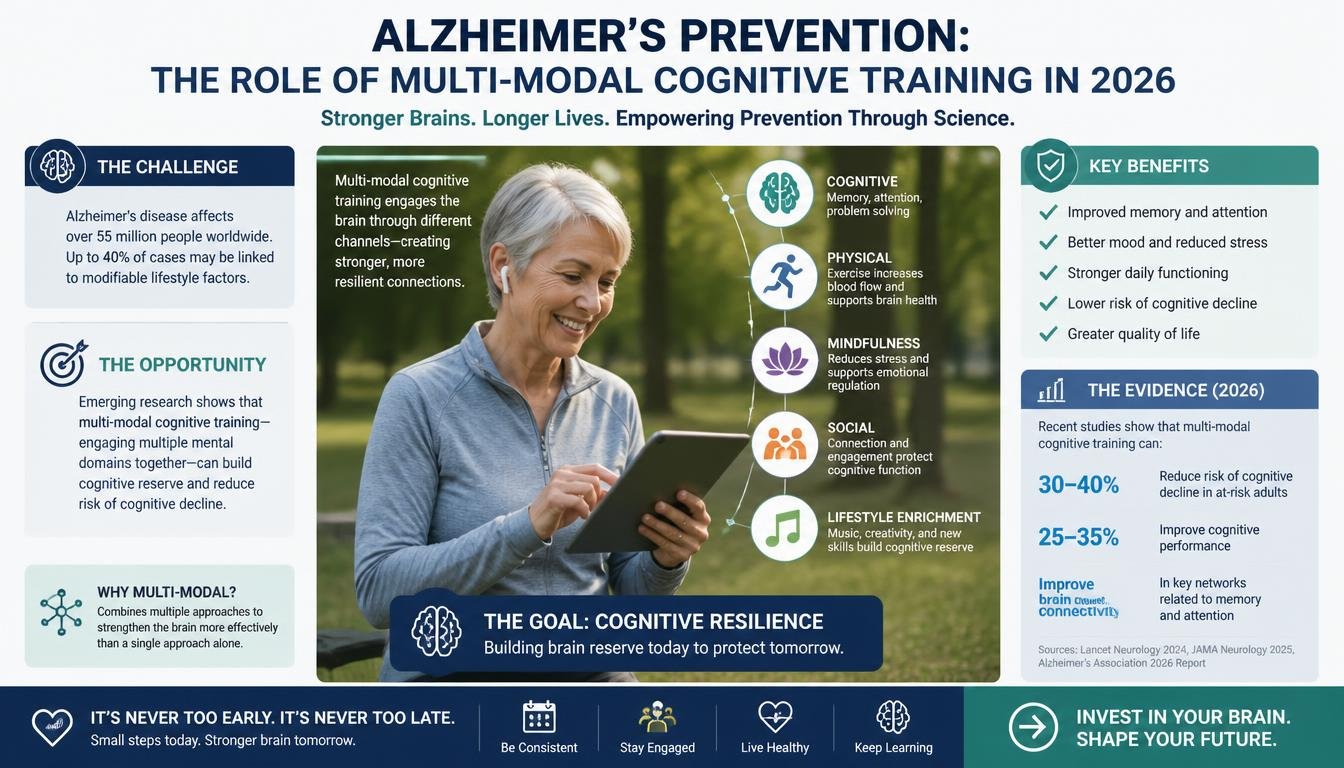

Did you know that 9.7% of adults under 40 report a cognitive disability, nearly double the earlier rate? That’s exactly why we’re seeing so much interest in neuroplasticity memory training in 2026, because people want tools that actually help the brain adapt, not just “feel productive.”
| What to focus on | Why it matters (in 2026) | Quick action |
|---|---|---|
| Task-specific practice | Real learning sticks better when training matches the skill (memory, attention, processing speed). | Use adaptive drills instead of random “brain games.” |
| Adaptive, dose-driven protocols | Memory performance improves more reliably when difficulty adjusts to you. | Build a plan with measurable progress checks. |
| Sleep, movement, nutrition | These are the biological foundation that neuroplasticity depends on. | Lock in nightly recovery and daily movement. |
| BDNF and neurorehabilitation principles | In 2026, more programs track biomarkers like BDNF to guide training intensity. | Choose plans that align training with neurobiology. |
| Retention habits | We forget rapidly after learning, so reinforcement is non-negotiable. | Use memory retention habits to stay consistent. |
| Personalization | “One size fits all” is usually weaker than a personalized cognitive track. | Start with goals, then generate your blueprint. |
In this guide, we’ll break down what neuroplasticity memory training looks like in real life in 2026, what to do first, what to measure, and which program types are worth your time.
When we say neuroplasticity memory training, we mean structured practice that is designed to drive brain change through repetition, targeted cognitive load, and measurable improvement. It is not random studying, not vague “mindfulness,” and not a one-time challenge.
In 2026, the best programs focus on three ideas we keep coming back to: the training has to be task-specific, it has to be dose-driven (enough volume and intensity), and it has to be adaptive so your difficulty level stays matched to your current performance.
On our cognitive performance collection page, we outline how modern cognitive training tools aim to optimize executive function, memory, and processing speed with task-specific, dose-driven protocols.


That same page also emphasizes how we use biomarkers like BDNF and neurorehabilitation principles to track progress objectively. In practical terms, that means we are less focused on “vibes” and more focused on what the brain is doing as the training repeats.
Here’s the issue we see constantly: people learn something, then assume it will stick. But in real life, we forget quickly without reinforcement.
On our memory retention habits collection, we call out the forgetting curve reality, including the idea that we forget 50% of new information within about one hour after learning it. That’s why retention habits are the first domino for neuroplasticity memory training.
Retention habits work because memory decays fast unless it is reinforced. So we treat sleep, movement, and nutrition as the biological foundation, then we layer in cognitive practice.
If you want a simple way to start, we recommend you begin with the routine first, then attach memory drills to your daily calendar. For more structured options, check memory retention habits program.

A big reason neuroplasticity memory training feels confusing is that people try to copy workouts from strangers. But the brain adapts based on the specific demands you place on it, so your plan should be based on your goals, your baseline, and the kind of memory issues you want to improve.
In 2026, we prefer a framework that uses a simple logic: identify what you want to improve, set a training “dose,” then adjust difficulty as your performance changes. That is how we keep the training at the point where your brain has to work, but not so hard that you disengage.
On the cognitive performance collection, we point to the idea of an executive training track and a “cognitive program blueprint generator.” The point of that type of generator is personalization, not complexity.
This is why we focus so heavily on structured neuroplasticity memory training. If the training is consistent and targeted, your brain is more likely to show measurable neural change, not just temporary performance gains.
People often ask whether neuroplasticity memory training is only for younger adults. In 2026, we’re increasingly seeing programs emphasize structured training for seniors, with the key difference being adaptive protocols and measurable progress.
On Cognitive Training vs Memory Apps: What Works for Seniors, we highlight a core idea: seniors in structured lifestyle interventions performed at a level comparable to adults 1 to 2 years younger than those using self-guided methods, based on the Alzheimer’s Association U.S. POINTER Study published in 2026.
If you are looking for a practical next step, think about pairing memory retention habits with cognitive training sessions rather than swapping one for the other. We generally see better outcomes when the routine supports the training.
If you want to go deeper, we also compare approaches like training versus apps. The key takeaway is that training works best when it is designed as a program, not a standalone activity.
Yes, neuroplasticity memory training can apply to teams and leaders, because executive function affects planning, attention, and daily decision-making. In 2026, more organizations want training programs with structure, personalization, and a consistent way to measure progress.
Our corporate cognitive training programs are built for organizations that refuse to accept cognitive decline or burnout as inevitable. We also describe a “cognitive program blueprint generator” that uses four key pillars to produce personalized cognitive performance training programs aligned with business goals.
Pricing example from our corporate page: Genius Switch is $39. We position tools like this inside a broader training framework, so they support the plan rather than replace it.
In other words, if a team wants neuroplasticity memory training results in 2026, we focus on adaptive cognitive work plus retention habits, then we keep the plan measurable.
We get it, supplements are tempting because they’re easy. But our view is straightforward: neuroplasticity memory training has stronger long-term evidence when it is structured and consistent.
On neuroplasticity training vs supplements, we explain that structured training tends to outperform most supplement stacks over time. Supplements can be part of a balanced longevity plan, but training is the “work” component the brain can respond to directly.
If you want to combine approaches, we recommend you treat supplements as add-ons while you keep your training track consistent and measurable.
Some people come to neuroplasticity memory training because they want better recall. Others come because they are working toward neurological recovery after stroke or TBI, and memory is part of the larger functional picture.
On neurological recovery, we describe protocols emphasizing high-dose, task-specific practice and home-based neurofeedback devices. The common thread is structured, dose-dense training that supports functional recovery and long-term cognitive longevity.
And if your goal is prevention, we connect the same training logic to daily brain health habits. For example, our brain health longevity habits page points out how consistency beats intensity, and how managing key health factors can prevent or delay a large portion of dementia cases. In 2026, we still treat those habits as the foundation your memory training rides on.
We use that idea when we coach people to pair brain training with body training. Memory improves when the brain receives the recovery and physiological support it needs.
For those considering more structured environments, we also include options like supervised neuro-training retreats. Our Blue Zone-Inspired retreats start around $3,579 for a 5-day neurologist-led program on the California coast (pricing shown on the page), designed to blend longevity habits with clinical neuro-training.
If you want neuroplasticity memory training results without overcomplicating your life, here are practical moves we recommend right away in 2026.
Pick one memory target, then reinforce it later the same day using recall, not re-reading.
Choose memory-focused drills that adjust difficulty based on performance.
If sleep is inconsistent, your memory training has a weaker foundation.
Even if your brain training is short, daily movement supports the environment for plasticity.
Use a consistent method so you can tell whether neuroplasticity memory training is actually working for you.
We also like using longevity and mindset habits because they reduce drop-off. When people can sustain routines, neuroplasticity memory training gets the repetition it needs.
If you want a mindset angle, see mindset and longevity science, where we outline the five pillars of brain longevity and how beliefs about aging can influence outcomes.
In 2026, the best approach to neuroplasticity memory training is simple: build retention habits to stop forgetting, use task-specific and dose-driven cognitive practice, and support the brain with sleep and movement. When training is adaptive and measurable, we see stronger chances of meaningful neural change, not just temporary improvement.
If you want to start now, we recommend beginning with a structured memory retention routine, then layering in a personalized training track. For planning inspiration and habit foundations, explore memory retention habits, then pair it with the kind of cognitive framework outlined in our cognitive performance resources.
Yes, because neuroplasticity memory training works best when it is consistent and structured, not when it takes over your whole life. In 2026, we focus on short retention routines plus one adaptive training session, so you can sustain the repetition the brain needs.
It targets the forgetting curve by combining memory practice with reinforcement habits. Neuroplasticity memory training in 2026 emphasizes spaced recall and routine-based reinforcement, so new information gets reactivated before it fades.
We recommend you protect sleep first, then add cognitive sessions. Neuroplasticity memory training depends on recovery, so in 2026 we treat sleep as the foundation that helps your brain consolidate what your training teaches.
Often, yes, when the program uses adaptive protocols and maintains training intensity at the cognitive edge. In 2026, structured cognitive training for seniors can outperform self-guided methods because the difficulty and outcomes stay aligned to memory goals.
It can when it is designed as task-specific, dose-dense practice. Neuroplasticity memory training fits recovery when it focuses on functional goals and uses structured home continuation plans alongside appropriate clinician oversight.
No, supplements usually are not a replacement. In 2026, we position neuroplasticity memory training as the core driver, while supplements are optional add-ons that support recovery if you need them.