The average attention span for digital content has dropped to just 8.25 seconds in 2026, down from 12 seconds in 2020 – and if that stat makes you feel called out, you are not alone. The ‘Brain Rot’ Reset: Digital Neuro-Detox 2026 is the structured, neuroscience-backed approach that is helping people fight back against the cognitive drain of constant scrolling, endless notifications, and dopamine-hijacked feeds. At Neuroplasticity Solutions, we have built our entire methodology around one core belief: your brain can be rewired, and the reset starts right now.

Question | Quick Answer |
|---|---|
What is ‘brain rot’? | A measurable cognitive decline caused by chronic overconsumption of low-quality digital content, especially short-form video. |
Does a digital neuro-detox actually work? | Yes. Research shows a single week of structured digital detox can restore up to 32% of baseline attention span and cognitive clarity. |
What is The Harkins Method™? | Our proprietary Neural Network of Change system, built on neuroscience-backed massed practice and novelty training to rewire the brain after cognitive decline. |
How does BDNF relate to a digital detox? | BDNF (Brain-Derived Neurotrophic Factor) is your brain’s repair protein. Digital overload suppresses it; a structured detox helps restore healthy BDNF levels. |
Who is best suited for a digital neuro-detox in 2026? | Anyone experiencing brain fog, poor focus, low motivation, mental fatigue, or compulsive scrolling behavior – from students to high-performance professionals. |
Can I combine manifestation techniques with a detox? | Absolutely. Structured manifestation practices activate the prefrontal cortex and support new neural pathway formation during a detox window. |
Where do I start? | Start with our digital detox program or explore our full range of neuroplasticity services. |
‘Brain rot’ is not just internet slang anymore. It is a real, measurable pattern of cognitive decline that comes from sustained exposure to low-quality, high-frequency digital stimulation.
When you scroll through short-form content for hours, your brain’s reward system gets flooded with micro-hits of dopamine. Each hit is smaller than the last. Your neural circuits literally recalibrate to expect faster, louder, more intense input – and anything slower feels unbearable.
The result? Deep focus becomes nearly impossible. Reading a full article feels exhausting. A 10-minute task takes 45 minutes because your brain keeps reaching for the next ping. This is where The ‘Brain Rot’ Reset: Digital Neuro-Detox 2026 becomes a genuine clinical priority, not just a wellness trend.
At Neuroplasticity Solutions, we see this pattern every day. The good news is that the brain is not broken – it is just overtrained in the wrong direction. And what can be trained in one direction can absolutely be retrained in another. That is the core premise behind everything we do.
Did You Know?
Users who primarily consume short-form content under 30 seconds show a 27% reduction in sustained attention during task-based activities.
Source: NIH / PubMed Central
Let us be straight with you: a digital neuro-detox is not putting your phone in a drawer for a weekend. That is a digital break. A digital neuro-detox in 2026 is a structured, neurologically intentional protocol designed to reverse the specific cognitive damage caused by algorithmic overconsumption.
Here is what separates a real neuro-detox from a casual social media break:
It targets specific neural circuits, not just screen time.
It uses replacement behaviors that actively stimulate BDNF production and synapse repair.
It includes cognitive training protocols that rebuild sustained attention from the ground up.
It tracks measurable cognitive outcomes like focus duration, working memory, and processing speed.
It addresses the dopamine recalibration that underlies compulsive digital behavior.
Our cognitive training programs are built specifically around these principles. We do not just tell you to “use your phone less.” We give you a fast-tracked, accelerated system for rebuilding the neural architecture that chronic scrolling has eroded.
BDNF (Brain-Derived Neurotrophic Factor) is one of the most important proteins in your brain. Think of it as fertilizer for your neurons. It supports the growth of new synaptic connections, protects existing neural pathways, and accelerates learning and memory formation.
Chronic digital overload actively suppresses BDNF production. High-frequency, low-effort stimulation keeps your brain in a reactive, low-depth processing mode that does not trigger the deeper cognitive work required for BDNF release.
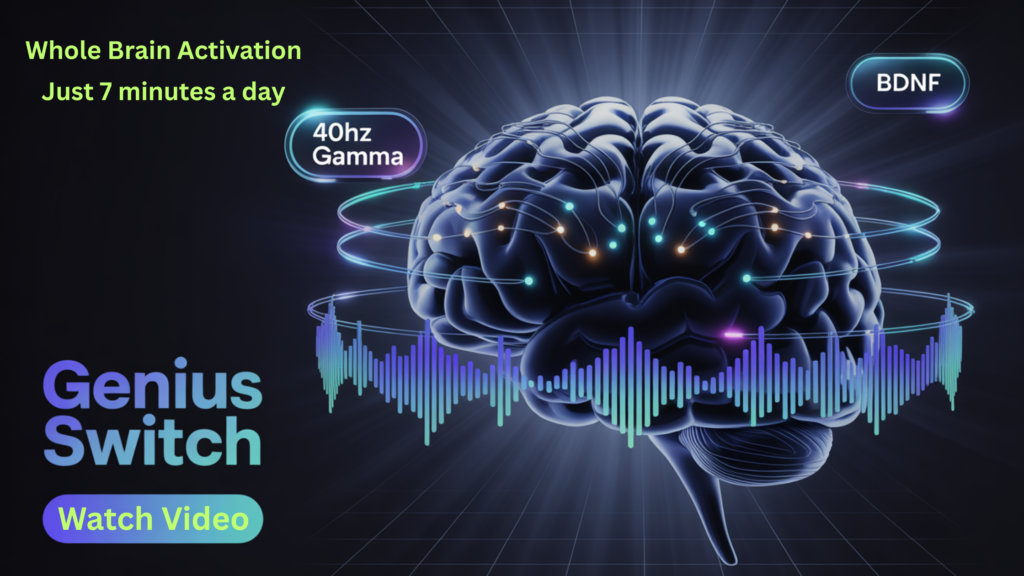
This is where BrainWave science becomes a game-changer in the detox process. Different brain states (measured as BrainWave frequencies) correspond to different cognitive functions:
BrainWave State | Frequency | Associated Function | Detox Role |
|---|---|---|---|
Delta | 0.5 – 4 Hz | Deep sleep, cellular repair | Critical for overnight BDNF release |
Theta | 4 – 8 Hz | Creativity, deep relaxation | Restored through offline, analog activity |
Alpha | 8 – 12 Hz | Calm focus, stress recovery | Primary target of neurofeedback protocols |
Beta | 12 – 35 Hz | Active thinking, task engagement | Rebuilt through sustained-attention tasks |
Gamma | 35+ Hz | High-level cognition, insight | The target end-state of a full detox protocol |
Excessive screen time artificially inflates high-beta and suppresses alpha and theta states. Our neurofeedback programs train your BrainWave patterns back toward their optimal distribution, accelerating the cognitive recovery that the digital neuro-detox initiates.
Restoring healthy BDNF levels through exercise, sleep optimization, and structured cognitive challenges is a core pillar of everything we do at Neuroplasticity Solutions. It is not optional – it is the mechanism by which the reset actually works at a cellular level.
Here is something we talk about openly at Neuroplasticity Solutions: manifestation is not woo. When you use structured manifestation techniques with an understanding of how the brain actually works, you are doing targeted prefrontal cortex activation.
Visualization, intention-setting, and deliberate mental rehearsal are all forms of cognitive training. They strengthen the same neural circuits that chronic scrolling weakens. During a digital neuro-detox 2026 window, the brain is in a heightened state of neuroplasticity – meaning it is more receptive to new patterns than usual.
This is the perfect time to introduce powerful manifestation techniques as replacement behaviors. Here are the ones we recommend integrating:
Scripted Visualization (10 minutes, AM): Write out in present tense what your cognitive best looks like. This activates the same neural circuits as actually performing the behavior.
Contrast Mapping: Identify the gap between your current brain fog state and your optimal cognitive state. The tension between those two points generates motivational drive in the anterior cingulate cortex.
Affirmative Repetition (Massed Practice Style): Repeat a specific cognitive identity statement 50+ times daily. Repetition is not fluffy here – it is massed practice applied to belief systems.
Sensory Grounding as a Reset Trigger: Use physical sensations (cold water, breath-holds, barefoot contact with natural surfaces) to shift BrainWave states and anchor your manifestation practice to a neurological reset signal.
Evening Review Protocol: A 5-minute structured review of cognitive wins from the day reinforces new neural pathways formed during detox activities.
The integration of manifestation into a clinical neuro-detox framework is one of the things that makes our approach genuinely different. We connect faith, resilience, and neuroscience in the same breath – because at the neurological level, they are not separate.

This infographic highlights the 5 key benefits of a digital neuro-detox for 2026. It shows how reducing digital overload can boost focus, mood, and energy.
Not everyone needs the same level of intervention. Here is a breakdown of who benefits most from each tier of our digital neuro-detox approach:
If you are a high-performing professional who notices your deep work sessions getting shorter, your recall slipping, or your decision-making feeling slower, you are experiencing the early signs of digital overload. A structured 7-day digital neuro-detox combined with our cognitive performance protocols is the fast-track fix.
In 2026, 63% of Gen Z have already attempted some form of intentional digital disconnection to protect their mental health. For students, the stakes are high. Poor sustained attention directly impacts academic performance, retention, and exam results. Our BrainWave-guided detox protocols are built to rebuild the attention circuitry that algorithm-driven feeds have eroded.
Our founder, Shawnee Harkins, survived three separate life-threatening Traumatic Brain Injuries at ages 18, 20, and 24. She knows firsthand that brain recovery and digital overstimulation are direct enemies. For patients in neuro-rehabilitation, a digital neuro-detox is not optional – it is a clinical priority. Our neuro-rehabilitation program integrates detox protocols as a foundational layer of recovery.
If you are in your 30s or 40s and want to protect your cognitive longevity, The ‘Brain Rot’ Reset: Digital Neuro-Detox 2026 is one of the most impactful preventative interventions available. Our preventative longevity track is designed for exactly this purpose.
If you want to boost brain power naturally, the first thing you need to accept is that there is no shortcut that bypasses the brain’s own biology. You can absolutely boost brain power naturally – but it requires structured, consistent input over time.
Here is our core 7-day digital neuro-detox framework:
Days 1-2 (Withdrawal Phase): Expect irritability, restlessness, and a strong pull toward your devices. This is normal. It is your dopamine system recalibrating. Replace scrolling time with physical movement and breathwork to stimulate BDNF release.
Days 3-4 (Stabilization Phase): BrainWave patterns begin to shift. Alpha states become more accessible. Introduce 30-minute blocks of uninterrupted reading or single-task focused work. Use structured manifestation techniques each morning.
Days 5-6 (Restoration Phase): Most users report noticeably improved clarity and mood at this point. Introduce novelty training – new physical skills, new creative activities, new learning domains – to establish fresh neural pathways.
Day 7 (Integration Phase): Design your re-entry into digital life with firm boundaries. Schedule specific “digital windows” rather than letting algorithms dictate your attention. This is where the reset becomes permanent.
To genuinely boost brain power naturally over the long term, this 7-day protocol should be repeated quarterly, with daily micro-detox practices (no screens for the first 60 minutes of each day) maintained in between full resets.
The Harkins Method™, also called the Neural Network of Change, is the proprietary framework that underpins everything we do at Neuroplasticity Solutions. It was developed by Shawnee Harkins through both personal experience and years of cross-disciplinary research spanning professional sports performance, clinical rehabilitation, and medical technology.
The method operates on two core mechanisms:
Massed Practice – heavy, repeated engagement with a specific cognitive or physical task to strengthen existing synaptic connections. In a detox context, this means doing the same deep-focus activity daily, building the neural “muscle” for sustained attention.
Novelty Training – introducing genuinely new experiences to stimulate the growth of entirely new neural pathways. This is the neurological mechanism behind the “fresh start” feeling people report after a successful digital detox.
Our two pending patents, one for a brain health treatment invention and one for performing neuro-rehabilitation in a VR environment, represent the cutting edge of how we are scaling this methodology. We are bringing the precision of elite athlete performance training into the world of neurological recovery and brain optimization.
We also use AI, AR, and VR-driven Medical XR tools to move brain rehabilitation and reset protocols out of a clinical setting and into an immersive, accessible digital environment. The irony of using sophisticated technology to help people recover from technology overload is not lost on us – but the key is always intentional, structured engagement versus passive, algorithmic consumption.
For people who want to accelerate their digital neuro-detox results, two clinical tools stand out as high-impact additions to the core protocol.
tDCS (Transcranial Direct Current Stimulation) is a non-invasive brain stimulation technique that uses low-level electrical currents to modulate neural excitability. In the context of a digital neuro-detox, it can be used to upregulate the prefrontal cortex – the exact region most suppressed by passive scrolling behavior. Our tDCS program is one of the most targeted tools we have for fast-tracking cognitive restoration.
Neurofeedback gives you real-time data on your own BrainWave states, allowing you to consciously train your brain toward the alpha and theta patterns that chronic digital exposure suppresses. Think of it as a mirror for your brain – and a coaching tool for your neural performance. Combined with The Harkins Method’s massed practice principles, neurofeedback accelerates the timeline of the brain rot reset significantly.
Did You Know?
A single week of digital detox has been shown to result in a 32% restoration of attention span and cognitive clarity.
Source: SQ Magazine (March 2026)
Most digital detox guides stop at “put your phone down.” We go further. The reason our approach works at a deeper level is that we treat manifestation as a neurological practice, not a motivational poster.
When you use manifestation techniques with neurological precision – visualizing specific outcomes, rehearsing cognitive performance mentally, building emotional certainty around a healed and high-functioning brain – you are doing something measurable. You are activating the prefrontal cortex, engaging the default mode network in a structured way, and releasing the same neurochemical cascade that physical skill practice triggers.
The brain does not fully distinguish between vividly imagined experience and real experience at the level of synaptic firing. That is not mysticism – it is the neuroscience behind motor imagery research and why elite athletes use mental rehearsal as seriously as physical training.
Shawnee Harkins integrates faith, resilience, and science precisely because her own three-TBI recovery proved that belief systems are not separate from neurology. They are part of it. If you tell your brain it is broken and staying broken, your neurochemistry follows. If you use structured manifestation to hold a clear, emotionally charged image of full recovery and peak cognitive function, your neural circuits orient toward that state.
We call this the cognitive identity bridge – and it is one of the most powerful components of The ‘Brain Rot’ Reset: Digital Neuro-Detox 2026 when applied with the precision of The Harkins Method™.
Ready to begin your digital neuro-detox 2026 reset? Here is where to start based on your specific situation:
If you are new to neuroplasticity: Visit our learning hub to understand the science behind what we do before starting a program.
If you want to explore all options: Browse our full services overview to find the right program tier.
If you want to dive into clinical tools: Explore our neurofeedback protocols and tDCS options for accelerated results.
If you are a healthcare or med-tech partner: Visit our methodology page or go straight to contact us to discuss scaling opportunities.
If you want to see proof it works: Read our client testimonials and review the clinical research behind our methods.
The ‘Brain Rot’ Reset: Digital Neuro-Detox 2026 is not a trend. It is a clinical response to a real and measurable neurological crisis that is getting worse every year the algorithm keeps winning.
Your attention span is not a fixed resource that you are helplessly watching shrink. It is a trainable, recoverable, and upgradeable system – and we have the methodology to prove it. Through The Harkins Method™, BrainWave science, BDNF restoration, structured manifestation techniques, and cutting-edge tools like tDCS and neurofeedback, we offer one of the most complete digital neuro-detox protocols available in 2026.
The brain that scrolled its way into brain rot is the same brain that can work its way back out. It just needs the right protocol, the right repetitions, and someone in its corner who has already done it. That is what Neuroplasticity Solutions is here for. Refuse to let the algorithm define your cognitive future. The reset starts now.
“I’ve stood where many neuro patients stand – facing a brain that feels broken and a world that says stay broken. The science says otherwise. The reset is real, and it is available to every single person reading this.”
– Shawnee Harkins, Founder of Neuroplasticity Solutions
Yes, it is very different. A social media break is passive – you just stop doing something. The ‘Brain Rot’ Reset: Digital Neuro-Detox 2026 is an active, structured neurological intervention that uses cognitive training, BrainWave protocols, BDNF-boosting activities, and manifestation techniques to rebuild the specific neural circuits that digital overload has eroded. It addresses the root cause, not just the symptom.
Research shows measurable improvements in attention span and cognitive clarity within a single week of structured digital detox. For deeper reset results using tools like neurofeedback and tDCS alongside The Harkins Method™, most users report significant changes within 21-30 days of consistent application.
Absolutely – in fact, digital neuro-detox is a clinical priority for TBI recovery, not just a wellness option. Excessive digital stimulation actively interferes with the neural repair process. Our neuro-rehabilitation program integrates detox protocols at the foundational level of recovery, based on our founder Shawnee Harkins’ own three-TBI recovery journey and The Harkins Method™.
BDNF (Brain-Derived Neurotrophic Factor) is the protein your brain uses to form new connections, repair existing ones, and support memory and learning. Chronic digital overload suppresses BDNF production. A structured digital neuro-detox – especially one that includes physical exercise, quality sleep, novelty training, and reduced dopamine loading – actively restores healthy BDNF levels, which is what makes the cognitive recovery feel so rapid and real.
It sits in both categories right now. As a formal diagnosis, it does not yet have a clinical code – but the cognitive patterns it describes (shortened attention span, impaired sustained focus, dopamine dysregulation, reduced working memory) are all measurable and well-documented in 2026 neuroscience literature. The ‘Brain Rot’ Reset: Digital Neuro-Detox 2026 treats these patterns with clinical precision regardless of what we call them.
Yes. The core of any effective digital neuro-detox is analog: physical exercise, deep sleep, sustained-attention reading, structured manifestation techniques, novelty experiences, and social connection. These are the foundational BDNF boosters that boost brain power naturally without any device. Technology tools like neurofeedback and tDCS are accelerators, not prerequisites.
Absolutely – and in 2026, this is the majority of the people we work with. Mental sluggishness, chronic distraction, and the inability to do deep focused work are early-stage cognitive decline signals, not character flaws. A structured digital neuro-detox protocol is one of the highest-ROI investments you can make in your cognitive performance this year, whether you are managing a neurological condition or just want your brain firing at full capacity again.