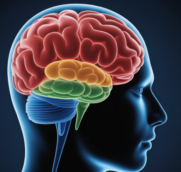

In 2026, the Postpartum Psychosis and the Brain: What Clinicians Need to Understand as the Lindsay Clancy Trial Unfolds conversation is no longer confined to journals and case conferences, because the condition’s acute risk can compress into a matter of days.
| Clinician-focused point | What to do in practice (2026) |
|---|---|
| PPP has a brain signature (not just mood symptoms) | Plan for neurobiology, not only diagnosis labels. |
| Discharge timing matters | Treat follow-up and safety planning as part of the clinical protocol. |
| There is a “diagnostic gap” | Use structured screening, collateral history, and clear red-flag thresholds. |
| Evidence-first education beats wellness noise | When discussing interventions, prioritize dosing principles and measurable progress. |
| BDNF is a practical biological target | If your program includes neuro-rehabilitation, align it with BDNF-related recovery frameworks. |
| Model recovery like neuro-rehabilitation | Look for a pathway that supports brain change over time, not just symptom suppression. |
Evidence over enthusiasm. If you are providing care, you do not need a clever metaphor, you need a coherent neurobiological plan.
The phrase Postpartum Psychosis and the Brain: What Clinicians Need to Understand as the Lindsay Clancy Trial Unfolds is not just a catchy framing. In 2026, clinicians are being pushed to treat postpartum psychosis as a neurobiological event, with rapid changes that affect judgment, perception, sleep regulation, and safety decisions.
Our position is simple: postpartum psychosis and the brain is not an abstract topic. It is an urgent clinical reality, and the brain changes during the acute window can be missed when the focus is limited to surface-level symptoms.
That matters for two reasons. First, symptom presentation can shift quickly, so a “one-time assessment” can under-capture risk. Second, the recovery pathway is not only about remission, it is also about the rebuilding of functional brain networks, including the cognitive and stress systems that break down during the episode.

The Lindsay Clancy case, unfolding in 2026, has become a stress test for discharge practices and clinician understanding of postpartum psychosis risk. The core problem we see, again and again, is the gap between how the condition is discussed publicly and how it is operationalized in real clinical decisions.
When clinicians finalize a discharge plan, they need to answer questions that are not optional. What is the likely trajectory of symptoms after hospitalization? How will relapse present? What protective supports exist in the home, and how quickly can escalation happen if symptoms return?
In our world, we often talk about neuroplasticity, BDNF activation, and evidence-based brain recovery. The point is not to replace psychiatry. The point is to recognize that postpartum psychosis is not only “mental health,” it is brain-state instability, and brain-state instability demands brain-state-aware follow-through.
If you want to understand postpartum psychosis and the brain, you need to think in brain systems, not only diagnoses. Acute episodes can involve disrupted sleep and stress regulation, altered sensory interpretation, impaired reality testing, and rapid shifts in executive control.
In 2026, more clinicians are acknowledging the neurobiology behind the presentation. That includes how hormones and inflammatory signaling can interact with neural plasticity processes, and how these interactions may influence brain connectivity when the brain is already under postpartum biological strain.
Where clinicians often get burned is the assumption that “standard mood frameworks” capture the full mechanism. They do not. That is why we emphasize the clinical education side of postpartum psychosis and the brain, because the diagnostic gap is not just a knowledge deficit, it is a decision-making deficit.
Postpartum psychosis is rare compared to other perinatal mental health issues, but rarity is not the same thing as low danger. In 2026, the most defensible clinical approach is to treat it as a high-stakes differential you actively rule in or out, not something you hope will not happen.
The diagnostic gap tends to show up in predictable ways. Symptoms can be misread as severe postpartum depression, delirium, or agitation. Collateral history can be incomplete. Medication histories can be inconsistent across settings. And sleep disruption, which is often a key clue, can be normalized as “new parent exhaustion.”
We would frame this as a protocol problem, not an intuition problem. Evidence-based dosing principles matter when you are deciding on interventions, but they also matter when you are deciding how often to reassess, how quickly to escalate, and what “safe enough” discharge actually means for postpartum psychosis and the brain.
Manifestation manifestation techniques BDNF BrainWave boost brain power naturally is exactly the kind of phrase clinicians should be cautious about in this context. Belief-based strategies can never substitute for real risk assessment, real safety planning, and real neuro-rehabilitation targets. If you are discussing BDNF-centered recovery, do it in a way that is measurable, time-bounded, and clinically grounded.

When we discuss postpartum psychosis brain changes, we keep returning to BDNF, because BDNF sits at the crossroads of learning, connectivity, and structural plasticity. The exact pathway is complex, but the clinical relevance is straightforward: when the brain is destabilized, recovery needs a system that supports repair mechanisms over time.
BDNF is often described as a “repair protein,” and we use that language carefully. In our framework, training, movement, and lifestyle support can be aligned to BDNF-centered neuro-rehabilitation, not as magic, but as measurable biological targeting.
This is also where 2026 conversations about brainwave tools get messy. You will see “BrainWave” marketing promises that blur neurophysiology into entertainment. You can acknowledge brainwave technologies without pretending they eliminate risk, delay relapse, or replace medical care.
If your team is considering brainwave or neurostimulation approaches, keep it evidence-based and protocol-based. Do not let “manifestation” framing creep into clinical decision-making. That is where the gap grows, between rigorous neuro-rehabilitation principles and wellness noise.
For clinicians who want an evidence-first example of how we talk about BDNF stimulation tools, our product page on Genius Switch, a 40Hz gamma audio series positioned to support BDNF production is a good reference point for how we separate claims from protocols.
Genius Switch pricing is $39, and the page describes it as precision 40Hz gamma audio stimulation intended to support natural BDNF production when used alongside training and lifestyle. Again, this is not a substitute for psychiatric care, it is an illustration of a dosing mindset around a biological target.

We are not interested in debating vibes. Evidence over enthusiasm. In the postpartum psychosis and the brain context, the stakes are too high to treat brain interventions as lifestyle branding.
Manifestation manifestation techniques BDNF BrainWave boost brain power naturally is an example of language that can sound clinical while drifting into the unmeasurable. Clinicians need to decide what is being targeted biologically, what dosing principles exist, and how progress is monitored.
When people say “BrainWave” without specifying parameters, session structure, or measurable outcomes, they are usually selling comfort, not clinical change. Brainwave audio might be a component in some neuro-rehabilitation frameworks, but it cannot replace symptom stabilization, psychosis risk management, or safety planning.
In 2026, we recommend a strict separation: you can acknowledge modern neurotechnology, but you must evaluate it like a clinical tool, including targeting, dosing, and follow-up. For example, our page on best tDCS devices for enhancing learning and focus in 2026 explicitly frames tDCS as neuromodulation that should be used with proper dosing, not as a wellness gadget.
We list common device price points on that page, including an entry-level unit at $99 and a clinically regulated option at around $800. Even if a postpartum psychosis treatment plan never includes home devices, the principle still applies, devices should be evaluated by targeting and dosing quality, not by marketing claims.
The most practical clinician takeaway from Postpartum Psychosis and the Brain: What Clinicians Need to Understand as the Lindsay Clancy Trial Unfolds is that recovery is not a single event. It is a monitored process, and the postpartum period is a time when risk can surge early and change quickly.
We treat neuro-rehabilitation as a measurable process. That is not a slogan. It means you define what “better” looks like, you set checkpoints, and you use protocols instead of hope.
For clinician teams, education should cover three layers:
If you want a broader neuro-recovery lens, our neurological recovery category is where we compile evidence-first protocol topics, including guides on brain training technology and neuroplasticity exercises. We do not treat this as “brain games,” we treat it as a dosing and follow-through problem.
And yes, we also insist teams understand that passive engagement does not meet the threshold for clinical change. Static difficulty, predictable puzzles, and passive scrolling through trivia do not drive the kind of brain adaptation recovery requires.
In the postpartum psychosis and the brain discussion, that philosophy becomes even more important. If you are recommending any “brainpower” tool, it must be structured, time-bounded, and monitored. Otherwise, it becomes another source of delay or confusion at the exact moment safety matters most.
If you are looking for a fast, clinically grounded place to start, we suggest you anchor education and decision-making to three evidence-first buckets. Not everything belongs in every setting, but every bucket belongs in every clinician conversation.
Postpartum Psychosis and the Brain: What Clinicians Need to Understand as the Lindsay Clancy Trial Unfolds is a reminder that high-stakes psychiatric conditions require high-stakes clinical precision. In 2026, that means closing the diagnostic gap, building discharge plans with real monitoring, and treating recovery like neuro-rehabilitation rather than a hope-based endpoint.
We also believe clinicians should be disciplined about language. If a tool is described through manifestation manifestation techniques BDNF BrainWave boost brain power naturally style framing without dosing principles and measurable outcomes, it belongs in lifestyle marketing, not in care pathways.
Evidence-first neuroplasticity, BDNF-focused recovery logic, and protocol-based follow-through are how we narrow the gap between published research and real-world outcomes. In postpartum psychosis, that gap can cost lives, so we do not negotiate with rigor.
Postpartum psychosis is a severe perinatal psychiatric emergency, and the Postpartum Psychosis and the Brain: What Clinicians Need to Understand as the Lindsay Clancy Trial Unfolds framing reflects how clinicians now consider it a brain-state instability problem, not only a mood problem. In 2026, education increasingly emphasizes neurobiology concepts like plasticity-related pathways, sleep disruption, and rapid shifts in reality testing.
In the acute phase, severe symptoms often persist for a shorter window, with the Postpartum Psychosis and the Brain: What Clinicians Need to Understand as the Lindsay Clancy Trial Unfolds discussion noting a typical duration of about 2 to 12 weeks. Recovery can extend, with complete recovery often taking around 6 to 12 months with appropriate treatment and follow-through.
The Lindsay Clancy case, unfolding in 2026, puts discharge planning under a microscope, because clinicians are being asked to justify risk assessment and timing decisions with postpartum psychosis and the brain realities. That typically means tighter monitoring plans, clearer escalation triggers, and safety planning that does not assume symptoms will resolve predictably after discharge.
Some clinicians and researchers discuss BDNF-related recovery logic as part of neuro-rehabilitation thinking, which is why the Postpartum Psychosis and the Brain: What Clinicians Need to Understand as the Lindsay Clancy Trial Unfolds conversation keeps returning to measurable biological targets. Brainwave tools should only be considered when they are protocol-based, measurable, and never used to replace psychiatric stabilization.
No. manifestation manifestation techniques BDNF BrainWave boost brain power naturally style language is often vague, hard to dose, and not tied to measurable clinical endpoints. In postpartum psychosis and the brain care, clinicians need evidence-based interventions with dosing principles, monitoring, and clear safety boundaries.
Postpartum psychosis is rarer than postpartum depression, which is why it can be missed during screening, but its severity demands rapid action. The Postpartum Psychosis and the Brain: What Clinicians Need to Understand as the Lindsay Clancy Trial Unfolds discussion emphasizes that rarity does not reduce danger, and it highlights why differentiating conditions is a core clinician responsibility.