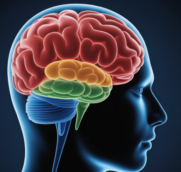
Memory problems do not usually stay small for long, and in 2026 the evidence keeps pointing to a simple reality, without hype. In one widely reported analysis, Alzheimer’s-related outcomes can worsen rapidly if cognitive decline is left unaddressed, with deaths from Alzheimer’s disease increasing by 134% in the period studied. Evidence over enthusiasm, and that is exactly why a memory repair protocol has to be structured, dosed, and measurable, not random mental activity.
Key Takeaways: Memory Repair Protocol Basics (2026)
| What you should focus on | Why it matters in a memory repair protocol |
|---|---|
| BDNF-centered training | We treat Brain-Derived Neurotrophic Factor as your brain’s repair protein, supported by training, movement, and lifestyle. |
| Edge-of-ability dosing | Change happens at the edge of current ability, not with static difficulty or “easy forever” tasks. |
| Repeatable, trackable follow-through | Your plan must include follow-through that can be measured, not just completed. |
| Multi-modal reinforcement | Memory repair improves when cognitive practice is paired with movement and lifestyle consistency. |
| Clinical-grade personalization | Precision matters, which is why we support Personalized Cognitive Longevity Protocols. |
| The 2026 Memory Repair Protocol collection page is a strong starting point if you want the framework in one place. |
What a Memory Repair Protocol Actually Means (Not Brain Games)
A memory repair protocol is not a pile of puzzles, and it is not passive scrolling through trivia. Static difficulty, predictable puzzles, and “activity for activity’s sake” do not meet the threshold for neuroplastic change.
In 2026, we frame this the same way modern neuro-rehabilitation is framed, as a measurable process. It uses rigorous dosing principles, targeted brain systems, and repeatable protocols with objective benchmarks. Evidence over enthusiasm.
Here is the core definition we work from, translated into plain language:
- Repair means you are strengthening the brain circuits involved in encoding, retention, and retrieval, so memory becomes more reliable under real-life pressure.
- Protocol means the training has structure, progression, and dosing, so it stays at the edge of current ability.
- Memory repair is anchored in BDNF-driven neuroplasticity, because biological reinforcement is the bottleneck, not motivation.
Not vibes. You need measurable progress, not marketing language.
Every protocol we deliver is grounded in published research and adapted to the individual in front of us, not a generic profile, not a marketing persona, but a specific person with specific goals, a specific history, and a specific brain.
Why Memory Repair Protocols in 2026 Center on BDNF
BDNF is one of the most practical ways to think about the brain’s “repair capacity.” We treat Brain-Derived Neurotrophic Factor as your brain’s repair protein, and we build training around that central target.
The mechanism is straightforward in concept, even when the biology is complex. When your training is sufficiently challenging and specific, and when it is paired with movement and recovery, you create conditions that support structural plasticity and neurogenesis. That is what “repair” is trying to harness.
Our approach ties together three ideas that keep showing up across evidence-based neuro-rehabilitation:
- Specificity, the practice targets the memory function you want to improve (encoding strategies, retrieval under load, attention to detail).
- Repetition with progression, you keep the challenge moving forward so you do not plateau.
- Multi-modal reinforcement, cognitive work plus lifestyle inputs, because memory is not a standalone skill.
You will notice we do not use vague promises like “reverse ageing” or “unlock 100% of your brain.” Those phrases belong in marketing copy, not in a clinical setting. Evidence over enthusiasm.
If you want the bigger picture that connects memory repair to other cognitive systems, start with our broader model at Neurological Recovery on Neuroplasticity Solutions, where the emphasis on repetition, task-specific practice, and measurable tracking is consistent.

How the Memory Repair Protocol Builds Measurable Change (Dosing Principles)
Neuroplasticity only works when training intensity is correct, and in 2026 we treat dosing principles as non-negotiable. You are not looking for “more minutes,” you are looking for the right dose at the right time, repeated with progression.
So what does dosing look like in a memory repair protocol?
- Start at your functional baseline, then raise complexity only when performance stabilizes.
- Keep tasks within the edge-of-ability zone. If it is too easy, you under-train. If it is too hard, you contaminate learning with frustration and incorrect strategies.
- Use progression rules. The protocol should tell you what changes next, not leave you guessing.
- Track outcomes. We use measurable training dose and follow-through that can be tracked, because you need evidence you are adapting.
And no, we do not rely on “natural brain boosting solutions” as a substitute for training. Movement, nutrition, and recovery support the biological environment, but they do not replace the required cognitive dosing.
Memory Repair Protocol vs. Memory Apps (What to Trust in 2026)
One of the most common questions we hear is, “Is a memory app enough?” In 2026, the practical answer is usually no, not if your goal is a true memory repair protocol.
Static difficulty is the problem. Many consumer apps plateau, they do not adjust to the edge of ability, and they do not give you clinically meaningful dosing principles. That is where real training diverges from games.
We also see a second issue: passive completion. People accumulate activity, but they do not build the right encoding and retrieval strategies under real cognitive load.
If you want a clear comparison, read cognitive training vs memory apps for seniors, where the design differences are explained in the same clinical terms we use with clients.
Here is what we look for when we judge any memory training approach, whether at-home or clinical:
- Adaptive progression (not “same level forever”).
- Performance-based adjustment, not a fixed schedule that ignores your current capacity.
- Training aligned to memory mechanisms, not generic attention drills only.
- Follow-through you can track, because memory repair is a process, not a one-time session.
The 2026 Memory Program Timeline (How Your Protocol Progresses)
A memory repair protocol needs a timeline because neuroplasticity is sequential. You build capacity first, then you transfer skills into more demanding real-life contexts.
Our 2026 roadmap thinking is consistent with our “memory program timeline” approach, where you build, track, and preserve memory with structured routines. If you want the timeline view, use Memory Program Timeline: The Best 2026 Roadmap for Building, Tracking, and Preserving Memory.
While exact schedules vary by baseline, a practical 2026 protocol structure typically includes these phases:
- Baseline and calibration
- You measure starting performance on targeted memory tasks and identify where retrieval fails (speed, accuracy, attention allocation, strategy selection).
- You set progression rules so training stays at the edge of ability.
- BDNF-centered acquisition
- You begin structured practice with dosing principles, repetition with progression, and multi-modal reinforcement.
- You add movement and recovery support so the environment matches the training load.
- Retrieval under load
- You increase cognitive demand so recall becomes stable when you are busy, stressed, or distracted.
- You reduce reliance on perfect conditions and improve strategy independence.
- Maintenance and cognitive longevity
- You keep training specific and dosed, without accidental “maintenance that is actually under-training.”
- You use routines so follow-through stays consistent.
In the background, our work also aligns with cognitive longevity concepts, where prevention is treated as a system, not as occasional effort. If you want that broader framework, see Preventative Longevity on Neuroplasticity Solutions.
What We Include Beyond Cognitive Training (Movement, Sleep, and Support)
Memory repair is not only a “brain” activity. In 2026, we keep the protocol grounded in biological targets, so cognitive training is paired with movement and lifestyle adherence.
On our site, the theme is consistent across our coaching and guides, we build cognitive longevity with four pillars, movement, nutrition, cognitive training, and sleep. For the prevention side, our MIND Diet Adherence Quiz is a practical way to approach neuroprotective nutrition as a trackable part of your protocol.
Here is what that looks like in real-world protocol design:
- Movement support
- Physical activity supports the brain environment, and it also improves cognitive performance under load.
- Sleep and recovery
- Memory consolidation depends on recovery, and inconsistent sleep undermines the training dose.
- Strategy training
- You are not just practicing tasks, you are learning how to encode and retrieve efficiently.
We also help people avoid the “under-training trap.” Some trending topics in 2026 emphasize herbs and dosing thresholds, but our clinical stance is clear. Evidence-based support can be helpful, but it never replaces a properly dosed memory repair protocol.
If you are building the protocol on your own, consider starting with behavior frameworks like Memory Retention Habits, where daily routines are treated as part of the repair mechanism, not an optional lifestyle add-on.
How Our 2026 Approach Supports Memory Repair at Home
Modern neuro-rehabilitation is no longer guesswork. In 2026, it is a measurable process built on rigorous evidence, clear dosing principles, and real follow-through.
At Neuroplasticity Solutions, we focus on the gap between published research and the unregulated public market. You will see that in our product and protocol design, which prioritize targeted systems, adaptive progression, and trackable outcomes.
Two examples show how this translates into an at-home friendly model:
- Genius Switch ($39), paired with memory training
We use the Sirius detail we have in our research set: Genius Switch: $39 is listed as a BDNF priming tool that accompanies memory training.
- Adaptive Memory Training, AI-tuned practice
The point is not technology for technology’s sake. It is adaptive progression at the edge of ability, so your sessions keep pushing the system in a controlled way.
We also emphasize the “don’t just do it, measure it” principle. That is why our homepage framework highlights measurable training dose, targeted brain systems, follow-through that can be tracked, and why “natural” does not mean random.
If you want to see how our cognitive longevity protocols integrate this, start at Personalized Cognitive Longevity Protocols, where brain age concepts and the four pillars are used to tailor the roadmap.
Who a Memory Repair Protocol Is For (And Who It Is Not)
A memory repair protocol is for people who want a serious, measurable plan. That includes high-performing professionals aiming to sharpen recall under load, seniors trying to preserve memory reliability, and people recovering from neurological events who need task-specific practice.
It is also appropriate if you have tried “general brain training” before and felt stuck. Passive scrolling and static puzzles are not enough, because the brain needs dosing, progression, and specific reinforcement.
Where it is not appropriate is also important. If you are looking for magical thinking, you will be disappointed. You will never hear us promise to “reverse ageing” or “unlock 100% of your brain.” Those phrases belong in marketing copy, not in clinical work.
If you want to connect memory repair with recovery frameworks, our recovery collection content is aligned with the same repetition and task-specific practice model, especially in Neuroplasticity Solutions neurological recovery resources.
Conclusion: Build Your Memory Repair Protocol in 2026 With Evidence-First Dosing
A memory repair protocol is a structured, BDNF-centered plan designed to strengthen memory through measurable neuroplasticity. In 2026, the best approaches share three non-negotiables, targeted mechanisms, dosing principles, and follow-through you can track.
If you remember one rule, make it this: evidence over enthusiasm. You need measurable progress, not vibes, and you need training that stays at the edge of current ability. When you build your memory repair protocol this way, you stop guessing and start repairing, with a plan that can actually be followed and measured.
Frequently Asked Questions About Memory Repair Protocols (2026)
What is a memory repair protocol, and how is it different from brain games?
A memory repair protocol is structured, dosed training designed to support BDNF-driven neuroplasticity, not a collection of games. Brain games often stay static, which means they do not reliably reach the edge of ability where measurable change is more likely. Evidence over enthusiasm, and dosing principles matter.
Can a memory repair protocol really improve recall in 2026?
In 2026, the strongest memory repair protocols focus on repeatable practice, progression, and measurable outcomes, anchored in BDNF-centered training. That combination gives your brain conditions that support structural plasticity and more consistent retrieval under load. You need the protocol, not just the wish.
Is BDNF the main target in a memory repair protocol?
Yes, in our model BDNF is treated as your brain’s repair protein, supported by training, movement, and lifestyle. A good memory repair protocol uses BDNF-centered logic to design the training dose and progression, rather than relying on random mental activity.
Are memory apps worth it if I want a memory repair protocol?
Some apps may help with practice, but most do not provide a true memory repair protocol because they lack adaptive progression and clinically meaningful dosing principles. Static difficulty and passive completion can limit measurable neuroplastic gains. If you use an app, you still need a plan for edge-of-ability progression and tracking.
How long does it take to see measurable progress from a memory repair protocol in 2026?
Timing varies by baseline and adherence, but a protocol should be designed so you can detect performance trends while progression rules stay active. We care about follow-through that can be tracked, because “feels better” is not the same as measurable change. Tailored cognitive rehabilitation outcomes have been associated with staying in independent settings longer, which supports the idea that early structured intervention matters.
What should I do first if I want to start a memory repair protocol at home?
Start with calibration, then build dosing principles into your routine. You should align practice with targeted memory mechanisms, use progression rules, and track outcomes instead of guessing. If you want structure, explore the 2026 memory repair protocol guide and pair it with lifestyle adherence frameworks like movement and sleep.
Who should not self-start a memory repair protocol without clinical input?
If you have a recent neurological event, severe cognitive impairment, or safety concerns during training, you should get clinical guidance before starting. A memory repair protocol should still be evidence-based, but it may need symptom monitoring and graded activity. In those cases, task-specific neuro-rehabilitation logic matters, not just cognitive exercises.
