
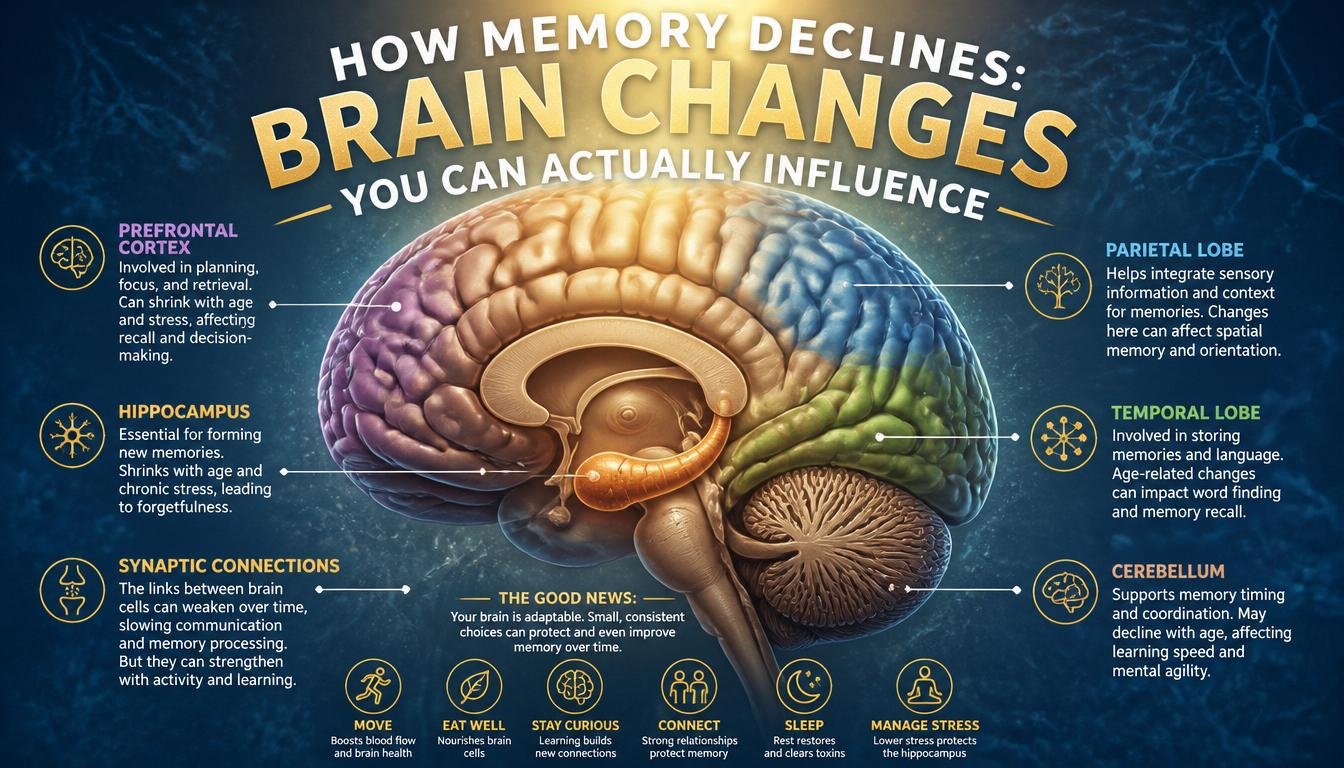
Understanding memory decline mechanisms used to be a guessing game, but in 2026, we know something the old textbooks never did: malfunctioning mitochondria, the tiny power plants inside your neurons, may trigger memory failure before a single brain cell actually dies. That detail changes everything because it means there is a window for reversal.
This is the story of how our understanding of memory loss evolved, and more importantly, which of those brain changes you can actually do something about.
| Question | Short Answer |
|---|---|
| What are the main memory decline mechanisms? | BDNF depletion, shrinking hippocampal volume, weakened synaptic integrity, sluggish glymphatic clearance, and tired mitochondria. |
| Can memory decline be slowed? | Yes. Preventative longevity strategies target the mechanisms directly, not just the symptoms. |
| What is the most important repair protein? | BDNF (Brain-Derived Neurotrophic Factor), the fertiliser for new synaptic connections. |
| Do brain-training apps fix memory decline? | No. Most are little more than games. Real change needs dosing, intensity, and measurable progress. |
| Is decline the same as disease? | No. Normal ageing loses 1-2% hippocampal volume a year. Disease accelerates it. |
For most of medical history, memory loss was treated as an inevitable cost of ageing. You got older, you forgot things, end of story.
Nineteenth and early twentieth century clinicians had no way to look inside a living brain. They saw the behaviour, the missed names and lost keys, and assumed the hardware was simply wearing out.
That assumption was wrong in one crucial way. The brain is a biological system, not a fixed machine that only degrades. But it would take decades of research to prove it.
The early model also lumped everything together. Normal age-related forgetfulness and genuine disease were treated as the same slope, just at different speeds. Untangling those two ideas became the first real breakthrough in mapping memory decline mechanisms.
When Alois Alzheimer described the sticky plaques and tangles in a patient’s brain in 1906, the field got its first physical villain. For nearly a century, amyloid build-up dominated the conversation about why memory fails.
The logic was tidy. Plaques accumulate, neurons choke, memory disappears.
This single-cause thinking shaped research funding for generations. It also produced a long string of disappointing drug trials that cleared amyloid but did not reliably restore memory.
The lesson was humbling and useful. Amyloid is part of the picture, but the memory decline mechanisms at work are plural, layered, and interacting. No single switch explains the whole thing.
The biggest shift came when researchers proved the adult brain rewires itself. Plasticity was not just a childhood phenomenon. It runs your whole life.
This reframed memory decline entirely. If the brain can build new connections, then decline is not a one-way street, and the right input can push back.
The brain you have today is not the brain you are stuck with.
Neuroscience is an exciting field, and that excitement sells. We are deliberately cautious about claims. But the evidence for structural plasticity is genuinely solid, and it is the foundation of every modern neurological recovery protocol.
The catch is that plasticity does not run on good intentions. Good intentions do not rebuild neural circuits. Dosing, intensity, and sequence do.

If neuroplasticity was the revolution, BDNF was its engine. Brain-Derived Neurotrophic Factor turned out to be the molecule that makes rewiring possible.
BDNF acts as a fertiliser for neurons, promoting new synaptic connections and protecting surviving tissue. When levels drop, the brain loses its capacity to repair and remember.
This was a turning point in understanding memory decline mechanisms. BDNF depletion is now treated as one of the central, addressable causes of age-related memory loss, rather than a footnote.
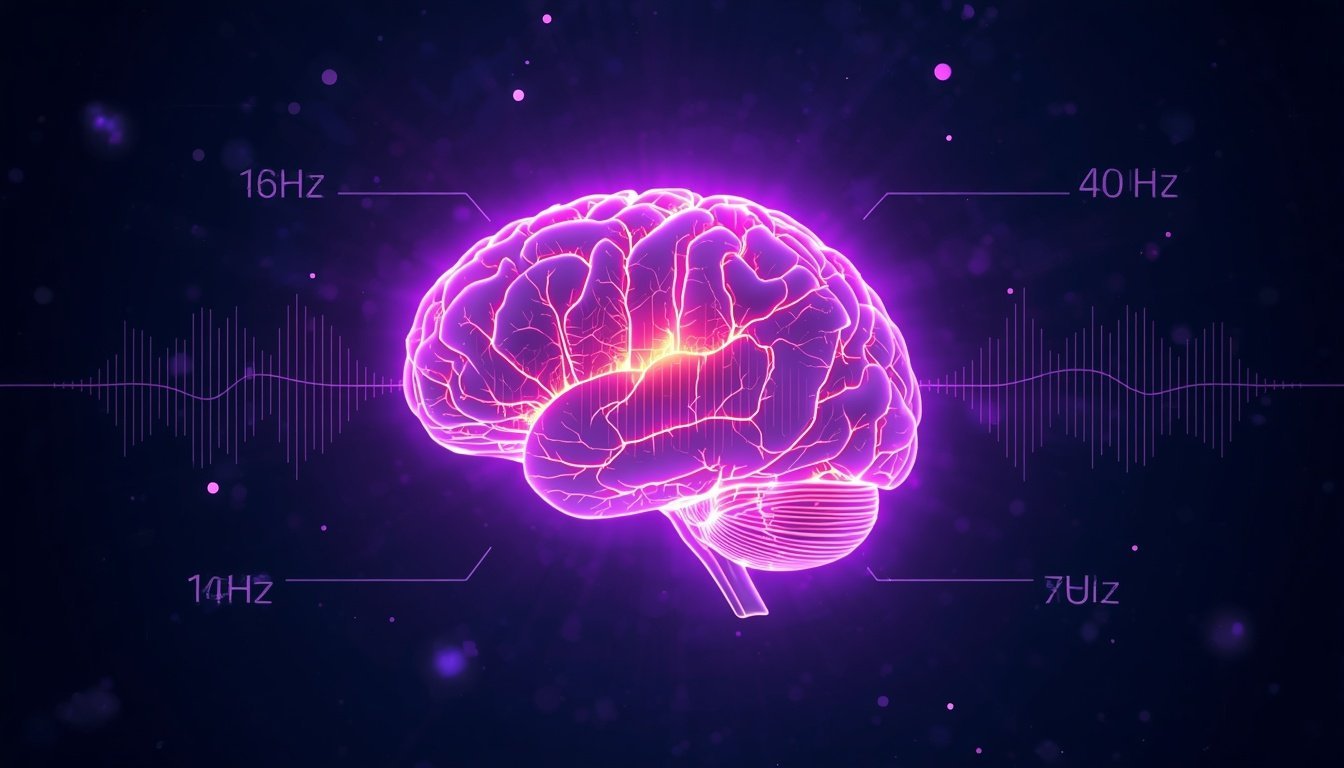
The practical upside is huge. Exercise, sleep, and targeted stimulation like the Genius Switch 40Hz gamma audio program (just $39) are all aimed at raising BDNF, the repair protein your memory depends on.
Modern imaging let researchers actually measure the hippocampus, the brain’s filing system for new memories. And the picture was sobering.
Even in healthy ageing, this region quietly shrinks year after year. In disease states, that shrinkage speeds up dramatically.
This gave us a measurable benchmark for separating normal ageing from accelerated decline. It also gave preservation programs a clear target: slow the shrink, protect the volume.
The good news buried in the data is that physical activity and learning actively grow hippocampal tissue. The same structure that wastes from neglect responds to the right load.
Memories do not live in single cells. They live in the connections between them, the synapses.
When synaptic integrity weakens, recall gets patchy long before any neuron dies. This is one of the quietest and earliest memory decline mechanisms, and it is heavily influenced by sleep.
Sleep is when synapses get pruned, reinforced, and consolidated. Skip it, and you sabotage the entire process of synaptic reinforcement.
One of the newest chapters in this history is the glymphatic system, discovered only in the last decade or so. It is essentially the brain’s waste-clearance network.
During deep sleep, this system flushes out the metabolic junk that accumulates while you think. When the glymphatic plumbing clogs, waste builds up and memory suffers.
This is why we treat sleep as non-negotiable and why protocols like 40Hz gamma light and sound therapy exist. They are designed to support that clearance process directly.

Explore four key brain factors linked to memory decline and how they interact. This infographic summarizes the mechanisms behind memory aging.
The 2026 frontier is energy. Researchers now believe tired, malfunctioning mitochondria can cause memory to falter while neurons are still alive and salvageable.
This is the most hopeful of all the memory decline mechanisms, because a recharged cell can recover. Death is permanent. Exhaustion is not.
It reframes memory loss as partly an energy crisis, not just a structural one. And energy is something you can influence with sleep, movement, and metabolic health.
Here is where history stops being academic. Every mechanism above has a lever you can pull.
You will never hear us promise to “reverse ageing” or “unlock 100% of your brain.” Those phrases belong in marketing copy, not in a clinical setting.
What we will say is this: the right inputs, delivered with proper dosing, genuinely move the needle. Modern neuro-rehabilitation is no longer guesswork; it is a measurable process built on rigorous evidence, clear dosing principles, and real follow-through.
And forget the gamified apps. Most brain-training apps are little more than games. You need measurable progress, not vibes. If you cannot see what is changing, you cannot optimize the programme.
The history of memory decline mechanisms is a story of moving from helpless fatalism to targeted, measurable action. We went from “you’re just getting old” to mapping BDNF, hippocampal volume, synaptic integrity, glymphatic clearance, and now mitochondrial energy.
Every one of those mechanisms gives you a lever. The choices you make about sleep, movement, and stimulation are not just helpful, they are biologically decisive.
You are not stuck with the brain you have today. Explore the full range of evidence-based protocols at Neuroplasticity Solutions and start influencing the mechanisms instead of accepting them.
The core memory decline mechanisms are BDNF depletion, hippocampal volume loss, weakened synaptic integrity, sluggish glymphatic waste clearance, and failing mitochondria. They interact, which is why no single drug or trick fixes memory loss on its own.
Some can. The 2026 mitochondrial research suggests memory failure often happens before cells die, leaving a real window for reversal if you recharge the system through sleep, exercise, and metabolic health.
Cognitively healthy older adults typically lose about 1% to 2% of hippocampal volume per year. That is the normal baseline that preservation programs aim to slow, not the accelerated loss seen in disease.
No. Most apps are little more than games and do not deliver the dosing or intensity needed to influence real memory decline mechanisms. Measurable, structured protocols beat gamified vibes every time.
BDNF, or Brain-Derived Neurotrophic Factor, is the repair protein that acts like fertiliser for neurons. Low BDNF is one of the central memory decline mechanisms, which is why raising it through exercise and gamma stimulation is a priority.
Absolutely. Sleep drives synaptic reinforcement and powers the glymphatic plumbing that clears brain waste. Twenty-four hours awake impairs your thinking as much as a 0.10% blood alcohol level.
Start by targeting the mechanisms you can influence: prioritise deep sleep, raise BDNF through movement, and consider evidence-based tools like 40Hz gamma protocols. The preventative longevity strategies page is a practical place to begin.