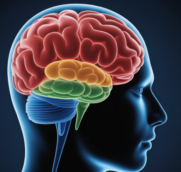

Cognitive flexibility is no longer a soft concept or a buzzword, it is a measurable neurological capacity tied directly to performance, recovery, and long-term brain health. Recent analysis of 13,550 documents on mental flexibility shows just how intensely this field has been studied, and how central cognitive flexibility has become to understanding how the brain adapts under pressure.
| Question | Answer |
|---|---|
| What is cognitive flexibility? | The ability to shift thinking, adapt to new rules, and update behavior based on changing demands. |
| How do you improve cognitive flexibility? | Through structured cognitive challenges, aerobic exercise, and targeted protocols like those outlined in synaptic plasticity habit frameworks. |
| What causes cognitive rigidity? | Low stimulation at the edge of ability, poor sleep, and lack of novelty reduce structural plasticity. |
| Do brain games improve flexibility? | No. Static difficulty and predictable puzzles fail to drive measurable change. |
| What role does BDNF play? | BDNF acts as the brain’s repair protein, supporting neurogenesis and adaptive rewiring. |
| Are there tools for faster gains? | Yes. Evidence-based systems like tDCS protocols can prime networks when paired with training. |
Cognitive flexibility is the brain’s ability to shift between mental sets, update strategies, and override outdated rules. It sits at the core of executive function, alongside working memory and inhibitory control.
Not entertainment, but adaptation. Not trivia recall, but real-time recalibration under pressure.
When people search for cognitive flexibility examples, they are usually describing situations like switching tasks midstream, adjusting to unexpected feedback, or solving problems with incomplete information. These are not abstract skills, they are measurable outputs of neural efficiency.
In 2026, cognitive flexibility is not optional for professionals, patients, or aging populations. It is the difference between maintaining performance and drifting into cognitive rigidity.
We see this clearly in modern cognitive performance frameworks, where adaptability under uncertainty is prioritized over raw memory.

Whether you are managing complex workflows or recovering from neurological disruption, cognitive flexibility determines how quickly you can update internal models and act on new information.
You need measurable progress, not vibes. Most advice around cognitive flexibility strategies fails because it ignores intensity and dosing.
The following strategies align with published research and clinical neuro-rehabilitation principles:
Static difficulty, predictable puzzles, and passive scrolling through trivia do not meet that threshold.
This is where confusion often enters the conversation. Terms like manifestation manifestation techniques BDNF BrainWave boost brain power naturally get grouped together, but they are not equivalent.
We treat Brain-Derived Neurotrophic Factor as your brain’s repair protein, supported by training, movement, and lifestyle. Not intention alone.

Manifestation manifestation techniques BDNF BrainWave boost brain power naturally only become relevant when they intersect with biology. That means measurable increases in BDNF, improved synaptic density, and repeatable performance gains.
Anything else belongs in marketing copy, not in a clinical setting.
If you are searching for cognitive flexibility tasks, focus on transfer, not entertainment.
The most effective formats include:
We see this approach reflected in neurological recovery protocols, where flexibility is trained as a core functional outcome, not a side effect.

Cognitive rigidity in adults is not a personality trait. It is a measurable decline in adaptive processing.
This shows up as slower task switching, resistance to new information, and reliance on outdated strategies. Left unaddressed, it compounds into broader executive dysfunction.
The gap is not awareness. It is execution.
Most people know they should challenge their brain. Few apply structured, progressive overload to cognitive systems the same way they would to physical training.

Research measures how effectively individuals can shift their mindset when presented with new rules.
Modern neuro-rehabilitation is no longer guesswork. It is a measurable process built on rigorous evidence, clear dosing principles, and real follow-through.
To improve cognitive flexibility, we focus on:
We also integrate insights from career longevity cognitive training, where adaptability directly impacts performance under pressure.
The specialized web-based cognitive systems that show strong clinical results are built around a fundamentally different design philosophy: make it scientifically rigorous first, then make it accessible.
Devices like tDCS can support cognitive flexibility when used correctly, but they are not standalone solutions.
The device primes neural circuits. The training drives change.
This is where manifestation manifestation techniques BDNF BrainWave boost brain power naturally gets misapplied again. Without structured input, stimulation alone does not produce lasting flexibility gains.
We return to fundamentals because they work. The five inputs below consistently show measurable effects on synaptic plasticity and flexibility:

These are not general wellness tips. They are inputs that influence BDNF, neurogenesis, and structural plasticity.
Again, manifestation manifestation techniques BDNF BrainWave boost brain power naturally only becomes meaningful when anchored to these biological mechanisms.
Neuroplasticity Solutions was founded on a simple but radical premise: the brain you have today is not the brain you are stuck with.
Cognitive flexibility can be improved, measured, and sustained, but only through structured, evidence-based protocols. Not passive apps. Not vague strategies. Not vibes.
Whether you are addressing cognitive rigidity in adults, building cognitive flexibility skills for performance, or designing long-term cognitive longevity plans, the standard remains the same. Evidence over enthusiasm.
Cognitive flexibility is the ability to adapt your thinking when situations change. It allows you to shift strategies, update decisions, and avoid cognitive rigidity.
You can improve cognitive flexibility by using structured, high-intensity cognitive tasks combined with aerobic exercise and proper sleep. Quick gains come from consistency and measurable progression.
The best cognitive flexibility tasks involve rule switching, dual-tasking, and problem-solving under pressure. These challenge your brain at the edge of its current ability.
Cognitive rigidity in adults is often caused by lack of challenge, poor sleep, and repetitive environments. It reflects reduced neuroplasticity and lower adaptive capacity.
Yes. BDNF supports neurogenesis and synaptic repair, making it essential for improving cognitive flexibility. It increases through exercise, learning, and targeted training.
Only when grounded in biology. Without measurable increases in BDNF and structured training, these approaches do not meaningfully improve cognitive flexibility.
Yes. Cognitive flexibility directly impacts decision-making, adaptability, and learning speed, all of which are critical for staying competitive in modern work environments.