If you are noticing memory slip-ups in 2026, you are not alone. 7.4 million Americans age 65 and older are living with clinical Alzheimer’s dementia in 2026, and that scale is exactly why a real memory repair protocol has to be evidence-based, measurable, and repeatable, not just “brain exercises” you forget to do.
| What we focus on | Why it matters in 2026 | Where to start |
|---|---|---|
| Dosing + baseline tracking | A memory repair protocol should show progress you can actually measure. | Memory preservation protocol with measurable progress |
| BDNF as the anchor | We target biology, not vibes, with BDNF activation before training. | Genius Switch (40Hz gamma audio) as BDNF priming |
| Adaptive cognitive training | Memory repair protocols rely on progressive practice, not one-size-fits-all. | Personalized cognitive longevity protocols |
| Memory retention habits | Small repeatable habits compound into durable retention. | Memory retention habits that actually work |
| Recovery and brain injury timing | Early targeted treatment can reduce later decline risk. | Restore memory after a brain injury, evidence-first |
| Brainwave and neurofeedback options | 2026 protocols increasingly use EEG and brainwave state tuning for attention and recovery readiness. | Neurofeedback for executive function in 2026 |
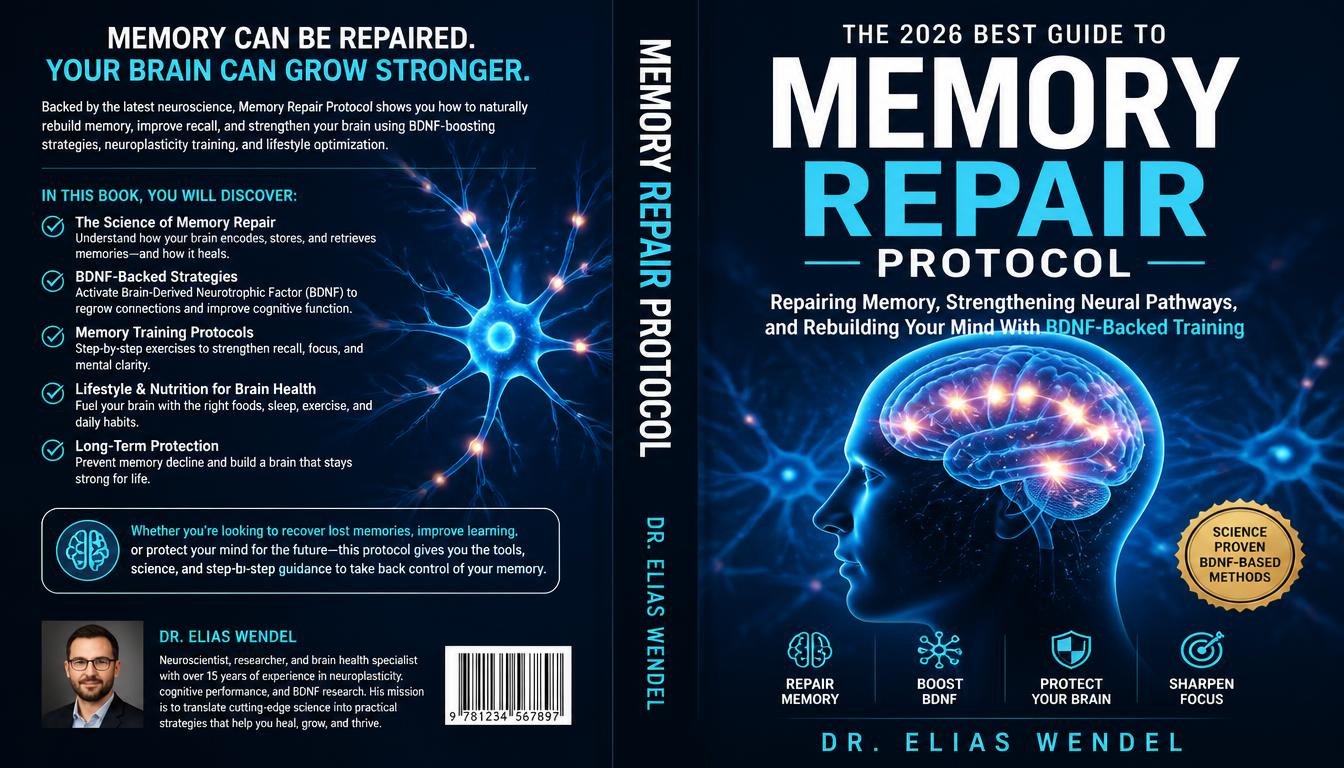
A memory repair protocol is a structured, evidence-based plan designed to improve memory function through measurable change, not just “keep your brain busy.” In 2026, the big difference we see is that good protocols treat memory like a trainable system with a biological target, a training dose, and progress tracking.
On our side, we anchor the protocol in BDNF, because it is repeatedly positioned as a brain’s repair and plasticity-related signal within memory preservation frameworks. Then we layer in structured training and a practical lifestyle foundation (sleep, nutrition, stress, and attention readiness) so the gains are more likely to hold.
Here is what we do not do. We do not rely on vague “brain games” that you can skip for a week and still expect results. We also avoid one-and-done challenges. Memory repair protocols in 2026 are designed around consistency, progression, and adaptive difficulty.
Simple rule: If a plan cannot tell you what you do each day, what you measure, and how it progresses, it is not really a memory repair protocol.
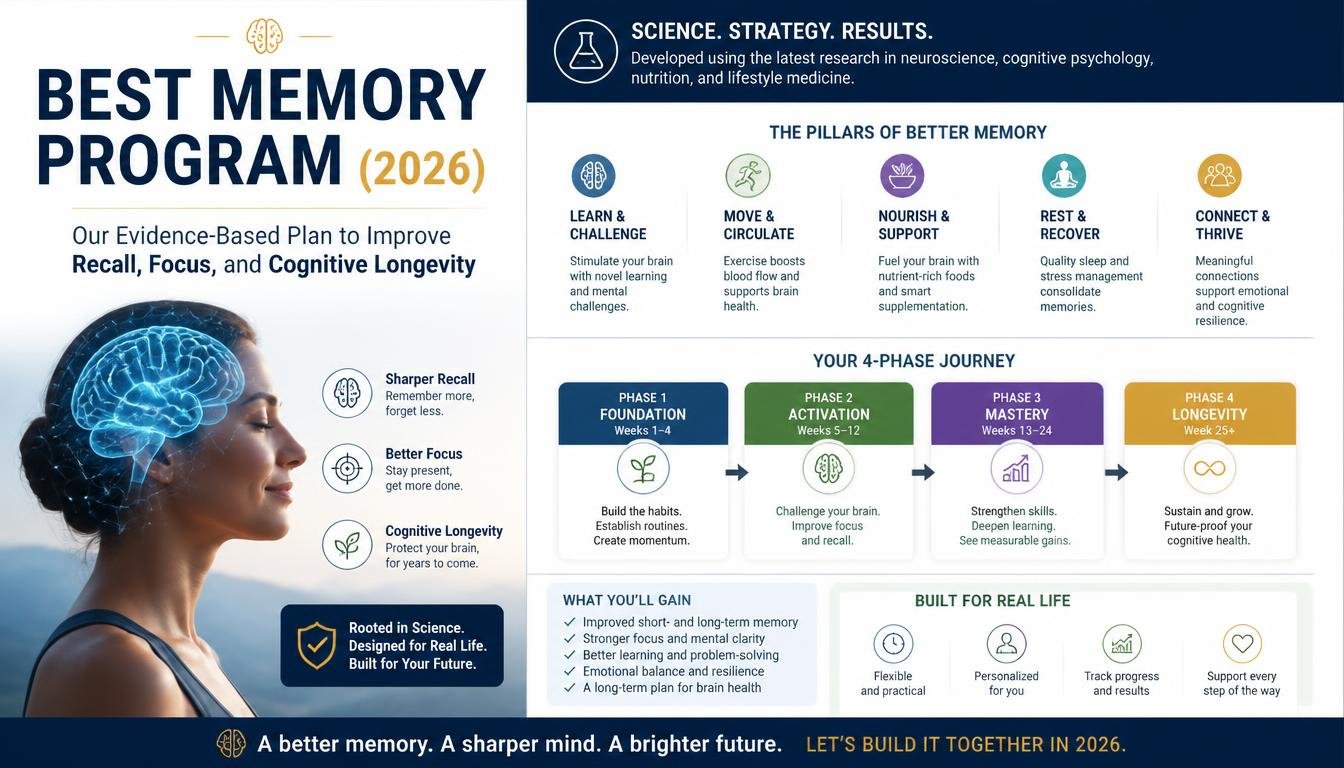
If you want a refresher on how we approach protection and performance in the first place, this companion guide helps you understand the “program” side of the same framework: a clinical, evidence-based plan to protect recall and focus in 2026.

One reason people lose momentum is they jump straight into training without setting the right brain state. In a memory repair protocol, we treat priming as the entry point, then we stack structured cognitive work on top.
In our approach, BDNF is the anchor. That is why many of our memory repair protocol frameworks reference BDNF activation before adaptive training. A practical example is Genius Switch, which uses 40Hz gamma audio to prime BDNF production, setting the stage for the training phase.
We also keep this realistic. Genius Switch is positioned as an entry step inside a broader memory and preservation framework, not a standalone cure. The “protocol” part still matters most: baseline assessment, dosing principles, and progression across time.
Want the product details in plain English? Here is the page we use as our reference for the actual priming approach: Genius Switch: Activate Your Brain’s BDNF. Pricing on that product page shows $39.

Even the best memory repair protocol fails if daily life fights it. That is why we treat memory retention habits as the maintenance layer that makes training outcomes more durable.
In 2026, the habits we recommend are simple but not casual: spaced repetition and active recall, plus sleep, nutrition, and stress management. Spaced repetition beats cramming, and active recall strengthens the pathway you are trying to repair.
We also like to keep this easy to start. Memory retention habits are small, repeatable actions. You do them consistently, and you scale them when the routine feels stable.
If you want the full habit breakdown, read: Memory Retention Habits That Actually Work in 2026.
Bonus angle for 2026: the more you reduce “mental noise,” the more your training can land. That is where a digital detox style reset can help with attention readiness, especially if you feel constantly scattered.
We know “manifestation manifestation techniques” can sound random, so here is our grounded take for a memory repair protocol. We do not treat manifestation like magic. We use it as a behavioral brain-state cue, then we connect that cue to real training readiness.
In 2026, digital overwhelm can suppress the conditions you need for learning and memory. That is why we pair a reset window with BDNF and brainwave science. Our digital detox approach references brainwave-driven priming during the detox window, aimed at improving attention and training readiness for what comes next.
Where does the “manifestation” piece fit? We recommend using manifestation as a focused intention ritual immediately before structured cognitive training. It is basically a start-line routine. You set an outcome, then you do the work. That combination tends to make people stick with the protocol longer.
If you want the full structure, see: Digital Neuro Detox 2026: The science-backed “brain rot” reset.
And yes, we tie this to the phrase people search for when they want a “natural” feel: manifestation manifestation techniques BDNF BrainWave boost brain power naturally.
When memory loss follows a brain injury, your repair protocol needs a different emphasis. It is still about BDNF and plasticity-related change, but timing and structured dosing become even more important.
Our evidence-first framing highlights that targeted medical treatment within the first week after brain injury is biologically decisive for reducing later cognitive decline risk. After that, recovery focuses on measurable neuroplasticity via adaptive training.
We also treat recovery like a process with checkpoints. Memory recovery is described as measurable and built on structured dosing principles, not random effort.
If your goal is “restore memory after a brain injury with an evidence-first plan,” this guide is the one we point people to: Effective Ways to Restore Memory After a Brain Injury: The 2026 Evidence-First Guide. It also references a Genius Switch Protocol (40Hz gamma priming) as part of the recovery-oriented pathway, with Genius Switch priced at $39 on that page.
For the neurofeedback angle, see: Neurofeedback for Executive Function in 2026.
Seniors in 2026 need memory repair protocols that are specific, not generic. One reason many approaches fail is that they rely on effort alone instead of dosing and measurable outcomes.
Our “best for seniors” framing emphasizes that adaptive, structured cognitive training that drives BDNF production is central. It also highlights that most memory apps do not meet clinical standards, mainly because they do not use structured dosing principles.
We also keep the entry point practical: Genius Switch plus adaptive training, with measurable progress tracking.
Want the comparison style breakdown for what actually preserves memory in seniors? Read: Top Memory Preservation Programs for Seniors in 2026: The Evidence-Based Ranking.
And if you want to see the longer-term model we use for life-stage tailoring, we also recommend the personalization framework: Personalized cognitive longevity protocols.
Not everyone needs the same memory repair protocol at the same time. That is why we like personalization and “era-based” planning, especially in 2026 when people live longer with more variation in health.
Our era-based brain health mapping matches protocol targets to life stage, including foundation years, performance years, preventative longevity, and recovery era. The point is dosing and evidence fit, not one static routine forever.
If you want that full framework, check: How we track your brain through every decade in 2026 (era-based brain health mapping).
Also, if you are someone who wants preventative strategies that align with the same biology-led approach, use this guide: Best preventative longevity strategies to extend healthspan.
Here is a practical checklist we would follow if we were starting a memory repair protocol in 2026 and wanted momentum fast.
| Day(s) | Protocol action | What you should notice |
|---|---|---|
| Days 1-2 | Pick a baseline habit track (sleep timing, recall attempts, stress triggers). | You stop guessing and start measuring. |
| Days 3-4 | Add active recall + spaced repetition, 10-20 minutes daily. | Better retrieval, less “tip-of-the-tongue” fatigue. |
| Days 5-6 | Use a pre-training brain-state routine (intention + reduced distractions). This can include manifestation manifestation techniques BDNF BrainWave boost brain power naturally as a cue. | More consistent focus during practice. |
| Day 7 | Review what worked, adjust difficulty, and keep the plan moving. | You get real progress instead of repeating the same week. |
If you want the habit-first plan spelled out, our habit guides are the simplest starting points: Memory Retention Habits That Actually Work in 2026.
A memory repair protocol in 2026 is not a vague routine. It is a structured plan built around BDNF activation, adaptive cognitive training, and memory retention habits that keep your learning “online” day after day.
When we combine priming (like our Genius Switch 40Hz gamma audio entry point at $39), spaced practice, sleep and stress management, and a consistent brain-state routine (including manifestation manifestation techniques BDNF BrainWave boost brain power naturally as a focus cue), we get something practical and measurable. That is the real goal of a memory repair protocol, repair your memory with a plan you can actually stick to.
A memory repair protocol is a structured plan with dosing principles, baseline assessment, and adaptive progression. It focuses on measurable outcomes and often targets BDNF activation to support memory training, instead of relying on generic brain games.
In 2026, BDNF-first memory repair protocols are popular because they connect training to a biological anchor and then measure results over time. Our approach emphasizes BDNF priming (like 40Hz gamma audio) paired with structured training, which is where the protocol “action” happens.
Genius Switch is positioned as a primer inside a broader memory preservation and memory repair framework, not a standalone cure. If you use it as part of adaptive training and retention habits, it can be a useful entry step, and it is priced at $39 on the relevant pages.
Memory retention habits are the daily layer that supports what your training is building. In a memory repair protocol, they typically include spaced repetition, active recall, and consistency with sleep, nutrition, and stress management so the gains hold.
Yes. A structured digital neuro detox in 2026 can reduce overload, improve attention readiness, and make it easier to stay consistent with your training. It is often paired with brainwave-oriented or neurofeedback-style readiness prep.
For recovery, timing and dosing matter. Our evidence-first framing highlights that targeted medical treatment in the first week after brain injury can be biologically decisive, then recovery work uses BDNF-focused repair principles and adaptive cognitive training.