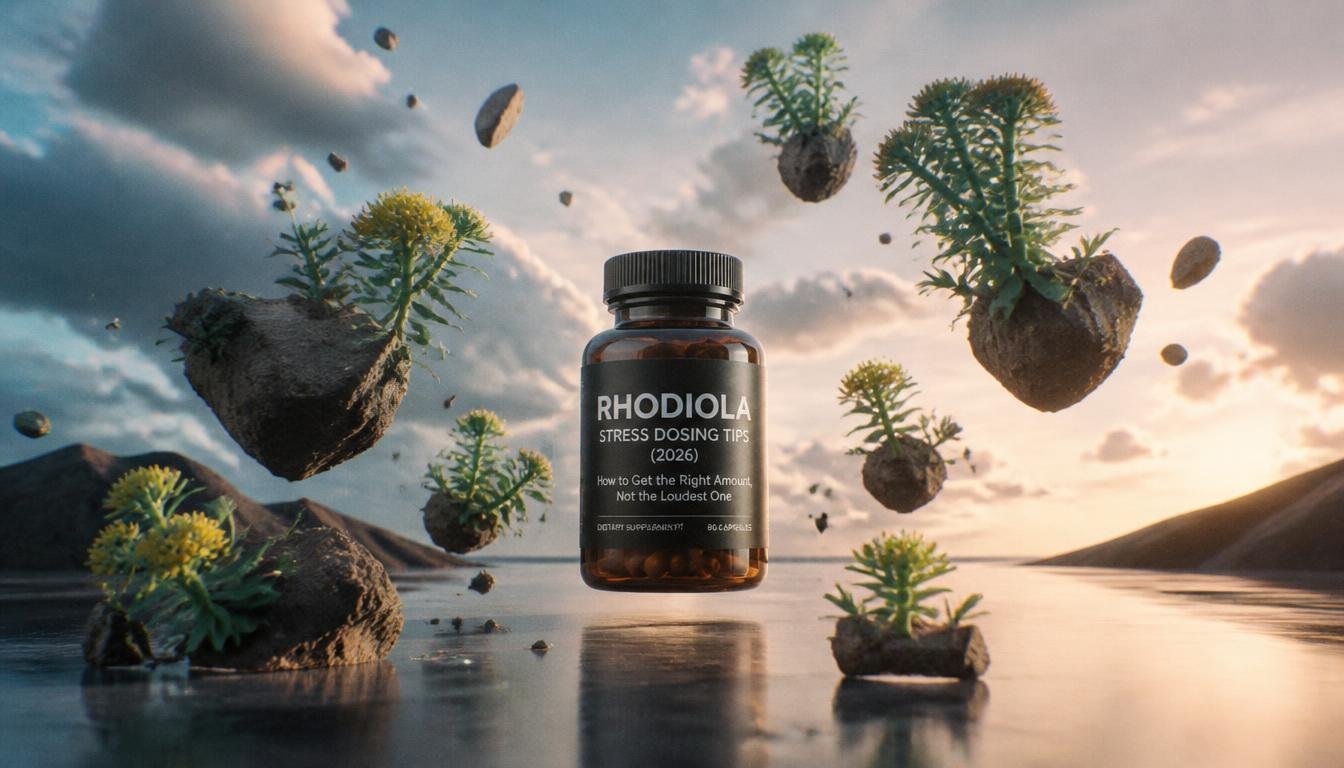
If you are thinking about Rhodiola Stress Dosing Tips in 2026, start with this reality check: many people end up taking way more than they need, then interpret the “nothing happened” result as a failed supplement. A more evidence-based approach is boring on purpose, structured around measurable dosing principles and a clear plan for how you will respond.
| What to do | Why it matters (in 2026 terms) |
|---|---|
| Start low, then adjust. | Rhodiola can show a bell-curve response, so “more” is not always “better.” |
| Use a standardized extract. | Many clinical protocols rely on consistent ratios like 3% rosavins and ~1% salidroside. |
| Consider split dosing. | “Even coverage” across the day can fit real schedules and reduce aftereffects for some people. |
| Track fatigue and stress, not vibes. | Neuro-rehabilitation in 2026 is measurable, so your supplement plan should be too. |
| Pair with brain-friendly recovery. | Supplements are not a substitute for sleep, workload design, and cognitive recovery. |
| Know who should ask first. | Pregnancy, bipolar disorder, and medication interactions require medical input. |
Daily rhodiola intakes vary widely from low baseline support to high end dosing.
When people ask for Rhodiola Stress Dosing Tips, they usually mean one of two things: they want help with physical stress symptoms (fatigue, exhaustion, mental weariness), or they want help with perceived stress and emotional strain. Both show up in clinical research, but your dosing decision should reflect the specific effect you are targeting.
Modern neuro-rehabilitation is no longer guesswork. It is a measurable process built on rigorous evidence, clear dosing principles, and real follow-through. You are trying to move your nervous system toward a more stable state, not just “feel something” after a pill.
Also, rhodiola is often discussed alongside BDNF, because training, movement, and lifestyle are treated as the biological levers for repair and plasticity. We treat BDNF as your brain’s “repair protein,” supported by training, movement, and lifestyle. Your rhodiola plan should complement that, not replace it. (If you want the broader framing, start with Activate Your Brain’s BDNF.)
Let’s get practical. The most commonly cited human ranges for rhodiola extracts used in health studies fall in the 200 to 600 mg/day band, and many protocols also describe split-dosing schedules like 200 mg twice daily. The exact best dose is not universal, but the framework is consistent.
Here is how we translate that into Rhodiola Stress Dosing Tips you can actually use in 2026.
And yes, that means “more” is not the default assumption. Experts recommend not exceeding certain thresholds because rhodiola can show a bell-curve response, meaning higher doses may become ineffective instead of improving outcomes.
You do not need a complicated stack. You need measurable progress, not vibes. In 2026, the cleanest way to apply Rhodiola Stress Dosing Tips is with a dosing ladder, where each step is deliberate and trackable.
Here is a practical ladder many people can adapt, using low-to-moderate entry points and then deciding whether to adjust.
We recommend you adjust based on outcomes you can observe, like improved ability to recover after work, reduced irritability, or reduced “crash” fatigue. If you see no benefit after an appropriate trial, your next move is not “double it blindly.” Your next move is to reassess timing, quality, and fit.

A “reset and measure” mindset is often what separates dosing plans that work from those that feel random.
Evidence over enthusiasm. Those phrases are not slogans. They are how we keep protocols honest.
If you want Rhodiola Stress Dosing Tips that lead to decisions, you need a measurement routine. In practice, that means you track the same signals daily for a short window, then decide based on change, not anticipation.
You can also use established stress markers from research as a conceptual anchor, because clinical studies often evaluate perceived stress and fatigue outcomes over several weeks. For example, a trial using 576 mg/day reported a 30% reduction in fatigue symptoms over four weeks, and that kind of magnitude is exactly what you should aim to verify in your own experience.
One reason people abandon rhodiola is timing. They start, feel nothing after a few days, then switch products or doses without a real trial. In 2026, the better approach is to follow a structured adjustment window.
Research summaries include findings like rapid improvement in stress-associated symptoms within 3 days for certain observed measures, but that does not mean every person experiences the same timeframe or that every dosing level yields the same quick effect. Your plan should include both an early check and a longer confirmation.
Here are dosing decisions we see repeatedly when people use rhodiola for stress. This is where Rhodiola Stress Dosing Tips should become personal, because your schedule and stress pattern determine the best timing.
And do not ignore the non-supplement variables. If you are still feeding your brain constant cognitive overload, you can easily misattribute what is actually an environmental stress issue. That is why we also talk about structured resets like Digital Neuro-Detox 2026, and why our management strategies emphasize brain-friendly workload design. (Reference: brain-friendly management strategies.)
This section matters because Rhodiola Stress Dosing Tips are only useful if you can take rhodiola safely.
We cannot replace medical advice. But we can give you the common decision points you should respect in 2026.
Also, if you experience side effects such as headache, nausea, or sleep disruption, that is a dosing signal. Reduce dose, shift timing, or stop and reassess. In a measured protocol, side effects are information, not a mystery.
Here is the part people often skip. Rhodiola can support the stress response, but the nervous system still needs real recovery, not just chemical assistance.
In 2026, our framework emphasizes measurable brain health habits. That includes protecting sleep consistency, designing workload for attention recovery, and avoiding cognitive overload patterns that silently keep stress elevated.

Rhodiola Stress Dosing Tips in 2026 should follow one rule: use evidence-based dosing principles, then verify your response with tracking. Most protocols land in the 200 to 600 mg/day neighborhood, with many people starting lower (often around 50 mg) and adjusting based on fatigue, perceived stress, and recovery quality.
You need measurable progress, not vibes. If rhodiola helps, you will see it in your ability to recover and sustain mental clarity under load. If it does not, you change the plan with the same discipline you would use in any neuro-rehabilitation protocol, guided by the gap between published research and real-life outcomes.
There is no single “best” dose, but many evidence-based protocols use 200 to 600 mg/day as the studied range, often with consideration for standardized extracts. For Rhodiola Stress Dosing Tips, we recommend starting lower (for example around 50 mg) and adjusting only after you track stress and fatigue outcomes for at least a couple of weeks.
Many standard supplement recommendations describe split regimens like 200 mg twice daily, which can help match your stress pattern across the day. If your goal is stress fatigue support, use Rhodiola Stress Dosing Tips to test split dosing while monitoring sleep and perceived stress changes.
Some summaries report improvements in stress-associated symptoms within 3 days, but that is not guaranteed for everyone or every dose. For Rhodiola Stress Dosing Tips, use an early check in the first week and then confirm with tracking over 2 to 4 weeks for a clearer decision.
Rhodiola can show a bell-curve response, meaning higher doses are not automatically better. That is why our Rhodiola Stress Dosing Tips lean toward laddering from lower doses and avoiding maximal dosing unless your measurements show you need it.
Many clinical trials use rhodiola standardized to ratios such as 3% rosavins and 0.8% to 1% salidroside. If you are applying Rhodiola Stress Dosing Tips, standardization helps you compare your product to what research protocols used.
Yes. If you are pregnant or breastfeeding, have bipolar disorder or mood instability, or take medications that affect arousal, mood, or blood pressure, you should ask a clinician before using rhodiola. In Rhodiola Stress Dosing Tips, side effects like sleep disruption or overstimulation are dosing signals, not something to ignore.
Rhodiola can support stress biology, but it is not a substitute for recovery design. If you want the highest chance of consistent results in 2026, pair your Rhodiola Stress Dosing Tips with brain-friendly workload management and structured recovery like those outlined in Digital Neuro-Detox 2026.