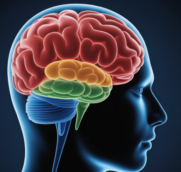

The average human attention span on a screen has collapsed to 47 seconds, down from two and a half minutes back in 2004. That statistic is the entire premise behind what we call the streaming brain, a state of digital cognitive load and focus fragmentation built by notification pings, split-screen multitasking, and endless scrolling that has become the default operating condition for millions of people in 2026.
We are not here to sell you a meditation app. We are here to walk through what the research actually says about digital cognitive load and focus fragmentation, and what a clinically grounded recovery protocol looks like once the scrolling stops.
| Question | Answer |
|---|---|
| What is the streaming brain? | Our term for the neurological state produced by chronic digital cognitive load, marked by shortened attention windows and reduced prefrontal recovery time between tasks. |
| Does digital cognitive load actually change brain function? | Yes. Repeated task switching measurably taxes the prefrontal cortex and lowers the amount of BDNF available for repair, according to research covered in our cognitive performance archive. |
| Can brain training apps fix focus fragmentation? | Static difficulty, predictable puzzles, and passive scrolling through trivia don’t meet the training threshold the brain needs. Structured, adaptive protocols do. |
| How long does it take to recover attention after an interruption? | Roughly 23 minutes and 15 seconds, on average, according to attention-span research we reference throughout this guide. |
| Is a digital detox enough on its own? | A one-week digital detox is a start, not a cure. Lasting change requires dosed, measurable training layered on top of it. |
| Are postpartum psychosis and digital burnout the same thing? | No, and we explain why later in this guide, including what the neurobiology of postpartum psychosis in 2026 tells us about severe versus everyday cognitive overload. |
| Where do I start? | Baseline assessment first, then a protocol matched to your specific brain. See our trending topics in neuroplasticity section for context on what’s current. |
We use “the streaming brain” to describe a specific, measurable pattern. Constant notifications, tab switching, and short-form video consumption train the brain to expect novelty every few seconds, and the brain adapts to that expectation.
That adaptation is not a personality flaw. It is neuroplasticity working exactly as designed, just pointed in a direction nobody chose on purpose.
Digital cognitive load and focus fragmentation are two sides of the same coin. Load is the volume of competing inputs; fragmentation is what happens to sustained attention once that load exceeds what the prefrontal cortex can process in sequence.

The average screen-based task now holds attention for a fraction of the time it once did.
Task switching feels efficient. It is not.
Every time you move from an email to a chat notification to a video tab, the prefrontal cortex pays a re-orientation cost. Research on knowledge workers puts that cost at roughly 40% of otherwise productive time, lost purely to the cognitive load of shifting between digital tasks.
Knowledge workers now face an average of 275 pings per day from meetings, emails, and chats during core working hours. Add in the average of 205 phone checks per day most Americans report, and you get a prefrontal cortex that never gets a clean, uninterrupted block of processing time.
Multiply that by 275 daily pings and the arithmetic stops working in your favor. This is the mechanism behind the streaming brain, and it is why treating digital cognitive load and focus fragmentation as a willpower problem misses the biology entirely.
Short answer: usually not.
Static difficulty, predictable puzzles, and passive scrolling through trivia don’t meet the threshold the brain needs to rebuild attention capacity. Real change happens at the edge of current ability, not in a comfortable, repeatable loop that a casual app is designed to keep you inside of.
We treat Brain-Derived Neurotrophic Factor as your brain’s “repair protein,” supported by training, movement, and lifestyle, not by tapping the same matching game every morning. Our breakdown of what separates rigorous protocols from consumer apps goes deeper in Brain Training Technologies in 2026, where we walk through adaptive, data-driven training that actually pushes neuroplastic change.


Tools like 40Hz gamma audio protocols exist to prime BDNF release before structured cognitive work, not to replace it. That distinction matters, and it’s one most consumer marketing skips entirely.
Home-based EEG training has grown considerably in 2026, largely because people want objective brain data instead of a subjective “I feel sharper” report. A professional-grade EEG headset gives you an actual read on cortical activity, which matters when you’re trying to prove a protocol is working rather than just hoping it is.
Our full breakdown of what qualifies as professional-grade is in The 2026 Guide to Professional-Grade EEG Headsets. It covers who these devices actually serve, from stroke survivors to executives managing chronic digital cognitive load.

Transcranial direct current stimulation (tDCS) is another tool people reach for, and it can genuinely prime the brain for learning when it’s paired with deliberate practice. It is not a shortcut around the practice itself.
Dosing, electrode placement, and structured training all determine whether tDCS helps or actively hinders performance. We cover the safety data and dosing principles in our tDCS safety guide, because not every kit on the market deserves a place near your prefrontal cortex.
Vagus nerve stimulation (VNS) sits at an interesting crossroads in 2026. Clinical, hospital-grade VNS systems are a different category entirely from the consumer wearables sold as “focus” or “calm” devices.
We draw a hard line here. Consumer wearables are wellness tools, not medical treatments, and treating them interchangeably is exactly the kind of marketing conflation we try to avoid.
Where VNS earns its place in a legitimate protocol is through its potential link to BDNF and structural plasticity, which is the same repair protein we return to throughout every conversation about recovering from digital cognitive load. Our full comparison of clinical systems versus wearables is in Vagus Nerve Stimulation Devices: Clinical Systems vs Consumer Wearables.
We want to be precise here, because precision is the whole point of evidence-based practice.
Postpartum psychosis is not digital burnout. It is a severe, rapid-onset psychiatric emergency involving profound postpartum psychosis brain changes, and it has nothing to do with screen time or notification volume.
The public conversation around postpartum psychosis intensified through 2026 as coverage of the Lindsay Clancy trial brought the neurobiology of postpartum psychosis into mainstream discussion for the first time in a serious clinical context. That case matters because it forced a public reckoning with how severe hormonal and neurological shifts after childbirth can produce psychosis, distinct from the fatigue, distraction, and attention fragmentation that come from chronic overstimulation.
We flag this distinction because we see clients confuse the two. Feeling foggy and fragmented after a week of doom scrolling is real, but it is a different neurological state, with a different mechanism and a different treatment path, than a postpartum psychiatric emergency requiring immediate psychiatric care.
Evidence over enthusiasm, and precision over panic. Not every cognitive symptom belongs to the same diagnosis.
Sometimes the intervention that actually works isn’t a device at all. It’s distance.
Blue Zone-inspired retreats blend longevity principles with structured, clinically supervised neuro-training, and short stays have shown measurable improvements in sleep and mood in people carrying chronic digital cognitive load.
The best programs personalize the intensity and duration around your specific brain, not a generic wellness itinerary. Full detail on cost ranges and outcomes is available in Blue Zone-Inspired Retreats: The Best Locations for Supervised Neuro-Training.
It is possible, and it is not marketing when the mechanism is followed correctly.
BDNF responds to aerobic exercise, quality sleep, structured cognitive challenge, and specific auditory protocols like 40Hz gamma entrainment. None of that happens through passive consumption of content, which is precisely the behavior driving the streaming brain in the first place.
The gap we exist to close is between what published research says raises BDNF and what the unregulated consumer market claims does. Those are frequently not the same list.
Anecdotally and biologically, yes.
Gen Z now spends an average of 7 hours and 43 minutes on smartphones daily, and social media platforms are engineered around a completion rate advantage for short videos: 76.4% completion for clips under 15 seconds versus just 41.8% for videos between 31 and 60 seconds. Content creators live inside that incentive structure professionally, which means their baseline attention window is being actively trained toward the shortest possible unit.
That 32% recovery number is real, but it is also incomplete. It gets you back to a baseline, not to a genuinely stronger attention system, which is why detox alone is a starting point rather than a full protocol.
Baseline assessment. Always.
You need measurable progress, not vibes, and you cannot measure progress without knowing where you started. That means an objective read on attention span, reaction time, and where your specific brain is losing the most ground to fragmentation.
From there, protocols get built around dosing, not enthusiasm. Structured cognitive training, BDNF-supportive habits, and, where appropriate, devices like tDCS or EEG feedback get layered in against a real baseline, tracked over weeks, not vibes-checked after one good night’s sleep.
Modern neuro-rehabilitation is no longer guesswork for digital cognitive load any more than it is for stroke recovery or memory preservation. It is a measurable process built on rigorous evidence, clear dosing principles, and real follow-through.
Constant notifications, tab switching, and short-form video consumption train the brain to expect novelty every few seconds, which fragments sustained attention over time. The result is digital cognitive load and focus fragmentation that shows up as difficulty concentrating on longer tasks.
A one-week digital detox restores roughly 32% of lost attention capacity, which is meaningful but incomplete. Lasting recovery from digital cognitive load and focus fragmentation requires structured, dosed cognitive training layered on top of reduced screen exposure.
Most consumer apps rely on static difficulty and passive engagement, which doesn’t meet the threshold needed to reverse focus fragmentation. Adaptive, evidence-based protocols that push the brain to the edge of its current ability tend to outperform casual games significantly.
No. Postpartum psychosis involves severe, rapid postpartum psychosis brain changes tied to hormonal and neurological shifts after childbirth, distinct from the attention fragmentation caused by chronic screen overstimulation. Coverage of the Lindsay Clancy trial in 2026 helped bring public attention to the neurobiology of postpartum psychosis specifically, separate from everyday digital fatigue.
tDCS can prime learning when paired with deliberate, structured practice, but it is not a standalone fix for digital cognitive load. Dosing and electrode placement matter, and using it without a training plan behind it can hinder rather than help focus.
Research puts the average full recovery time at 23 minutes and 15 seconds after a single interruption. Given that knowledge workers face roughly 275 pings a day, that math explains most of the felt experience of focus fragmentation in modern work.
Yes, through aerobic exercise, sleep, structured cognitive challenge, and specific protocols like 40Hz gamma audio entrainment. BDNF acts as the brain’s repair protein, and boosting it through evidence-based methods is a legitimate part of recovering from digital cognitive load, not a marketing claim.
The streaming brain is real, measurable, and increasingly common in 2026, but it is not permanent. Combating digital cognitive load and focus fragmentation takes more than a detox weekend or a trivia app; it takes a baseline assessment, a dosed protocol, and honest tracking of what’s actually changing in your attention span over time.
That’s the gap we work in every day, between the published research on BDNF, structural plasticity, and attention recovery, and the noisy consumer market promising shortcuts. Evidence over enthusiasm, every time.