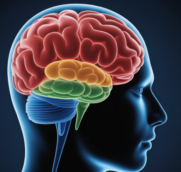

By 2050, the global population aged 65 and older will reach 1.6 billion people, and every one of them will be carrying a brain that either has real biological markers guiding its care or doesn’t. Biological Markers and Cognitive Longevity are no longer abstract terms buried in journals; they are the difference between guessing about your brain health and actually measuring it.
We built this guide because most of what gets marketed under “cognitive longevity” has nothing to do with biology at all. You’ll find plenty of manifestation techniques out there promising to boost brain power naturally through BDNF visualization and vague “brainwave” talk, and none of it holds up against a mini cog test, a clock drawing test, or a proper MoCA score.
That’s the gap we exist to close. Evidence over enthusiasm, every time.
| Marker or Tool | What It Actually Measures | Best For |
|---|---|---|
| BDNF (Brain-Derived Neurotrophic Factor) | The “repair protein” driving neurogenesis and structural plasticity | Tracking whether training is biologically doing anything |
| Mini-Cog Test | Three-item recall plus a clock drawing task | A three-minute brief cognitive assessment tool for a quick baseline |
| Clock Drawing Test | Visuospatial planning and executive function | Catching early executive decline before memory complaints start |
| MoCA (Montreal Cognitive Assessment) | Multi-domain cognition: memory, attention, language, executive function | Detecting mild cognitive impairment a standard checkup misses |
| MMSE | Global cognitive status and dementia staging | Tracking severity once a diagnosis is on the table |
| Structural Plasticity Markers | Measurable, physical change in brain tissue from training | Proving a protocol is working, not just feeling productive |
| Inflammation Markers | Systemic drivers of accelerated cognitive decline | Preventative longevity strategy and long-term risk reduction |
Want the full research-to-practice picture on our clinical approach? Read more about how we build protocols or start with our neuro-rehabilitation programs.
A biological marker is not a vibe. It’s a measurable, reproducible signal that tells you something specific about the state of your brain, whether that’s a protein level, a scan finding, or a validated test score.
Cognitive longevity, as a field, is built on the idea that the brain you have today is not the brain you’re stuck with. Neuroplasticity Solutions was founded on that exact premise, and it only works if you can measure the change, not just claim it.
That’s where structural plasticity and neurogenesis come in. Structural plasticity is the physical, wiring-level change your brain undergoes in response to demand; neurogenesis is the growth of new neurons entirely.
Both are real, both are measurable, and neither happens from static difficulty, predictable puzzles, or passive scrolling through trivia. You need an “edge of current ability” level of challenge, dosed correctly, tracked over time.
If you want a brief cognitive assessment tool that takes less time than making coffee, the mini cog test is it. The mini cog assessment test asks someone to recall three words and draw a clock face showing a specific time, and that’s the whole exam.
It sounds almost too simple to matter, but the clock drawing test portion is doing serious work. Drawing a clock correctly requires planning, spatial reasoning, and executive sequencing all at once, which is exactly the kind of multi-domain function that starts slipping early in cognitive decline.
This is why the mini cog cognitive assessment shows up so often in primary care settings: it’s fast, it’s validated, and it flags people who need a deeper look. It is not, however, a substitute for a full clinical workup.
Once a brief screen raises a flag, the field moves to something more detailed. A moca cog test (Montreal Cognitive Assessment) covers memory, attention, language, visuospatial skills, and executive function in about 10 to 15 minutes, and it catches mild cognitive impairment that a Mini-Cog will sail right past.
The MMSE (Mini-Mental State Examination) is the older, more established tool, and it’s still widely used for tracking dementia severity over time. The two scales don’t map onto each other one-to-one, which is exactly why we built a MoCA to MMSE score conversion chart for 2026, so clinicians and families aren’t left guessing what a score actually means across settings.
Biological Markers and Cognitive Longevity depend on this kind of comparability. A number without context is not a marker; it’s just a number.
Let’s address the elephant in the room. A quick search for how to boost brain power naturally will hand you a stack of manifestation techniques promising to activate BDNF through positive thinking, brainwave audio, and visualization scripts.
None of that is what we do, and none of it belongs anywhere near a clinical setting. We treat Brain-Derived Neurotrophic Factor as your brain’s repair protein, full stop, and it responds to training, movement, and lifestyle, not affirmations.
You will never hear us promise to “reverse ageing” or “unlock 100% of your brain.” Those phrases belong in marketing copy, not in a clinical setting.
Only about 14% of consumers actually believe scientific-sounding terms make a product credible, which tells you something: people are tired of pseudo-science dressed up in lab coats. What they want, and what we deliver, is a research-to-practice pipeline you can actually verify.
We know that skepticism is earned, not assumed. That’s exactly why our BDNF activation protocol is built around dosing principles, not slogans about how to boost brain power naturally overnight.

Not every program calling itself “brain training” deserves the label. Static difficulty, predictable puzzles, and passive scrolling through trivia don’t meet the threshold for real structural plasticity.
The specialized, web-based cognitive systems that actually show strong clinical results are built around a different design philosophy: make it scientifically rigorous first, then make it accessible. That means difficulty adapts in real time, sitting right at the edge of your current ability, because that edge is where the brain is forced to change.
We break down exactly which programs meet that bar in our 2026 review of adaptive cognitive training programs, comparing dosing, adaptivity, and the actual research behind each one.

People often ask us why a $5-a-month memory app isn’t enough. It’s a fair question, and the answer comes down to dosing and design intent.
Consumer memory apps are built to be entertaining and habit-forming; clinical cognitive training is built to hit specific biological targets, tracked against baseline scores like a MoCA or MMSE. One is a game. The other is a protocol.
We laid out the full comparison, feature by feature and evidence base by evidence base, in Cognitive Training vs Memory Apps. Modern neuro-rehabilitation is no longer guesswork; it is a measurable process built on rigorous evidence, clear dosing principles, and real follow-through.
Not all senior-focused memory programs are created equal, and frankly, most of them are not created with much evidence at all. We ranked the field based on what’s actually published, not what’s best marketed.
The programs that rise to the top share a few traits: adaptive difficulty, structured tracking against a brief cognitive assessment tool like the Mini-Cog or MoCA, and a clear connection back to BDNF-supporting activity. You can see the full evidence-based ranking in our 2026 memory preservation programs guide.
Whether you are a senior aiming to preserve memory or a family member managing that care from a distance, this is where preventative longevity strategy actually starts.
Biological Markers and Cognitive Longevity aren’t just about catching problems after they show up on a clock drawing test. Prevention is where the real leverage is.
That means treating inflammation, sleep quality, cardiovascular health, and movement as inputs to brain biology, not separate wellness categories. Our best preventative longevity strategies resource walks through which interventions have actual data behind them and which are just trending.
We also track a brain resilience score across our cognitive performance content library, giving you a running picture of protocols and tools worth your time.
Stroke recovery is where biological markers matter most urgently, because motor and cognitive gains stall fast without the right stimulus. Neuroplasticity Solutions grew out of a frustration shared by clinicians, researchers, and clients alike: too much rehab still relies on guesswork instead of dosed, measurable exercise.
Our 2026 guide to neuroplasticity tools and strategies after stroke covers exactly which interventions are backed by published research, not folklore.

Whether you are recovering from a neurological event or supporting someone who is, this is where structural plasticity stops being theory and starts being your daily protocol.

Projected compound annual growth rates across key segments of the biological marker and cognitive health market.
Biological Markers and Cognitive Longevity come down to one basic principle: you need measurable progress, not vibes. A mini cog test, a clock drawing test, a full moca cog test, and BDNF-supported training all give you something a manifestation technique never will, which is proof.
The field is growing fast, the population that needs it is growing faster, and the gap between rigorous science and unregulated marketing isn’t closing on its own. We’re here to close it, one specific brain at a time.
Biological markers are measurable, reproducible signals, like BDNF levels or validated test scores, that show the real state of your brain rather than how it feels. In cognitive longevity, they’re what separates an evidence-based protocol from a guess.
A mini cog assessment test is a good three-minute baseline, catching gross memory and executive function issues quickly. It is not a substitute for a full MoCA or MMSE evaluation if that initial screen raises concerns.
The clock drawing test measures visuospatial planning and executive function, both of which tend to decline early and quietly. It’s one of the most efficient brief cognitive assessment tools available for flagging that early change.
The MoCA covers more cognitive domains in more detail and catches mild impairment earlier, while the MMSE is more established for tracking dementia severity over time. The two don’t convert one-to-one, which is why score conversion charts matter for continuity of care.
Yes, and it has nothing to do with visualization or affirmations. BDNF responds to dosed, adaptive cognitive training, movement, and sleep, not manifestation techniques promising to boost brain power naturally overnight.
Adaptive, evidence-based cognitive training programs are worth it if they’re dosed at the edge of your current ability and tracked against real assessment scores. Passive apps and static puzzle games generally are not, because they don’t drive structural plasticity.
A low score on a mini cog cognitive assessment or clock drawing test should prompt a full clinical workup, typically a MoCA followed by physician review. From there, a targeted, evidence-based cognitive longevity protocol can be built around the specific deficits found.