
Approximately 55 million people worldwide are affected by traumatic brain injury each year, yet the vast majority are handed generic worksheets and told to “give it time.” If you want to know how to accelerate TBI recovery using targeted cognitive training, you need to understand what actually drives neuroplastic change — and just as importantly, what doesn’t.
| Key Point | What the Evidence Says |
|---|---|
| Targeted vs. generic training | Targeted cognitive training produces a 0.64 standardized mean difference (SMD) in global cognitive function for TBI patients, compared to negligible gains from generic brain games. |
| Biological priming is non-negotiable | Cognitive training alone is only approximately 30% as effective without the right biological priming. BDNF expression, sleep, and movement must precede cognitive load. |
| Plasticity threshold mapping | We map your individual plasticity threshold before prescribing anything. Generic programs skip this step. We consider it non-negotiable. |
| Modality comparison matters | Not all cognitive training is equal. Digital interventions, 40Hz gamma stimulation, and neurofeedback each target different cognitive domains with different effect sizes. |
| Timing and intensity | The brain only rewires itself when it’s pushed to the edge of its current ability. Static difficulty and predictable puzzles don’t meet that threshold. |
| Home-based vs. clinical | In 2026, evidence-based home tools are closing the gap with clinical settings, but only when they include adaptive difficulty and measurable progress tracking. |
| What to avoid | Only 20.8% of cognitive training apps offer user-tailored modules, and just 33% involved medical professionals in development. Most consumer apps are entertainment, not rehabilitation. |
The brain you have today is not the brain you are stuck with. But the path from injury to recovery is not paved with app-store puzzles and feel-good trivia games.
When we compare how to accelerate TBI recovery using targeted cognitive training versus generic brain apps, the difference is structural, not marginal. Targeted cognitive training operates on the principle of threshold-of-ability: tasks must sit just beyond current function to trigger neuroplastic change. Generic apps do the opposite. They adapt downward to keep you engaged, comfortable, and scrolling.
Static difficulty, predictable puzzles, and passive scrolling through trivia don’t meet that threshold. They generate engagement metrics for the app developer, not structural change for your brain.
Here’s what the 2026 evidence landscape looks like when we compare the two head-to-head:
| Feature | Generic Brain Apps | Targeted Cognitive Training |
|---|---|---|
| Adaptive difficulty | Often static or adapts downward to maintain engagement | Calibrated to individual plasticity threshold, escalates as function improves |
| Clinical involvement | Only 33% of apps involve medical professionals in development | Designed and monitored by clinicians with neuro-rehabilitation expertise |
| Personalization | Only 20.8% offer user-tailored modules | Every protocol adapted to the individual in front of us — not a generic profile |
| Cognitive domains targeted | Broad, unfocused “brain training” | Specific domains: attention, executive function, social cognition, memory |
| Outcome measurement | Self-reported “brain scores” with no clinical validation | Standardized assessments with published effect sizes |
| Effect size (global cognition) | Negligible to small | SMD 0.64 — a medium-to-large effect in TBI populations |
You will never hear us promise to “reverse ageing” or “unlock 100% of your brain.” Those phrases belong in marketing copy, not in a clinical setting.
If a modality lacks rigorous evidence, we say so. And when it comes to generic brain apps, the evidence is clear: they are cognitive entertainment, not neuro-rehabilitation.

Consistency is key to unlocking neuroplasticity after brain injury.
Every protocol we deliver is grounded in published research and adapted to the individual in front of us — not a generic profile, not a marketing persona, but a specific person with specific goals, a specific history, and a specific brain.
This is why we use the 3-Phase Plasticity Loop as our foundational methodology. It is a structured, sequential system that ensures cognitive training is delivered at the right time, at the right intensity, and on the right biological substrate.
We map your individual plasticity threshold before prescribing anything. This means we measure where your cognitive function sits today — across attention, executive function, memory, and social cognition — and identify the exact point where a task becomes challenging enough to trigger adaptation.
Generic programs skip this step. We consider it non-negotiable.
Without baseline mapping, you are training blind. You might be working below threshold (no adaptation triggered) or above threshold (overload, fatigue, setback). Both waste time and, worse, can reinforce neural atrophy patterns.
Cognitive training alone is only approximately 30% as effective without the right biological priming. This is not our opinion. This is what the published data shows across multiple meta-analyses.
We treat Brain-Derived Neurotrophic Factor as your brain’s “repair protein,” supported by training, movement, and lifestyle. BDNF expression must be elevated before cognitive load is introduced. This is the biological foundation that makes targeted training stick.
Biological priming includes:
Objective tracking. You need measurable progress, not vibes.
Once the biological substrate is primed, we introduce targeted cognitive training at your mapped threshold. Every session is tracked. Every domain is measured. Adjustments are data-driven, not intuitive.
The 3-Phase Plasticity Loop is not a one-time cycle. It repeats: reassess, re-prime, re-integrate. Each iteration raises the threshold. Each iteration produces structural change, not just practice effects.

Not all targeted cognitive training is created equal. Different modalities target different cognitive domains, and the effect sizes vary significantly. If you want to accelerate TBI recovery using targeted cognitive training, you need to match the modality to the deficit.
Here is how the major evidence-based modalities compare in 2026:
| Modality | Primary Domain | Effect Size (SMD) | Best For | Limitations |
|---|---|---|---|---|
| Computer-based cognitive training | Attention, processing speed | 0.40 (attention) | Post-concussion attention deficits, mild-moderate TBI | Transfer to real-world tasks can be limited without integration phase |
| VR-based cognitive training | Executive function, spatial navigation | 0.32 (executive function) | Moderate-severe TBI with executive dysfunction | Cost, motion sensitivity in some patients, requires clinical oversight |
| Neurofeedback | Attention regulation, emotional control | Variable (0.30-0.60 depending on protocol) | TBI with comorbid anxiety, attention dysregulation | Requires multiple sessions, practitioner-dependent quality |
| 40Hz Gamma stimulation | Global cognition, BDNF expression, glymphatic clearance | Supportive — enhances other modalities | Biological priming phase, multi-domain recovery | Not a standalone cognitive training tool; works as an adjunct |
| Perceptual Attention Therapy (PATH) | Memory, reading, visual processing | Significant (36-session protocol) | Post-concussion memory and reading deficits | Requires consistent 30-minute sessions over multiple weeks |
| Social cognition training | Social cognition, emotional recognition | 0.46 | TBI with social interaction deficits, emotional dysregulation | Less digital, often requires interpersonal components |
The data is clear: no single modality covers all domains. A protocol that accelerates TBI recovery using targeted cognitive training must be multi-modal, domain-specific, and sequenced according to the 3-Phase Plasticity Loop.
You can explore more about our approach to cognitive performance training and the specific protocols we use.
When we compare biological priming tools, one stands out for its accessibility, evidence base, and direct relevance to TBI recovery: 40Hz Gamma auditory stimulation.
40Hz Gamma is not a cognitive training modality in the traditional sense. It is a biological priming tool. It works by stimulating gamma-band neural oscillations, which serve two critical functions in the injured brain:
We integrate 40Hz Gamma as part of Phase 2 (biological priming) in the 3-Phase Plasticity Loop. It prepares the brain to respond more robustly to the cognitive training that follows.
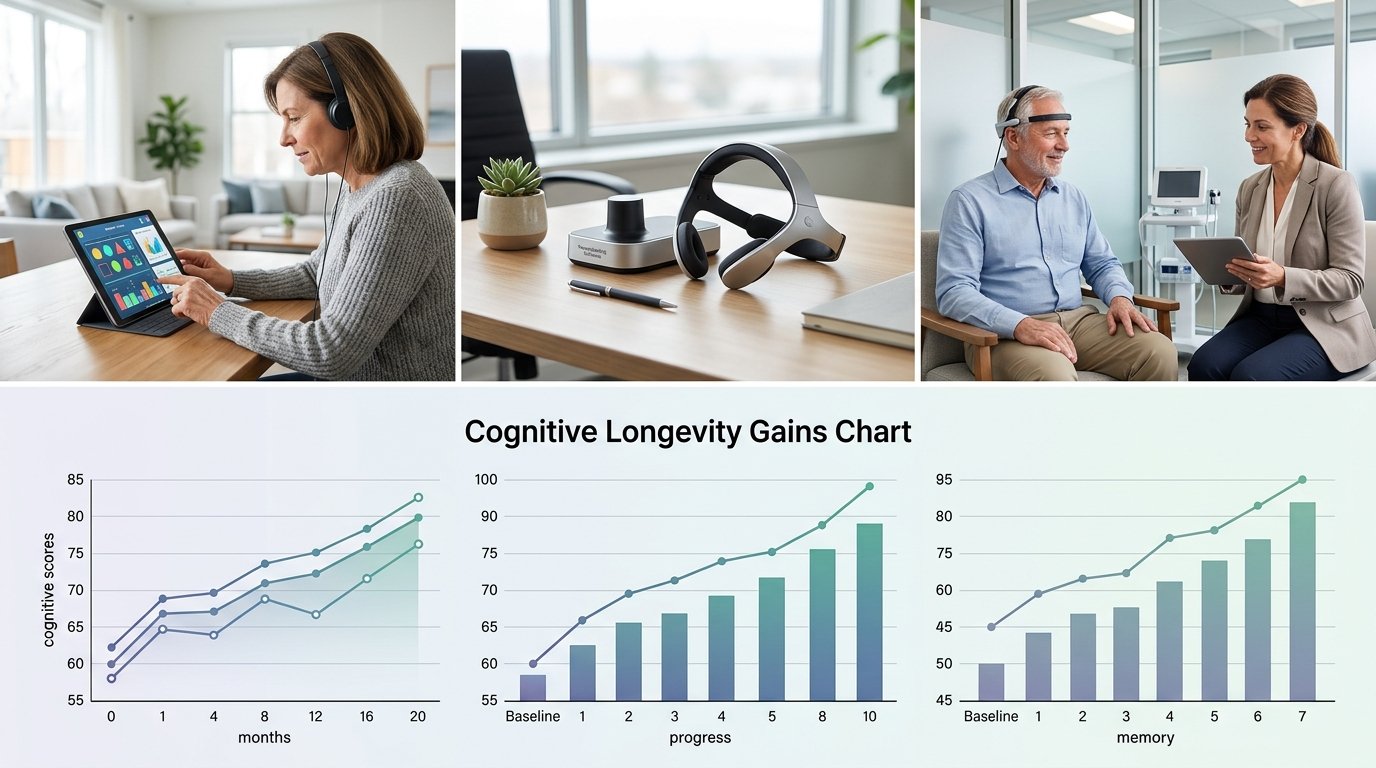
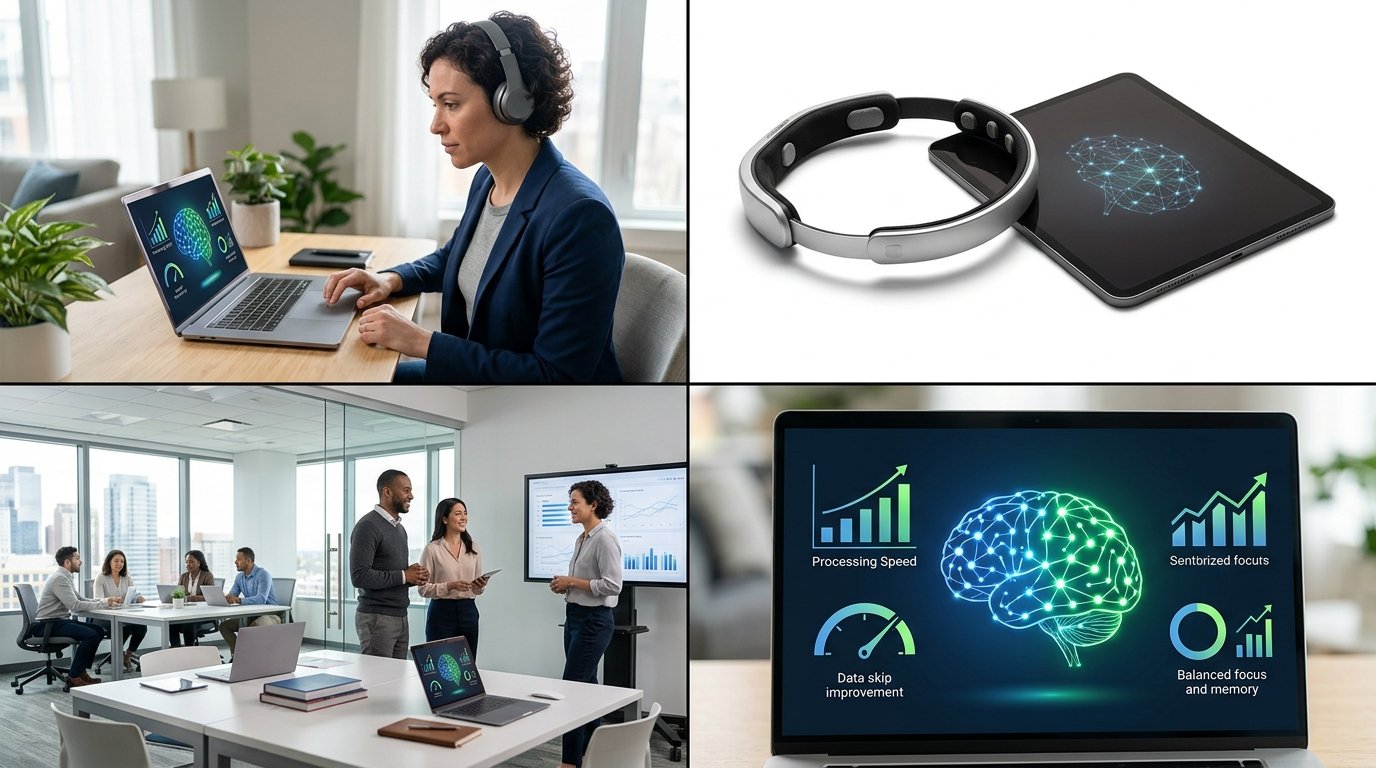
One tool we recommend for this purpose is the Genius Switch Audio Series ($39). It delivers precision 40Hz gamma binaural audio designed to stimulate BDNF production and support cognitive longevity.
At $39, it is one of the most cost-effective biological priming tools available in 2026. No pills. No prescriptions. Just sound, delivered through standard headphones, with a short implementation guide.
But here is the critical distinction: 40Hz Gamma is a priming tool, not a replacement for targeted cognitive training. We see too many people who buy a gamma audio program and expect it to “fix” their TBI. It won’t. It prepares the brain. The cognitive training does the rewiring.
In 2026, the gap between home-based and clinical neuro-rehabilitation has narrowed significantly. But it has not closed entirely, and the differences matter.
Here is how the two settings compare when implementing targeted cognitive training for TBI recovery:
| Factor | Home-Based Training | Clinical Setting |
|---|---|---|
| Assessment quality | Self-administered or remote; less precise | Comprehensive, clinician-administered, normed |
| Plasticity threshold mapping | Approximated through adaptive software | Precisely mapped with clinical instruments |
| Biological priming | Self-directed (sleep, movement, 40Hz gamma audio) | Clinician-supervised, includes neurofeedback, tDCS, controlled exercise |
| Training consistency | Higher (daily access, no travel) | Lower (limited by appointment frequency) |
| Adaptive difficulty | Software-driven; quality varies enormously | Clinician-adjusted in real time based on performance and fatigue |
| Cost | Low to moderate ($39-$300/month for tools) | High ($150-$500+ per session) |
| Best role in recovery | Maintenance, daily repetition, biological priming | Initial assessment, complex cases, protocol design |
The optimal approach is not either/or. It is sequenced. Start clinical, transition home. The clinical setting handles Phase 1 (assessment) and initiates Phase 2 (biological priming). Home-based tools handle daily execution of Phase 3 (integration) with periodic clinical check-ins.
For those looking at home-based options, our guide to top home-based neuroplasticity tools for 2026 covers the evidence-based picks, many of which apply to TBI as well as stroke recovery.
When discussing how to accelerate TBI recovery using targeted cognitive training, we must address the difference between structured methodologies and standard rehab. The Harkins Method — a foundational recovery system for TBI and stroke — exemplifies what happens when you build a protocol around the 3-Phase Plasticity Loop rather than around insurance-driven session limits.
Standard rehab typically looks like this: a patient receives 6-12 weeks of outpatient therapy, consisting of occupational therapy, speech therapy, and physical therapy. Sessions are 45-60 minutes, 2-3 times per week. Cognitive training, when included, is often worksheet-based or uses outdated software with no adaptive difficulty.
The Harkins Method, by contrast, is built on three principles that directly contradict standard rehab defaults:
Here is a direct comparison:
| Dimension | Standard Rehab | Harkins Method / 3-Phase Plasticity Loop |
|---|---|---|
| Assessment | Initial evaluation, periodic re-checks | Continuous: every cycle includes reassessment |
| Biological priming | Rarely addressed; focus is on symptoms | Core phase: BDNF, sleep, glymphatic, movement, nutrition |
| Cognitive training | Worksheets, outdated software, generic tasks | Multi-modal, adaptive, domain-specific, threshold-calibrated |
| Progress tracking | Subjective clinician notes, occasional standardized tests | Objective tracking: every session, every domain, data-driven adjustments |
| Duration | Fixed (6-12 weeks typical) | Variable, determined by measurable progress |
| Home integration | Minimal “homework” sheets | Structured home protocol with tools, tracking, and check-ins |
We are deliberately cautious about claims. We do not say the Harkins Method is a miracle. We say it is what happens when you apply published neuroscience to TBI recovery without compromise.
There is a variable that almost no TBI recovery protocol addresses, and it sabotages cognitive training outcomes silently: uncontrolled digital consumption.
After a brain injury, the brain’s attentional architecture is compromised. Prefrontal control is weakened. The default mode network runs hot. And what do most people do during recovery? They scroll. They stream. They switch between apps, notifications, and fragmented content for hours per day.
This is not a moral judgment. It is a neurological problem. Fragmented digital consumption trains the brain for exactly the opposite of what targeted cognitive training aims to build: sustained attention, working memory capacity, and executive control.
A structured digital neuro-detox protocol is not about giving up your devices. It is about strategically restoring the brain’s baseline attentional architecture.
We implement this as part of the biological priming phase. The protocol includes:
Without this step, you are training the brain for focus during your 30-minute cognitive session and training it for fragmentation during the other 15 hours of the day. The net effect is minimal. The brain cannot build sustained attentional capacity in a hostile attentional environment.
Objective tracking. You need measurable progress, not vibes.
When you accelerate TBI recovery using targeted cognitive training, progress is not felt. It is measured. Here is what that measurement looks like across cognitive domains, based on published effect sizes for digital cognitive interventions in TBI populations:
| Cognitive Domain | Effect Size (SMD) | What This Means Practically |
|---|---|---|
| Global cognitive function | 0.64 | A medium-to-large improvement across overall cognitive performance — the kind of change that shows up on standardized neuropsychological testing, not just self-report. |
| Attention | 0.40 | A moderate improvement in sustained and selective attention — measurable on continuous performance tasks and in real-world task completion. |
| Executive function | 0.32 | A small-to-moderate improvement in planning, inhibition, and cognitive flexibility — the domains most relevant for high-stakes professionals returning to work. |
| Social cognition | 0.46 | A moderate improvement in emotional recognition and social interaction quality — often the most personally meaningful domain for TBI survivors. |
These effect sizes assume proper protocol design: biological priming, adaptive difficulty, domain-specific targeting, and consistent execution. Strip away any of those elements, and the numbers drop.
For a deeper dive into memory-specific restoration after brain injury, our 2026 evidence-first guide to restoring memory after brain injury covers the protocols and outcomes in detail.
We see the same failures repeated across nearly every TBI recovery protocol that comes through our door. Here is what does not work, and why:
The brain only rewires itself when it’s pushed to the edge of its current ability. Most programs — especially app-based ones — set difficulty too low. The patient feels successful. The brain does not adapt. This is the most common failure mode in TBI cognitive training.
You cannot out-train a depleted biological substrate. If BDNF is suppressed by poor sleep, chronic stress, or sedentary behavior, cognitive training produces a fraction of its potential effect. We repeatedly see patients who have spent months on cognitive training with minimal results, only to see rapid improvement once we address sleep, movement, and gamma stimulation.
Attention training alone does not improve executive function. Executive function training alone does not improve social cognition. TBI affects multiple domains. Your protocol must too.
If you cannot show me your baseline, your current scores, and the trajectory between them, you are not training. You are hoping. Hope is not a protocol.
Only 20.8% of cognitive training apps offer user-tailored modules. Only 33% involved medical professionals in their development. The rest are consumer products dressed up in clinical language. They do not meet the standard for neuro-rehabilitation.
Understanding how to accelerate TBI recovery using targeted cognitive training requires rejecting two extremes: the fatalism that says your brain is permanently damaged, and the hype that says an app will fix it. The brain you have today is not the brain you are stuck with. But the path from injury to recovery demands precision.
It demands the 3-Phase Plasticity Loop: assessment, biological priming, and integration. It demands multi-modal training calibrated to your individual plasticity threshold. It demands 40Hz Gamma stimulation for BDNF expression and glymphatic clearance. It demands a digital neuro-detox to protect the attentional architecture you are trying to rebuild. And it demands objective tracking — because you need measurable progress, not vibes.
Every protocol we deliver is grounded in published research and adapted to the individual in front of us — not a generic profile, not a marketing persona, but a specific person with specific goals, a specific history, and a specific brain. That is the standard for neuro-rehabilitation in 2026, and it is the only standard worth meeting.
With proper biological priming and consistent training at the plasticity threshold, measurable improvements typically appear within 4-8 weeks. The PATH protocol showed significant cognitive restoration after 36 sessions of 30 minutes each. However, timelines vary based on injury severity, priming quality, and protocol adherence.
Yes, but only with the right tools. Home-based training works best after an initial clinical assessment maps your plasticity threshold. Tools like the Genius Switch 40Hz gamma audio ($39) support biological priming at home, while adaptive cognitive training software handles the integration phase. The key is objective tracking and periodic clinical check-ins.
Most consumer brain training apps are not effective for TBI recovery. Only 20.8% offer user-tailored modules, and just 33% involved medical professionals in development. Targeted cognitive training — as distinguished from generic brain games — produces a 0.64 SMD improvement in global cognitive function, which generic apps do not match.
Biological priming is the process of preparing the brain’s physiological substrate before introducing cognitive training load. It includes optimizing BDNF expression, sleep architecture, glymphatic function, and stress regulation. Without it, cognitive training alone is only approximately 30% as effective. We treat Brain-Derived Neurotrophic Factor as the brain’s repair protein, supported by training, movement, and lifestyle.
40Hz gamma stimulation supports TBI recovery through two mechanisms: enhancing glymphatic clearance of neurotoxic waste and increasing BDNF expression. It is a biological priming tool, not a standalone cognitive training modality. We integrate it into Phase 2 of the 3-Phase Plasticity Loop to prepare the brain for more effective cognitive training in Phase 3.
The Harkins Method is built around the 3-Phase Plasticity Loop: continuous assessment, integrated biological priming, and multi-modal targeted cognitive training. Standard rehab typically delivers time-limited, worksheet-based cognitive exercises without addressing biological priming or plasticity thresholds. The Harkins Method extends protocols based on measurable progress, not arbitrary billing cycles.
No. Neuroplasticity does not have an expiration date. The brain remains capable of structural change throughout life, though the rate of change may be slower in chronic injury. The critical factors are not time-since-injury but biological priming quality, training intensity relative to your current threshold, and consistent objective tracking. We have worked with patients years and even decades post-injury who achieved meaningful functional gains.