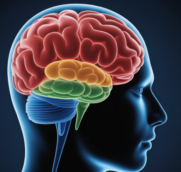

New AI models combining brain scans with clinical measures can now predict future cognitive decline in cognitively normal older adults with 81% to 91% accuracy, years before a single memory lapse shows up. That statistic alone should change how you think about brain health. Learning how to spot early cognitive thinning before memory loss starts is no longer guesswork reserved for neurologists with expensive imaging equipment. It is a measurable process, and we think every adult over 40 should understand it.
| Question | Short Answer |
|---|---|
| What is cognitive thinning? | Structural changes in brain tissue (thinning of the cortex, reduced volume in memory-related regions) that occur before clinical symptoms of cognitive decline appear. |
| How early can it be detected? | Blood biomarkers like p-tau217 can flag risk 3 to 4 years before symptoms. Structural brain trajectories can hit a critical inflection point 2.5 years before measurable impairment. |
| What are the earliest symptoms? | Subtle word-finding trouble, slower processing speed, and unexplained weight loss (which can precede diagnosis by up to a decade). |
| Which tools detect it clinically? | The MoCA and MMSE cognitive assessments, used together to establish and track a baseline. |
| Does age alone cause it? | No. Age related cognitive decline is real, but infection, chronic stress, sleep loss, and vascular disease all accelerate it independently of age. |
| Do brain games help? | Passive apps rarely provide the training intensity needed. See our breakdown of cognitive training versus memory apps. |
| Is there treatment? | Yes. Treatment for cognitive decline increasingly centers on structured, adaptive protocols rather than static puzzles or supplements alone. |
People throw around the term cognitive decline like it describes a single condition. It doesn’t.
The clinical definition of cognitive impairment covers a spectrum: from the ordinary slowing that comes with ageing and cognitive decline, to mild cognitive impairment (MCI), all the way to dementia. Cognitive thinning is the structural precursor, the physical loss of gray matter volume and cortical thickness in regions tied to memory and executive function, that shows up on imaging before a person or their family notices anything is wrong.
Cognitive decline meaning, in practical terms, is a measurable drop in one or more domains: memory, attention, processing speed, language, or executive function. Cognitive function impairment is diagnosed when that drop is significant enough to interfere with independent daily tasks. Thinning precedes that threshold. That’s the entire point of this guide.
Most people wait for memory loss before they ask questions. By then, the thinning has often been progressing for years.
Common early cognitive decline symptoms and cognitive impairment examples include:
That last one, unintended weight loss, deserves its own mention. Research shows it can begin manifesting as a warning sign up to 10 years before a formal dementia diagnosis. Most clinicians don’t connect it to brain health at all. We do.
You can’t manage what you don’t measure. That’s not a slogan, it’s the entire foundation of evidence-based neuro-rehabilitation.

The two most widely used clinical instruments are the Montreal Cognitive Assessment (MoCA) and the Mini-Mental State Examination (MMSE). Neither test alone tells the whole story, which is why we built a MoCA to MMSE conversion crosswalk so clinicians and individuals can compare scores across both scales and track change over time.
A single test score is a snapshot. A baseline, tracked repeatedly, is a trajectory. That’s how you catch cognitive deterioration before it crosses into diagnosable impairment.

Pathological brain changes associated with cognitive decline may begin long before any noticeable symptoms appear.
Age related cognitive decline is real. But age and cognitive decline are not the same story for every patient, and lumping every case under “getting older” hides the actual causes.
Some of the documented drivers behind causes of cognitive decline include:
MS and cognitive decline deserve special mention. Ms cognitive decline often shows up as processing speed loss long before physical symptoms progress, and it’s frequently missed because clinicians focus on motor markers first.
Lewy body dementia is its own category entirely. Lewy body dementia fast decline is a recognized clinical pattern, where cognitive fluctuation and rapid deterioration can outpace the slower trajectory typical of Alzheimer’s disease. This is one reason define cognitive impairment searches so often lead people to conflicting answers: the underlying disease dramatically changes the timeline.
For readers managing recovery after a neurological event, our post-concussion recovery programs for athletes apply the same structural-plasticity principles used for age-related decline, just on a compressed timeline.
Let’s address something directly. If you’ve searched for manifestation techniques, BDNF, BrainWave programs, or ways to boost brain power naturally, you’ve probably run into a lot of marketing dressed up as neuroscience.
Manifestation techniques don’t build structural plasticity. Brain-Derived Neurotrophic Factor does. We treat BDNF as your brain’s “repair protein,” the biological signal that supports neurogenesis and synaptic repair, and it responds to specific, measurable inputs: aerobic exercise, sleep architecture, targeted cognitive load, and in some protocols, gamma-frequency audio entrainment.
Our own Genius Switch BDNF activation series uses 40Hz gamma audio, priced at $39.00, as one input among several designed to support this pathway. It is not a substitute for movement or sleep. It is a component, not a miracle, and we’re careful about the difference.
If you want to boost brain power naturally in a way that actually shows up on a MoCA rescore, it comes down to dosing principles applied consistently, not a technique you repeat in your head before bed.
Static difficulty, predictable puzzles, and passive scrolling through trivia don’t meet the threshold your brain needs to change. We’ve written at length about the difference between real cognitive training versus consumer memory apps, and the gap is not subtle.
Change happens at the edge of current ability. A puzzle you’ve already mastered doesn’t ask anything new of your neural circuitry. It’s entertainment, not rehabilitation, and it will not show you early cognitive thinning even if you play it every single day.
Adaptive systems that raise and lower difficulty in real time, based on your actual performance, are a fundamentally different design philosophy. Scientifically rigorous first, accessible second. That ordering matters.
Modern neuro-rehabilitation is no longer guesswork. It’s a measurable process built on rigorous evidence, clear dosing principles, and real follow-through.
Effective treatment for cognitive decline in 2026 typically combines:
We cover the specifics of digital habits in our digital neuro detox and brain rot reset guide, and our full breakdown of program design is in our 2026 guide to adaptive cognitive training programs.

Not all decline is gradual. Acute cognitive decline, the kind that shows up over days or weeks rather than years, is a medical emergency signal, not a “watch and wait” situation.
Causes include stroke, infection (sepsis-related delirium), medication interactions, and rapid-progression conditions like Lewy body dementia. If you or a family member notices sudden confusion, disorientation, or a sharp drop in function, that’s a different clinical picture than the slow thinning we’ve discussed above, and it needs immediate medical evaluation, not a home cognitive quiz.
For clinical coding purposes, cognitive decline is documented under several ICD-10 categories depending on cause; providers searching icd10 cognitive decline codes will find distinct entries for vascular, degenerative, and unspecified etiologies. That distinction matters for treatment planning, which is exactly why we don’t treat “cognitive decline” as one diagnosis with one protocol.
Cognitive decline in elderly patients typically develops slowly, layered on top of normal cognitive decline in old age processes like reduced processing speed. But early cognitive thinning is increasingly documented in adults in their 40s and 50s too, often tied to vascular risk factors, chronic stress, or untreated sleep disorders rather than age itself.
This is precisely why we don’t build generic protocols. Every plan we deliver is grounded in published research and adapted to the individual in front of us, not a generic age bracket, not a marketing persona, but a specific person with a specific brain and a specific risk profile.
If you take one thing from this guide, take this: get a baseline before you think you need one.
That means a MoCA or MMSE score on record, a conversation with your provider about brain health (something only 14% of adults currently do despite high interest), and a repeat assessment on a fixed schedule, not “whenever something feels off.” Evidence over enthusiasm. You need measurable progress, not vibes, and that starts with a number you can compare against later.
Learning how to spot early cognitive thinning before memory loss starts isn’t about becoming anxious over every forgotten name. It’s about treating your brain’s trajectory as a measurable, trackable thing, the same way you’d track blood pressure or cholesterol.
Baseline testing, honest attention to early symptoms, and evidence-based training protocols close the gap between what research already knows and what most people actually do about their brain health. That gap is where we operate, and it’s closeable, years before a diagnosis, not after one.
Subtle changes in word-finding, processing speed, and multitasking ability typically appear before memory loss becomes obvious. Unintended weight loss is also a documented early marker, sometimes preceding diagnosis by up to a decade.
Structural plasticity work, adaptive cognitive training, aerobic exercise, and sleep correction can improve function and support neurogenesis, but we never promise to “reverse” damage. Measurable improvement in function is the realistic, evidence-based goal.
Mild cognitive impairment involves a measurable drop in a cognitive domain that’s greater than expected for age but doesn’t yet interfere with independent daily function. Normal ageing and cognitive decline is a slower, less pronounced version of the same processes.
Clinicians typically use standardized tools like the MoCA or MMSE, often alongside blood biomarkers such as p-tau217 or imaging, to establish a baseline and track change. Our MoCA to MMSE crosswalk helps standardize comparisons across both scales.
No. Age and cognitive decline vary significantly based on vascular health, chronic infection history, sleep quality, and underlying conditions like MS cognitive decline or Lewy body dementia, which can produce a faster decline pattern than typical ageing.
Most consumer memory apps rely on static, repeatable puzzles that don’t push the brain to its adaptive edge. Programs built on adaptive difficulty and rigorous dosing principles show stronger evidence of supporting structural plasticity.
Acute cognitive decline usually stems from a specific event: stroke, infection, medication reaction, or rapid-onset conditions like Lewy body dementia fast decline. Gradual cognitive deterioration develops over years and is tied to slower structural thinning, vascular changes, and cumulative risk factors.