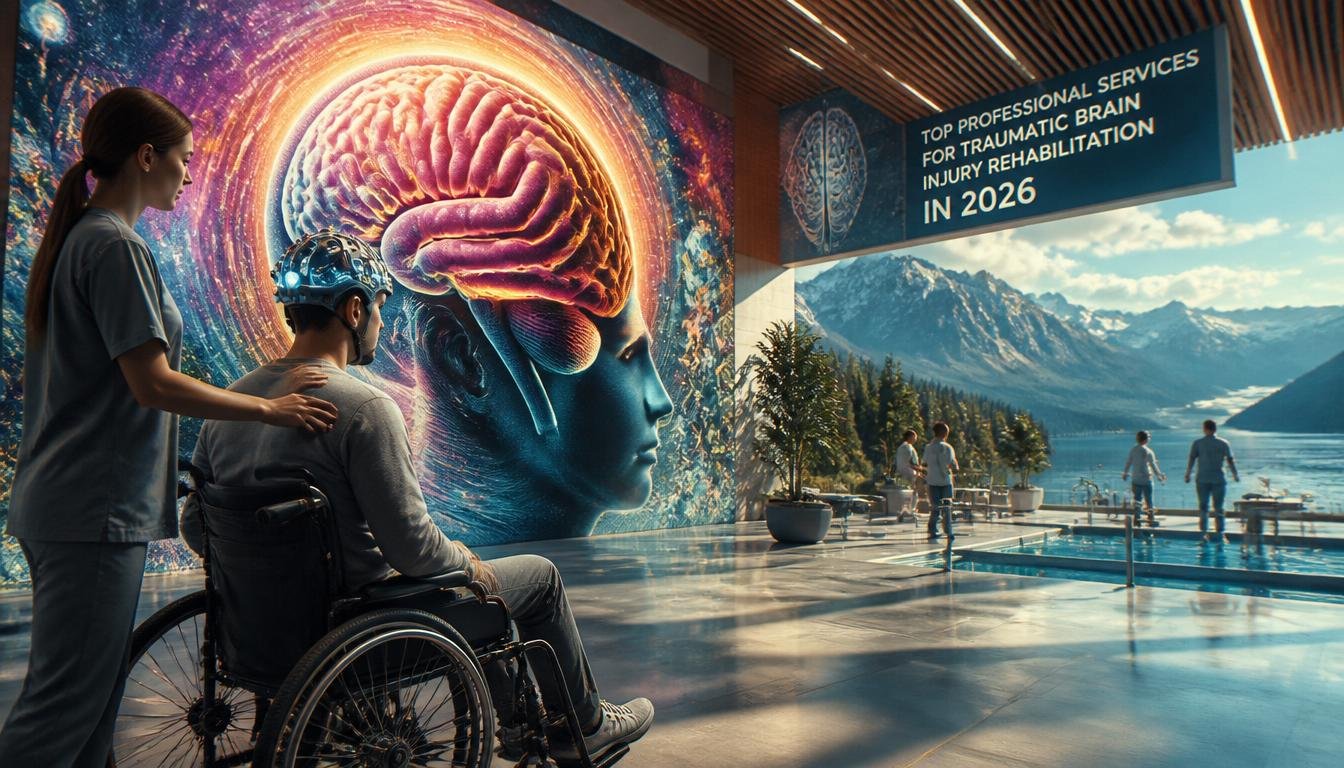
When 76% of healthcare professionals report that TBI patient progress via telehealth equals or exceeds traditional clinic outcomes, you know the landscape has fundamentally shifted. The top professional services for traumatic brain injury rehabilitation in 2026 are no longer defined by location or tradition. They are defined by measurable intensity, protocol dosing, and evidence-over-enthusiasm.
In 2026, the good news is that modern neuro-rehabilitation is no longer guesswork; it is a measurable process built on rigorous evidence. We are anti-misfit and we only recommend what can be dosed, tracked, and proven to help. This listicle breaks down the professional services that actually move the needle for traumatic brain injury recovery.
| Service Type | What It Targets | Why It Matters for TBI |
|---|---|---|
| Clinical Neuro-Rehabilitation | Structural plasticity, motor restoration | High-repetition, task-specific dosing that forces rewiring |
| Neurofeedback Protocols | Focus, impulse control, self-regulation | EEG-based training with objective tracking and baseline assessment |
| 40Hz Gamma Audio Priming | BDNF activation, glymphatic clearance | Primes the brain’s repair protein before cognitive training |
| Sensory-Motor Integration | Coordination, sensory processing | Retrains the connection between sensory input and motor output |
| Home-Based Neuroplasticity Tools | High-volume dosing outside clinic | Extends therapy hours beyond clinical walls |
| Predictive Brain Modeling | Personalized recovery forecasting | Digital twins adapt protocols to individual neural profiles |
You can explore the broader framework of neuro-rehabilitation approaches to understand how these services fit together in a recovery protocol.
Neuroplasticity Solutions was founded on a simple but radical premise: the brain you have today is not the brain you are stuck with. Clinical neuro-rehabilitation is where that premise gets tested under controlled conditions.
These services deliver high-repetition, task-specific training with measurable intensity. The brain only rewires itself when it’s pushed to the edge of its current ability. A generic “do puzzles” plan often misses threshold-of-ability, especially under stress.
What separates clinical neuro-rehabilitation from casual brain training is the dosing framework. We treat cognitive and motor training with the same rigor as pharmaceutical dosing. Timing matters. Intensity matters. The number of repetitions matters.

For motor recovery specifically, clinical programs combine aerobic priming to elevate BDNF with task-specific exercises. This dual approach drives structural plasticity faster than motor training alone. The research is clear: plasticity progresses over months with sustained effort, not weeks.
Key components of clinical neuro-rehabilitation include:
Baseline, repeat testing, and objective reporting are non-negotiable. Any service that cannot show you the data is not delivering professional rehabilitation. It is delivering hope.
Neurofeedback uses EEG to train brain activity in real time. For TBI patients, this means improving self-regulation, focus, and impulse control through direct neural feedback. The patient sees their brain activity. The brain adjusts. The system tracks the change.
This is not relaxation therapy. It is a structured cognitive performance training protocol that requires a baseline assessment, ongoing review, and adaptive programming. We recommend neurofeedback as part of a broader neurofeedback protocol for focus and executive function rather than as a standalone intervention.

What makes neurofeedback effective for TBI patients specifically?
Neurofeedback pairs well with gamma priming and motor training. The combination creates a multi-pathway stimulation approach that drives more robust neuroplastic changes than any single modality alone.
TBI often disrupts the connection between what the brain perceives and how the body responds. Sensory-motor integration tasks retrain this pathway. They pair sensory input with motor output until the system reconnects.
These are not balance exercises. They are structured protocols that challenge the patient’s threshold-of-ability and force adaptive neural responses. The patient must process sensory information and execute a motor response within a measured timeframe.

Professional services for traumatic brain injury rehabilitation that include motor training typically combine:
Local clinical support matters here. Access to neuro rehab professionals within the patient’s region ensures that motor training is supervised, adjusted, and dosed correctly. You can read more about locally delivered rehabilitation services to understand the clinical model.
For motor recovery, plan on a minimum of 120 hours of structured training. That is not a suggestion. It is the dosage threshold that research consistently identifies for meaningful structural change.
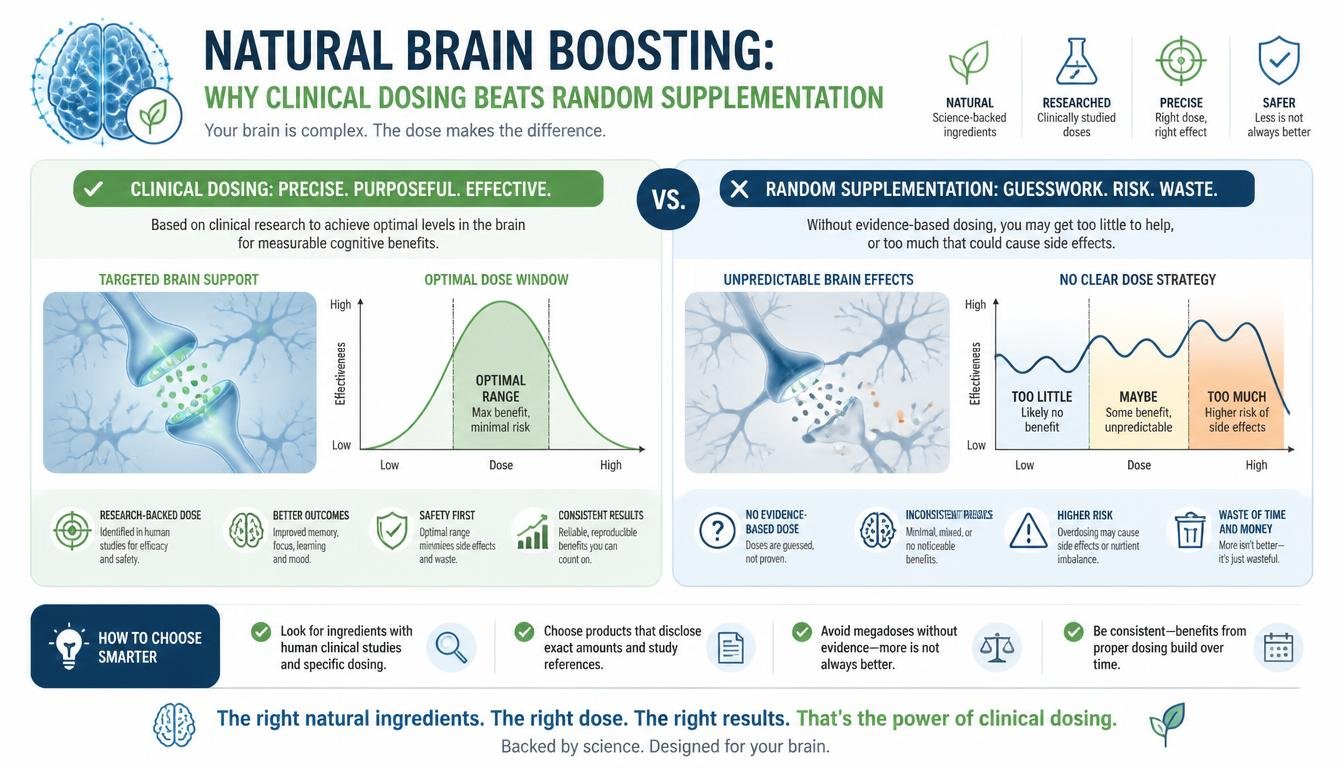
We treat Brain-Derived Neurotrophic Factor as your brain’s “repair protein,” supported by training, movement, and lifestyle. 40Hz gamma audio priming is one of the most accessible tools to activate BDNF before rehabilitation exercises.
The Genius Switch is a 40Hz Gamma audio kit designed as a preparatory tool. At $39, it is the entry point for patients who need to prime their neural environment before cognitive or motor training begins. It is not a standalone treatment. It is a dosing tool that increases BDNF availability so that subsequent training produces greater neuroplastic gains.
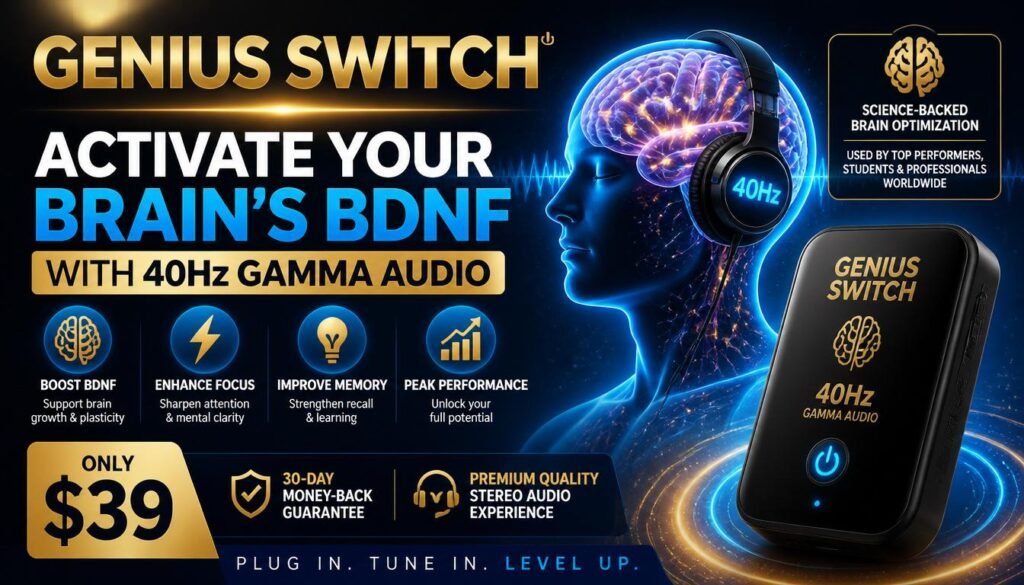
The mechanism is straightforward. 40Hz gamma stimulation engages the brain’s glymphatic plumbing system. This is the clearance pathway that removes metabolic waste from neural tissue. After a TBI, this waste clearance system is often compromised. Gamma stimulation helps restore it.
Here is how we position gamma priming within a professional TBI rehabilitation plan:
Every protocol we deliver is grounded in published research and adapted to the individual in front of us. Not a generic profile. Not a marketing persona. You will never hear us promise to “reverse ageing” or “unlock 100% of your brain.” Those phrases belong in marketing copy, not in a clinical setting.
Clinic hours alone cannot deliver the repetition volume needed for structural plasticity. Home-based neuroplasticity tools extend the dosing window beyond clinical walls, allowing patients to continue high-volume stimulation between sessions.
This is not self-directed brain training. These tools are prescribed, monitored, and adjusted by clinicians. The difference between a clinical home program and a brain game app is the same as the difference between prescribed medication and a supplement you found online.

What makes home-based tools effective for TBI rehabilitation?
The home program should always include BDNF priming. The best home-based neuroplasticity tools for 2026 combine gamma audio priming with cognitive and motor exercises that meet the patient’s current threshold-of-ability.
Too easy and the brain coasts. Too hard and the system shuts down. That is the anti-misfit principle in action. We reject generic training levels that do not match the individual’s current state.
Predictive brain modeling uses neural data to forecast recovery trajectories and tailor rehabilitation plans. In 2026, this technology has moved from research labs to clinical practice.
Neural digital twins are computational models of an individual brain. They integrate baseline assessment data, ongoing neurofeedback results, and cognitive performance metrics to predict how a patient will respond to different rehabilitation protocols.

This matters for TBI rehabilitation because every brain injury is unique. Two patients with the same Glasgow Coma Score may have radically different recovery trajectories. Predictive modeling helps clinicians choose the right protocol dosing for each individual rather than relying on population averages.
How digital twins connect to real-world recovery:
We are anti-misfit. Predictive modeling is the technological expression of that philosophy. It ensures that protocol dosing matches the individual’s neural state, not a generic template.
TBI often damages executive function. Planning, attention, impulse control, and working memory take the hit. Cognitive performance training addresses these deficits through structured, adaptive protocols.
This is not brain games. The distinction matters. A generic “do puzzles” plan often misses threshold-of-ability, especially under stress. Professional cognitive training adapts difficulty in real time, pushing the patient to the edge of their current ability without crossing into frustration.
Professional cognitive performance training for TBI includes:
Each session produces data. Each protocol adjustment is driven by that data. If a training program cannot show you the metrics, it is not professional cognitive rehabilitation. It is entertainment.
The evidence-based neuroplasticity strategies for executive function apply equally to TBI recovery and high-performance cognitive training. The mechanisms are the same. BDNF elevation, gamma priming, and threshold-of-ability dosing drive neurogenesis in both contexts.
TBI increases the risk of long-term cognitive decline. The research on this is unambiguous. But decline is not inevitable if the underlying mechanisms are addressed early.
Preventative longevity services for TBI patients focus on three biological substrates: BDNF depletion, hippocampal changes, and glymphatic clearance. Each of these can be influenced by targeted intervention.
What does a preventative longevity protocol for TBI patients include?
Memory restoration after brain injury requires the same evidence-over-enthusiasm approach as acute recovery. You can read the full breakdown of memory decline mechanisms to understand why BDNF depletion and glymphatic dysfunction are the primary targets.
For seniors recovering from TBI, the entry point is a baseline assessment plus the Genius Switch 40Hz gamma audio kit at $39. This combination initiates BDNF priming and glymphatic activation while the clinical team builds the full protocol.
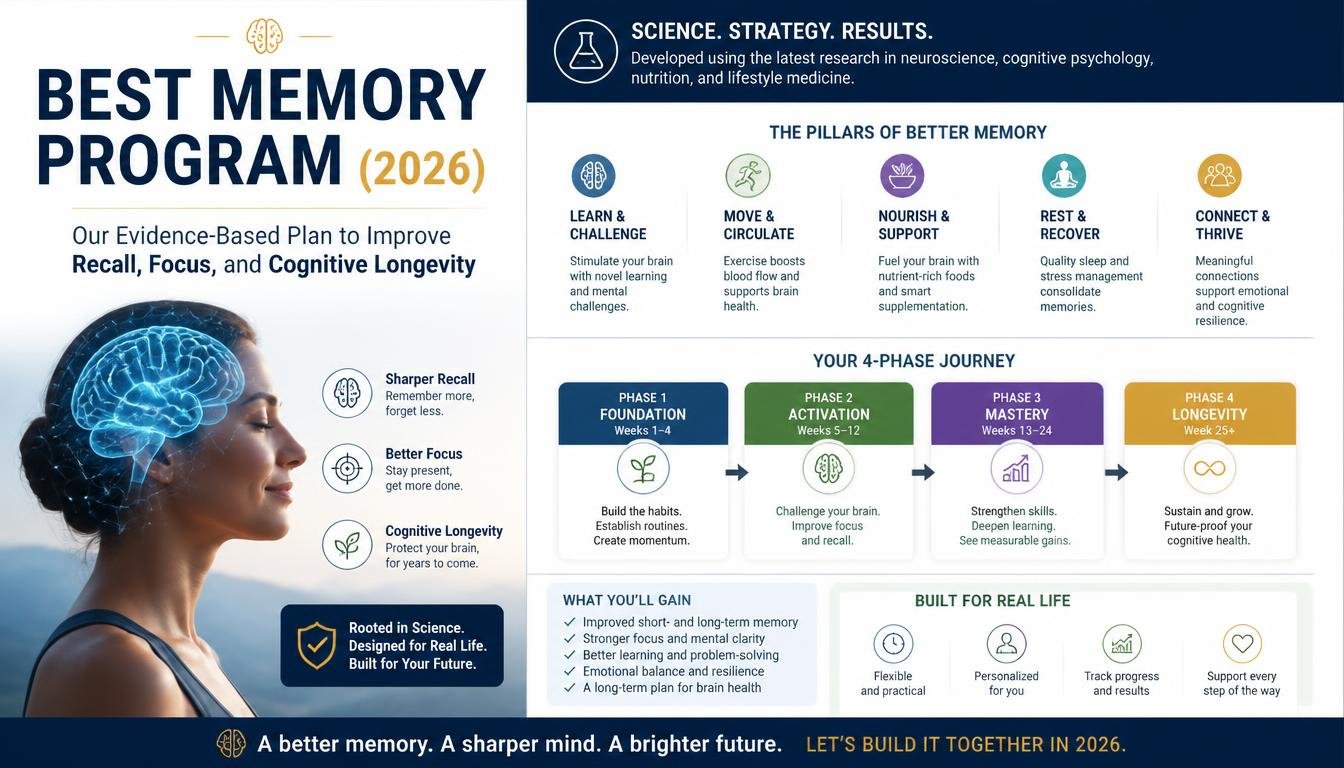
No single service delivers TBI recovery. The top professional services for traumatic brain injury rehabilitation work as an integrated system. Each modality addresses a different neural pathway, and the combination produces compound effects.
Here is the framework we recommend for assembling a professional TBI rehabilitation program in 2026:
| Phase | Services | Goal |
|---|---|---|
| Phase 1: Assessment | Baseline cognitive testing, epigenetic brain clock, EEG mapping | Establish starting point and identify specific deficits |
| Phase 2: Priming | 40Hz gamma audio ($39), aerobic exercise, nutrition protocol | Elevate BDNF and activate glymphatic plumbing |
| Phase 3: Intensive Training | Clinical neuro-rehab, neurofeedback, motor training, sensory-motor integration | Drive structural plasticity through high-repetition dosing |
| Phase 4: Extension | Home-based neuroplasticity tools, telehealth follow-up | Maintain dosing volume outside clinical hours |
| Phase 5: Longevity | Preventative protocols, ongoing cognitive training, repeat testing | Prevent decline and sustain cognitive longevity |
Predictive brain modeling can inform decisions at every phase. The digital twin adapts as data flows in from each modality, refining the protocol dosing for the next phase.
This is what evidence-over-enthusiasm looks like in practice. Every recommendation has a mechanism. Every protocol has a dose. Every outcome has a measurement.
The top professional services for traumatic brain injury rehabilitation in 2026 share one characteristic: they treat brain recovery as an engineering problem with measurable inputs and outputs. BDNF activation, threshold-of-ability dosing, glymphatic plumbing, and objective tracking are not buzzwords. They are the biological mechanisms that drive neurogenesis and structural plasticity.
Whether the entry point is a $39 Genius Switch 40Hz gamma audio kit or a full clinical neuro-rehabilitation program with 120+ hours of motor training, the principles remain the same. Baseline assessment first. Protocol dosing calibrated to the individual. Repeat testing at every phase. Adaptive adjustment based on data, not hope.
We are anti-misfit. We do not recommend what cannot be dosed, tracked, and proven to help. The brain only rewires itself when it is pushed to the edge of its current ability, and the top professional services for traumatic brain injury rehabilitation are the ones that deliver that push with clinical precision.
The top professional services include clinical neuro-rehabilitation, neurofeedback protocols, sensory-motor integration training, 40Hz gamma audio priming for BDNF activation, home-based neuroplasticity tools, predictive brain modeling, and cognitive performance training. Each service targets a specific neural mechanism and should be integrated into a phased recovery protocol.
Costs vary widely depending on service type and duration. The Genius Switch 40Hz gamma audio kit is $39 as an entry-level priming tool. Clinical neuro-rehabilitation programs with 120+ hours of supervised training represent a larger investment. Home-based tools and telehealth services extend coverage at lower per-session costs.
Yes. According to clinician surveys, 76% of healthcare professionals report that TBI patient progress via telehealth equals or exceeds in-person clinic outcomes, and 98% plan to continue offering telehealth services. Telehealth works best when integrated with home-based neuroplasticity tools and objective tracking.
Motor recovery programs typically require a minimum of 120 hours of structured, high-repetition training. Structural plasticity progresses over months with sustained effort, not weeks. Cognitive recovery timelines vary based on injury severity, baseline function, and protocol adherence. Ongoing preventative protocols may continue indefinitely to support cognitive longevity.
Brain-Derived Neurotrophic Factor is the brain’s primary repair protein. It drives neurogenesis and structural plasticity. Without adequate BDNF, rehabilitation gains fade. 40Hz gamma audio priming, aerobic exercise, and threshold-of-ability cognitive training all elevate BDNF levels to support recovery.
No. Generic brain training apps miss threshold-of-ability dosing and lack objective tracking. Professional cognitive rehabilitation adapts difficulty in real time, measures outcomes with standardized testing, and adjusts protocols based on clinical data. The anti-misfit principle rejects generic training levels that are too easy or too hard for the individual’s current state.
The glymphatic system is the brain’s waste clearance pathway. After a TBI, this system is often compromised, allowing metabolic waste to accumulate. 40Hz gamma audio stimulation helps restore glymphatic function, clearing waste and creating a healthier neural environment for neuroplasticity and BDNF-driven repair.