Did you know that 55.5% of patients using a non-invasive brain-computer interface (BCI) achieved a clinically meaningful functional response, compared to only 9.6% in a control group? That gap tells you everything you need to know about where neurological recovery is heading in 2026. We are living in a time when the tools for rebuilding brain function are more effective, more accessible, and more evidence-based than ever before, and understanding how to use them can make the difference between stagnation and real progress.
| Question | What You Need to Know |
|---|---|
| What is neurological recovery? | A structured, multi-modal process that helps the brain and nervous system recover function after damage or disease. It targets the nervous system directly through neuroplastic change. |
| How fast can recovery happen? | About 10% of stroke patients achieve near-complete recovery when intensive rehabilitation begins within the first 30 days. |
| Can it be done at home? | Yes. Home-based robotic therapy leads to average cost savings of $2,352 per user compared to clinic-based therapy, while still being effective. |
| What role does BDNF play? | BDNF (brain-derived neurotrophic factor) is central to neuroplasticity. It helps the brain form new neural pathways and is stimulated by tools like 40Hz gamma audio training. |
| Who benefits most in 2026? | Stroke survivors, TBI patients, people with cognitive decline, and even those experiencing burnout or attention issues. |
| Is it worth the investment? | Absolutely. Multidisciplinary rehabilitation care after severe brain injury yields an average of $1.5 million in lifetime cost-savings per person. |
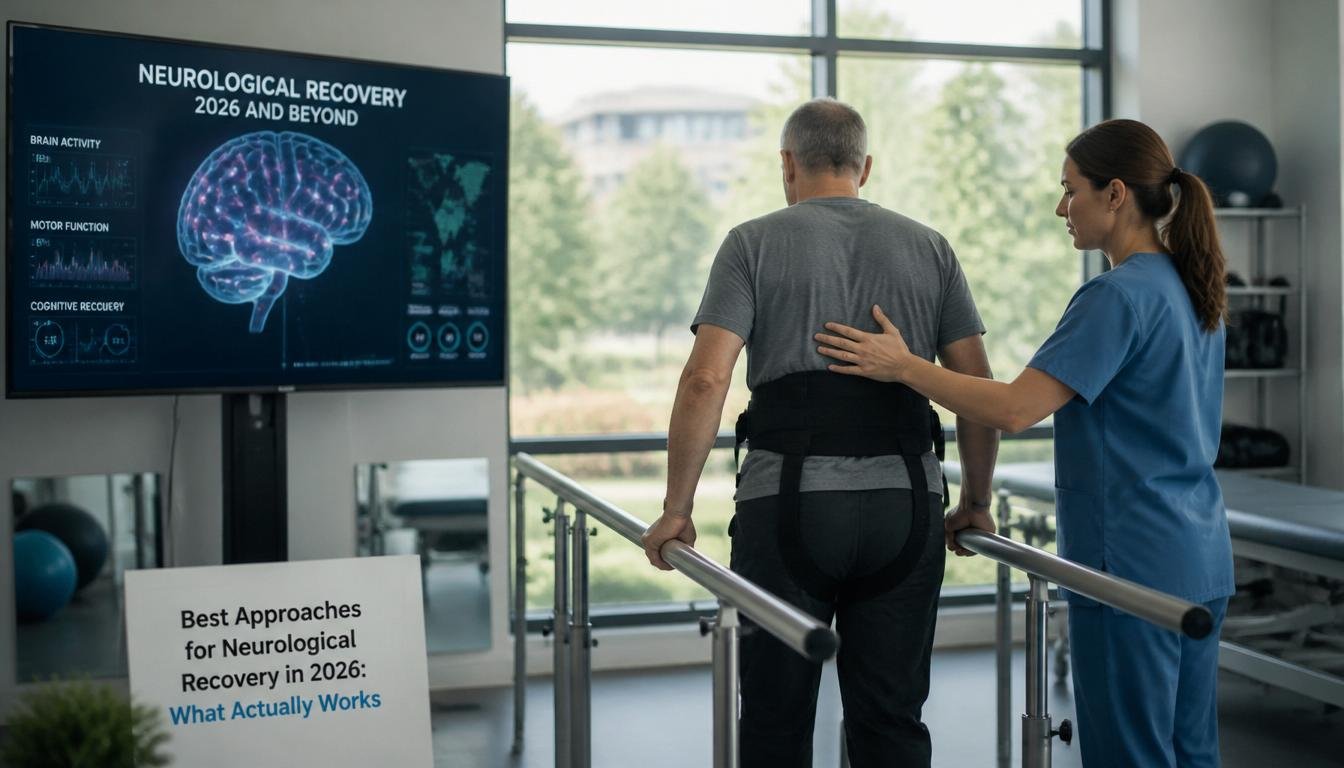
Neurological recovery is not a single treatment or a one-size-fits-all protocol. It is a structured, multi-modal clinical process designed to help the brain and nervous system recover function after damage or disease.
What makes it different from general physical therapy is the target: the nervous system itself. Every technique in a legitimate neurological recovery program is chosen because it stimulates neuroplastic change, which is the brain’s ability to reorganize its own neural pathways.
Globally, neurological disorders affect over 3 billion people and contribute to more than 11 million deaths each year. Over 40% of the global population is affected, which means this is not a niche concern. It is a massive public health issue, and the tools we have in 2026 are better equipped to address it than at any point in history.

The old view of the adult brain as a fixed machine that only wears down is no longer supported by science. We now know the brain can rebuild, rewire, and reorganize itself throughout life. BDNF plays a critical role in that process, and understanding how to activate it is one of the keys to effective recovery.
Some people explore manifestation techniques alongside clinical recovery, using focused mental practices to support their rehabilitation goals. While manifestation alone is not a substitute for evidence-based therapy, the underlying principle of directed, repeated mental focus does align with how neuroplasticity works.
If there is one molecule that sits at the center of neurological recovery conversations in 2026, it is BDNF. Brain-derived neurotrophic factor is a protein that supports neuron survival, encourages new synaptic connections, and helps the brain adapt to injury.
Research consistently shows that higher BDNF levels correlate with better recovery outcomes after stroke and traumatic brain injury. That is why so many modern recovery protocols are designed around BDNF activation, from exercise dosing to audio-based brainwave entrainment tools.
BrainWave entrainment is one of the most accessible ways to stimulate BDNF production. By delivering slightly different tonal frequencies to each ear through headphones, the brain is encouraged to align with a target frequency. This process can prime neural circuits for plasticity and make subsequent rehabilitation exercises more effective.
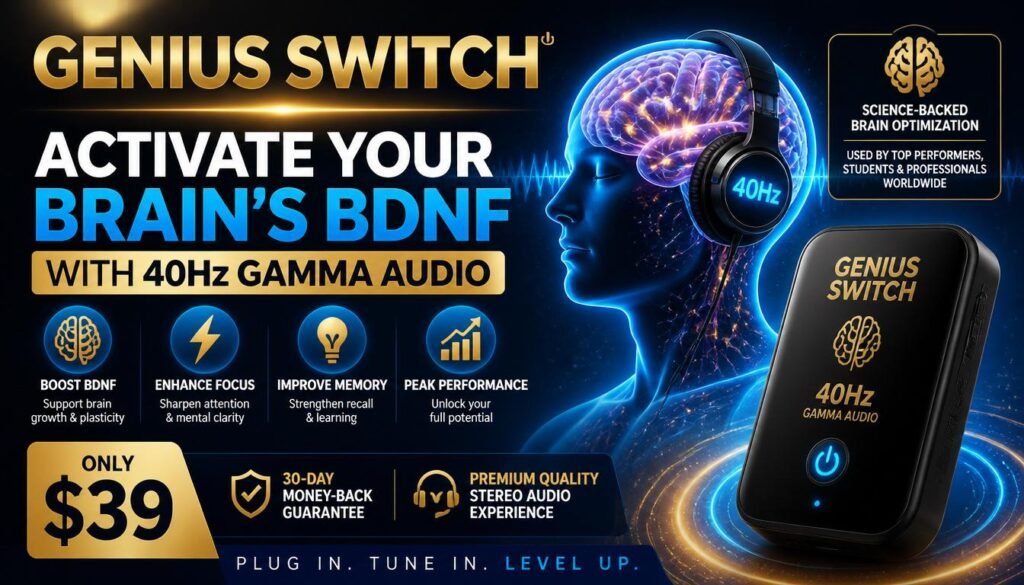
The Genius Switch Audio Series ($39) is a downloadable 40Hz gamma audio protocol designed specifically for this purpose. It uses brainwave entrainment to promote BDNF activation and cognitive performance, making it a practical tool for anyone looking to boost brain power naturally as part of their recovery journey.

Breakdown of patient outcomes in recent rehabilitation studies.
Functional plasticity refers to faster, short-term task gains, while structural plasticity involves longer-term rebuilding of neural pathways. Both are important, and the best recovery programs target both simultaneously.
Not everyone can attend a clinic five days a week. The good news is that home-based neuroplasticity tools have become genuinely effective in 2026, and the cost savings are significant.
Home-based robotic therapy leads to an average cost saving of $2,352 (64.97%) per user compared to traditional clinic-based therapy. That is not a marginal improvement. It is a fundamental shift in who can access quality rehabilitation.

Here are the best categories of home-based tools we recommend for neurological recovery:
We design home-based programs to be measurable and dose-controlled. This ensures correct threshold-of-ability dosing and regular progress checks, which are essential for meaningful neurological recovery.

Stroke recovery is where neurological recovery protocols are most rigorously tested. The statistics are sobering but also motivating: only 10% of stroke survivors achieve near-complete recovery, but that figure rises significantly when intensive, structured rehabilitation begins within the first 30 days.
The key is not just doing exercises, but doing the right exercises at the right intensity. Correct dosing, repetition, and multimodal approaches are what drive actual neuroplastic changes after stroke.

The best neuroplasticity exercises for rapid post-stroke motor recovery share several characteristics:
Some practitioners also incorporate manifestation techniques into stroke recovery, using guided visualization and mental rehearsal alongside physical exercises. The idea is that mentally rehearsing movements can activate similar neural pathways, reinforcing the physical work. This is not pseudoscience. Mental practice has been studied extensively and shows measurable benefits for motor recovery.

Choosing the right recovery program can feel overwhelming, especially when you are already dealing with the emotional weight of a brain injury or neurological diagnosis. But the data is clear: choosing an inpatient rehabilitation facility (IRF) over a skilled nursing facility (SNF) is associated with a 6.5% lower 90-day mortality rate.
Here is what to look for in a neurological recovery program in 2026:
Ask potential providers direct questions before committing. What modalities do they use and why? How do they measure progress? What is their experience with your specific condition? A good provider will welcome these questions.
We also recommend looking into whether the program offers BDNF-targeted interventions like the Genius Switch Audio Series, which uses 40Hz gamma frequencies to prime the brain for neuroplastic change. At $39, it is an accessible addition to almost any recovery plan.
Clinical tools and structured programs are essential, but they work best when supported by lifestyle choices that boost brain power naturally. Recovery does not happen in a vacuum. Your daily habits either support or undermine the neuroplastic changes you are working to create.
Here are the lifestyle factors that matter most for neurological recovery in 2026:
| Strategy | How It Supports Recovery |
|---|---|
| Aerobic exercise | Increases BDNF production and improves blood flow to the brain. |
| Quality sleep | Consolidates neuroplastic changes and clears metabolic waste from the brain. |
| Nutrition (omega-3s, antioxidants) | Provides building blocks for neural repair and reduces inflammation. |
| Digital neuro-detox | Reduces cognitive overload and helps re-regulate attention for better focus during therapy. |
| Mental practice and visualization | Reinforces neural pathways activated during physical therapy, supporting manifestation of recovery goals. |
A digital neuro-detox is particularly relevant in 2026. We are more connected than ever, and the cognitive cost of constant digital stimulation is real. Reducing digital clutter and following a structured detox protocol can improve your cognitive baseline, making your recovery exercises more effective.
The manifestation of recovery goals becomes more achievable when your brain is not fighting against constant distraction. By clearing mental space, you give your nervous system the bandwidth it needs to focus on rewiring.
Let us be clear about something: manifestation techniques are not magic, and they are not a replacement for evidence-based therapy. But there is genuine neuroscience behind why focused mental practice supports neurological recovery.
When you vividly imagine performing a movement, your brain activates many of the same neural circuits as when you physically perform that movement. This is why athletes use mental rehearsal, and it is why stroke rehabilitation programs increasingly incorporate guided visualization.
The manifestation of recovery outcomes works through a similar mechanism. By repeatedly directing focused attention toward specific recovery goals, you are strengthening the neural pathways associated with those goals. Combined with BDNF-promoting tools like BrainWave entrainment, this approach can amplify the effects of physical therapy.
Here is how to integrate manifestation techniques into your recovery routine:
By combining manifestation techniques with evidence-based neurological recovery protocols, you engage both the psychological and physiological dimensions of brain healing. The brain responds to repeated, focused stimulation, whether that stimulation comes from physical exercise, audio entrainment, or directed mental practice.
Neurological recovery in 2026 is not about waiting for the brain to heal on its own. It is about actively driving neuroplastic change through structured, multi-modal interventions that target the nervous system directly.
Whether you are recovering from a stroke, managing a TBI, or looking to boost brain power naturally as you age, the tools are available. From BDNF-targeted audio training like the Genius Switch Audio Series ($39) to comprehensive home-based neuroplasticity programs, the barriers to effective rehabilitation have never been lower.
We believe every person deserves access to evidence-based brain recovery tools. The statistics speak for themselves: 55.5% of BCI users achieved clinically meaningful responses, $1.5 million in lifetime cost-savings from multidisciplinary care, and 89% reductions in healthcare costs over three years. These are not incremental improvements. They are transformative.
Your brain is not fixed. With the right tools, the right timing, and the right intensity, neurological recovery is achievable. Start with a baseline assessment, choose evidence-based modalities, and commit to consistent, measured practice. The science is on your side.
Yes. About 10% of stroke patients achieve near-complete recovery when intensive rehabilitation begins within the first 30 days. With modern tools like BDNF-targeted audio training, non-invasive brain stimulation, and adaptive cognitive training, neurological recovery outcomes are significantly better than even five years ago.
Neurological recovery timelines vary depending on injury severity, timing of intervention, and program quality. Functional plasticity (faster task gains) can show results within weeks, while structural plasticity (longer-term neural rebuilding) takes months to years. Consistency and correct dosing matter more than total duration.
Home-based neuroplasticity tools are genuinely effective in 2026. Home-based robotic therapy saves an average of $2,352 per user compared to clinic-based therapy. Tools like the Genius Switch Audio Series ($39), guided home protocols, and wearable stimulation devices make quality rehabilitation accessible from home.
BDNF (brain-derived neurotrophic factor) is a protein that supports neuron survival and helps the brain form new synaptic connections. Higher BDNF levels correlate with better recovery outcomes after stroke and TBI. Tools like 40Hz gamma audio training, aerobic exercise, and proper sleep all help boost BDNF naturally.
Yes, when used alongside evidence-based therapy. Mental practice and visualization activate many of the same neural circuits as physical movement. When paired with BDNF-promoting tools and structured rehabilitation, manifestation techniques can reinforce neuroplastic changes and support recovery goals.
Look for measured baselines and follow-ups, evidence-based modalities (neurofeedback, motor training, CBT, nutrition), BDNF-targeted interventions, and a clear plan for both functional and structural plasticity. Ask providers direct questions about their experience with your specific condition and how they track progress.
At $39, the Genius Switch Audio Series is one of the most affordable BDNF-targeted tools available in 2026. It uses 40Hz gamma frequencies to stimulate brainwave entrainment and prime neural circuits for plastic change. It is not a standalone treatment, but it is a valuable addition to a comprehensive neurological recovery plan.