
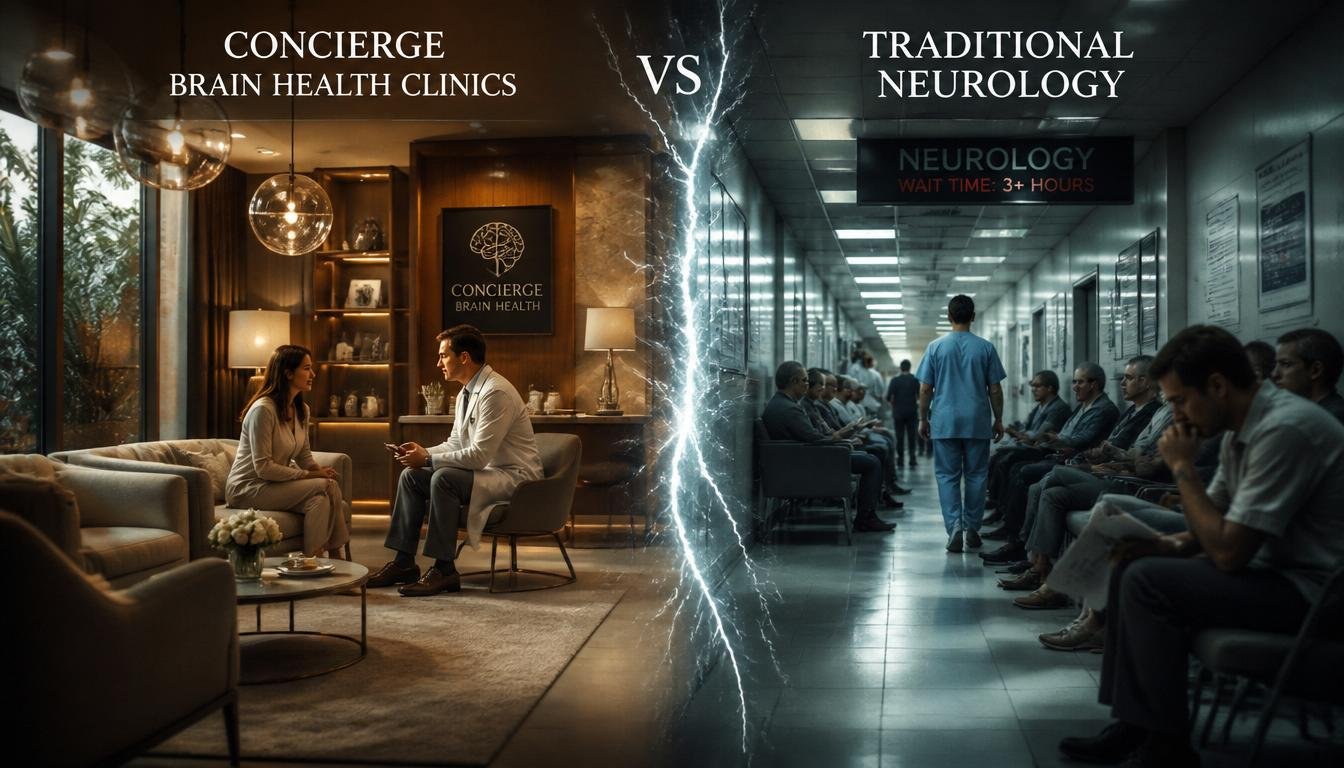
If you’ve ever waited for a neurology appointment, you already know the frustration, and the numbers back it up: the average wait-time at Stanford Neurology between an emergency department referral and an actual outpatient visit is 86 days. That gap is exactly why so many people are now comparing concierge brain health clinics vs traditional neurology before deciding where to seek care.
Some concierge clinics also fold in manifestation techniques, BDNF activation protocols, and BrainWave audio programs designed to help you boost brain power naturally, layered on top of standard diagnostic testing. That’s a very different experience from a rushed fifteen-minute slot at a hospital-based neurology department.
We put together this comparison to help you understand what each model actually offers, what it costs, and which one fits your situation.
| Factor | Traditional Neurology | Concierge Brain Health Clinics |
|---|---|---|
| Average wait for new appointment | Up to 86 days | Same-week or same-day in many cases |
| Visit length | 10 to 15 minutes | 60 to 90 minutes |
| Patient panel size | 2,000 to 3,000 patients per physician | 100 to 400 patients, sometimes capped at 50 |
| Cost structure | Insurance billing per visit | Membership fee, $2,000 to $100,000 annually |
| Focus | Diagnosis and disease management | Proactive prevention plus rehabilitation |
| Access to physician | Scheduled visits only | Direct cell phone or messaging access |
| Extra services | Standard neuro exams and imaging referrals | Cognitive training, BDNF and BrainWave protocols, longevity planning |
A few quick answers people search for when weighing concierge brain health clinics vs traditional neurology:
Brain health has become a mainstream concern, not a niche one. Research!America reports that 82% of Americans say they or someone close to them has dealt with a brain health condition.
At the same time, roughly 1 in 5 adults in the United States lives with a neurological illness such as dementia or multiple sclerosis, according to the Dana Foundation.
Despite that widespread impact, 66% of Americans admit they know little about brain health research, even though curiosity is high. That knowledge gap is part of why people are actively comparing service models instead of just accepting whatever appointment their insurance offers.
Traditional neurology practices operate inside a volume-based system. A single neurologist often carries a caseload built around insurance reimbursement rates, not around how much time each patient needs.
That structure produces short visits and long waits. It’s not that the doctors don’t care, it’s that the system rewards throughput over depth.
Here’s what you typically get:
Traditional neurology remains the right choice for acute symptoms, new-onset seizures, or anything requiring immediate hospital-level workup.
Concierge brain health clinics flip the model. Instead of billing insurance per visit, patients (or members) pay an annual fee that covers direct access, longer appointments, and often a broader menu of services.
A concierge physician typically manages 100 to 400 patients, and some highly private practices cap the panel at just 50 patients total, allowing for same-day visits and direct cell phone access to the doctor.
That kind of ratio changes what a visit can actually cover.

Average appointment length in traditional neurology versus concierge brain health clinics
A standard primary care or neurology visit runs 10 to 15 minutes. An annual physical or cognitive assessment at a concierge brain health practice usually runs 60 to 90 minutes, which is time enough for a real conversation about symptoms, lifestyle, and history.

Access is where the two models diverge the most. Waiting nearly three months for a neurology appointment isn’t unusual in the traditional system, but a novel clinic model that prioritized new patient intake over long-term return slots managed to cut wait-times by 73%.
That statistic matters because it shows the problem isn’t unfixable, it’s a scheduling and staffing choice.
Concierge brain health clinics build their whole business around eliminating that wait. With smaller patient panels, doctors can offer same-day or next-day visits and direct messaging instead of a receptionist gatekeeping the calendar.
Did You Know?
Concierge medicine members experience 65% fewer emergency room visits compared to patients in traditional care models.
Cost is usually the first question people ask, and it’s a fair one. Annual concierge medicine membership fees can range anywhere from $2,000 to $100,000, depending on the practice and how much white-glove service is included.
That sounds steep next to a copay, but the math isn’t always what it looks like on the surface.
Concierge members actually spend 35% less on total healthcare costs over time, despite the membership fee, largely because proactive management catches problems before they become expensive emergencies. Traditional neurology, by contrast, bills per visit through insurance, which keeps individual costs low but doesn’t reward the kind of ongoing preventative attention that concierge care builds in.
For anyone deciding between the two, it helps to look at our preventative longevity strategies guide, which lays out what a well-structured prevention plan should actually include.
This is where concierge brain health clinics really separate themselves from a standard neurology visit. Instead of only diagnosing what’s wrong, several concierge programs actively build in manifestation techniques, BDNF stimulation, and BrainWave-based audio sessions meant to help patients boost brain power naturally.
Brain-Derived Neurotrophic Factor, or BDNF, is often called “Miracle-Gro” for the brain because it supports the growth of new neural connections. Some concierge-style programs use precision 40Hz gamma audio stimulation as a non-drug way to encourage the brain’s own BDNF production.
Traditional neurology rarely touches this territory. A hospital-based neurologist is trained to diagnose and treat disease, not to coach patients through manifestation techniques or BDNF-boosting audio routines that aim to help people boost brain power naturally over months and years.
That doesn’t make one approach superior across the board, but it does explain why so many people search for “concierge brain health clinics vs traditional neurology” when they want more than a diagnosis.
One example of this crossover between neuroscience and consumer wellness is the Genius Switch program, which uses an auditory sequence developed by neuroscientists to support whole-brain activation in short daily sessions.
Tools like this represent the kind of daily, at-home protocol that concierge brain health clinics tend to recommend alongside in-office visits. Traditional neurology practices generally don’t have the appointment time to introduce or track these kinds of supplementary routines.
For patients recovering from stroke or other neurological events, the difference between models becomes very concrete. Evidence-based neuroplasticity exercises for stroke recovery emphasize high-repetition motor training and structured rehab, and that requires sustained, personalized attention.
Traditional neurology typically hands off rehab to a separate physical therapy referral, with limited coordination back to the neurologist. Concierge brain health clinics, by contrast, often build neuro-rehabilitation directly into the ongoing care plan.
We cover this in more depth in our piece on what actually works for neurological recovery in 2026, which looks at the science behind proactive, intensive rehab pathways.
Did You Know?
Concierge medicine members spend 35% less on total healthcare costs over time, despite paying an annual membership fee, thanks to proactive brain health management.
Cognitive training is another area where the two models split. Concierge and corporate-style programs increasingly offer structured executive cognitive training for leaders, aimed at resilience and measurable performance outcomes.
For seniors, the question often comes down to structured cognitive training versus passive memory apps. Our comparison on cognitive training vs memory apps breaks down which approach actually holds up for older adults.
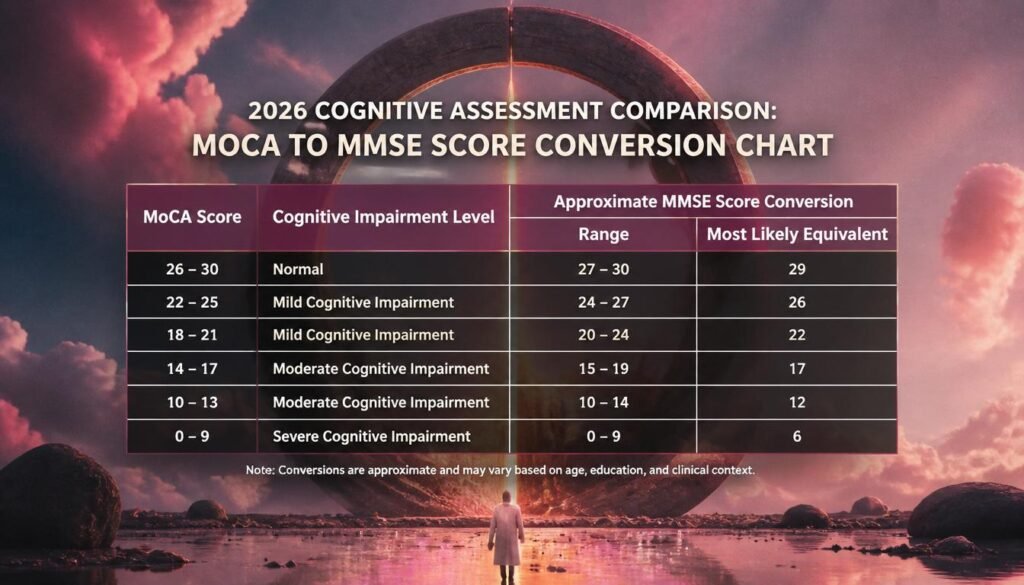
Traditional neurology can order a cognitive screening tool like the MoCA or MMSE, but rarely has bandwidth to run ongoing training. Concierge and specialized cognitive programs are built specifically to fill that gap.
The right choice depends on what you actually need. If you have new or acute neurological symptoms, traditional neurology’s access to hospital imaging and specialist networks is hard to replace.
If you’re focused on prevention, cognitive longevity, or want manifestation techniques, BDNF protocols, and BrainWave sessions built into an ongoing plan to help boost brain power naturally, a concierge brain health clinic is likely the better fit.
A few practical questions to ask before choosing:
Many people end up using both models at once: traditional neurology for acute issues and imaging, concierge brain health services for ongoing prevention, cognitive training, and lifestyle-based brain support.
Comparing concierge brain health clinics vs traditional neurology really comes down to time, access, and what kind of care you’re looking for. Traditional neurology still holds the edge for acute diagnosis and hospital-based imaging, while concierge brain health clinics offer longer visits, faster access, and a broader toolkit that includes manifestation techniques, BDNF activation, and BrainWave protocols to help boost brain power naturally.
Neither model is universally “better,” but understanding the tradeoffs in cost, wait time, and scope of service should make the decision a lot easier the next time you’re choosing where to bring your brain health concerns.
For people focused on prevention, cognitive longevity, and direct physician access, many find the membership fee worthwhile given the 35% reduction in overall healthcare spending reported among concierge members. It’s less essential if you only need occasional, insurance-covered specialist visits.
The core difference is time and access: traditional neurology visits run 10 to 15 minutes with waits as long as 86 days, while concierge visits run 60 to 90 minutes with same-day availability. Concierge clinics also tend to add cognitive training, BDNF protocols, and preventative planning that traditional neurology visits rarely have time for.
Yes, many concierge-style practices integrate structured neuro-rehabilitation and neuroplasticity exercises directly into ongoing care, rather than handing patients off to a separate referral. This can mean more coordinated, higher-repetition rehab compared to a standard neurology follow-up schedule.
BDNF (Brain-Derived Neurotrophic Factor) supports the growth of new neural connections, and some programs use 40Hz gamma audio stimulation as a non-drug way to encourage its natural production. While results vary by individual, these protocols are increasingly used alongside standard concierge brain health visits as a way to support cognitive function without medication.
Concierge membership fees range from about $2,000 to $100,000 annually depending on the practice, while traditional neurology is billed per visit through insurance. Despite the upfront fee, concierge members report 35% lower total healthcare costs over time due to proactive management.
Traditional neurology practices often carry thousands of patients per physician, which creates scheduling bottlenecks and averages of 86 days between referral and appointment at major centers like Stanford. Some clinics have cut wait times by 73% simply by restructuring how they prioritize new patient intake.
Many patients do exactly this: traditional neurology for acute symptoms, imaging, and specialist referrals, and a concierge brain health clinic for prevention, cognitive training, and ongoing lifestyle-based brain support. Comparing concierge brain health clinics vs traditional neurology isn’t always an either-or decision, it often works best as a combined approach.