Nearly 40% of Americans now suspect they have an undiagnosed brain health condition, yet only a quarter of them have ever gone looking for a real solution. That gap is exactly why this 2026 guide to professional-grade EEG headsets for home-based training exists: more people than ever want objective data on their own brain, and they want it without a clinic waiting room.
We built this guide for anyone comparing home-based EEG neurofeedback options, from stroke survivors rebuilding motor control to executives trying to stay sharp through a twelve-hour day. Below, we break down what “professional-grade” actually means in 2026, who each approach works best for, and how to combine hardware with proven brain-training protocols.
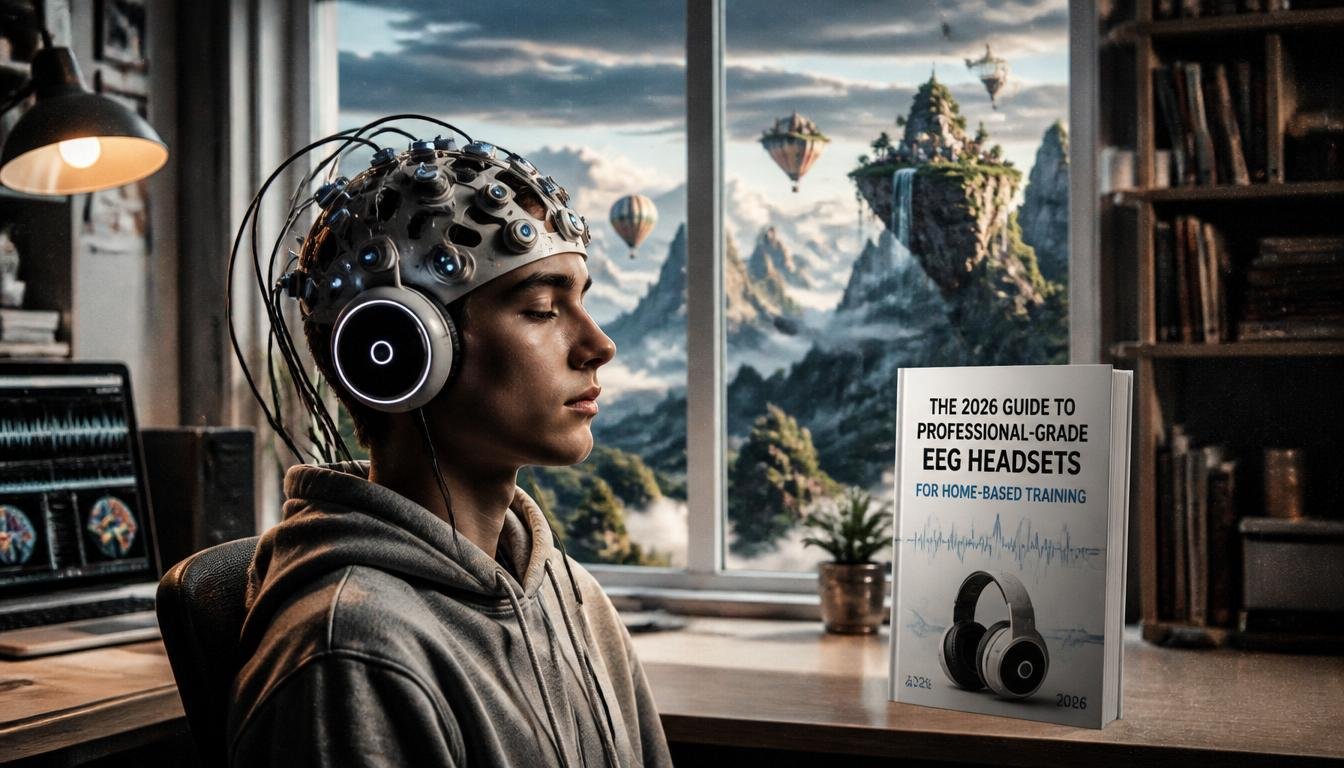
A professional-grade EEG headset isn’t just a gadget that blinks when you close your eyes.
It needs research-grade signal fidelity, consistent electrode placement, and software that ties raw brainwave data to a real training protocol.
That last part is the piece most home users overlook. A headset without a structured protocol behind it is just a data collector, not a training tool.
The global wearable EEG headset market was valued at roughly US$145.8 million in 2024 and has kept climbing as more of that hardware moves from labs into living rooms.
Clinics are expensive, scheduling is a hassle, and most people would rather train on their own couch.
That’s the driving force behind this shift toward home-based EEG training in 2026: convenience combined with hardware that finally matches clinical standards.
We’ve seen this play out across stroke rehab, executive coaching, and general cognitive maintenance. Our breakdown of home-based neuroplasticity tools for stroke survivors shows how EEG-based neurofeedback, gamma entrainment, and targeted motor practice now form a full at-home rehab stack.

If your goal is sharper planning, better impulse control, and sustained attention through a busy day, EEG-based neurofeedback for executive function is one of the strongest tools available right now.
This isn’t fringe biohacking anymore. It’s measurable, repeatable, and grounded in published research, which is exactly what our neurofeedback for executive function protocols walk through in detail.
Knowledge workers toggle between apps and windows up to 1,200 times a day. That constant switching is a biology problem tied directly to prefrontal cortex function, and it’s exactly the kind of load a professional-grade EEG headset is built to train against.
Our executive decision-making strategies for high performers lay out adaptive training approaches for people who need their brain to perform under pressure.
Stroke recovery is where home-based EEG training has proven itself the most.
Home-based rehab only works when the protocol is rigorous: dose-controlled training sessions and objective progress tracking, not just occasional practice.
Key modalities include EEG-based neurofeedback, gamma entrainment, and targeted motor practice, all covered in our stroke recovery exercises that actually work in 2026.
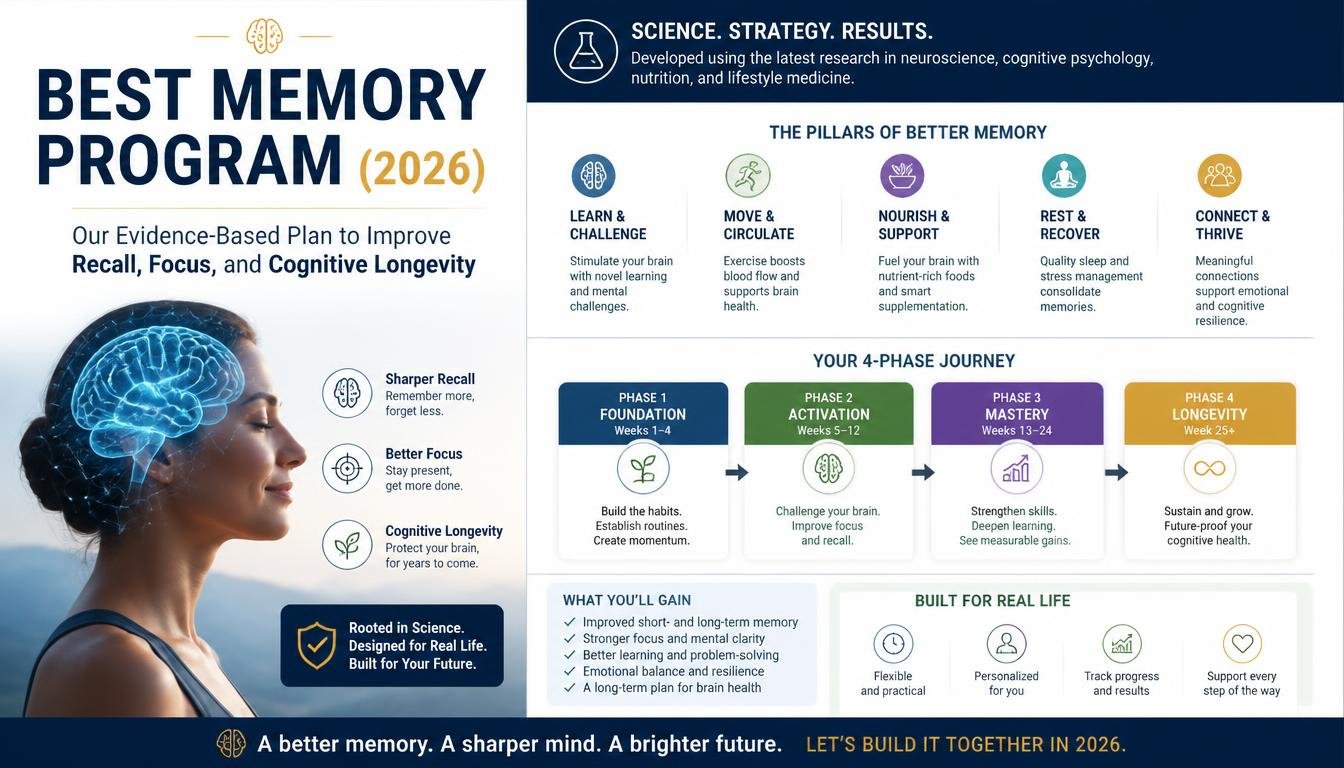
For long-term maintenance after the acute recovery window, our post-stroke cognitive longevity strategies combine multimodal exercise, the MIND diet, and consistent cognitive training doses to protect gains for years, not months.
Did You Know?
Every $1 invested in cognitive health training returns $5.39 on average, based on a peer-reviewed study covering more than 166,000 cases.
Memory decline usually traces back to hippocampus shrinkage and changes in neural wiring that reduce the brain’s ability to encode and retrieve new information.
The good news is that practical, dose-controlled cognitive training can genuinely influence that trajectory. Our memory decline mechanisms breakdown covers exactly which changes you can and can’t control.
For anyone recovering from a brain injury specifically, timing matters just as much as the tool. Our evidence-first guide to restoring memory after brain injury outlines how BDNF priming and structured cognitive training frameworks work together.
Concussion recovery in 2026 leans heavily on multi-modal approaches: neurofeedback, cognitive training, and a gradual return-to-activity protocol.
Our post-concussion recovery programs for athletes emphasize dose-controlled strategies with remote monitoring, which is exactly what a home EEG setup is designed to support.
Modern clinical rehab is data-driven too, built on high-repetition, task-specific dosing with EEG-based neurofeedback as a core component. Our traumatic brain injury rehabilitation services overview shows how professional clinics structure that same approach.
A lot of the buzz around home EEG training gets tangled up with wellness trends, but the underlying science is real.
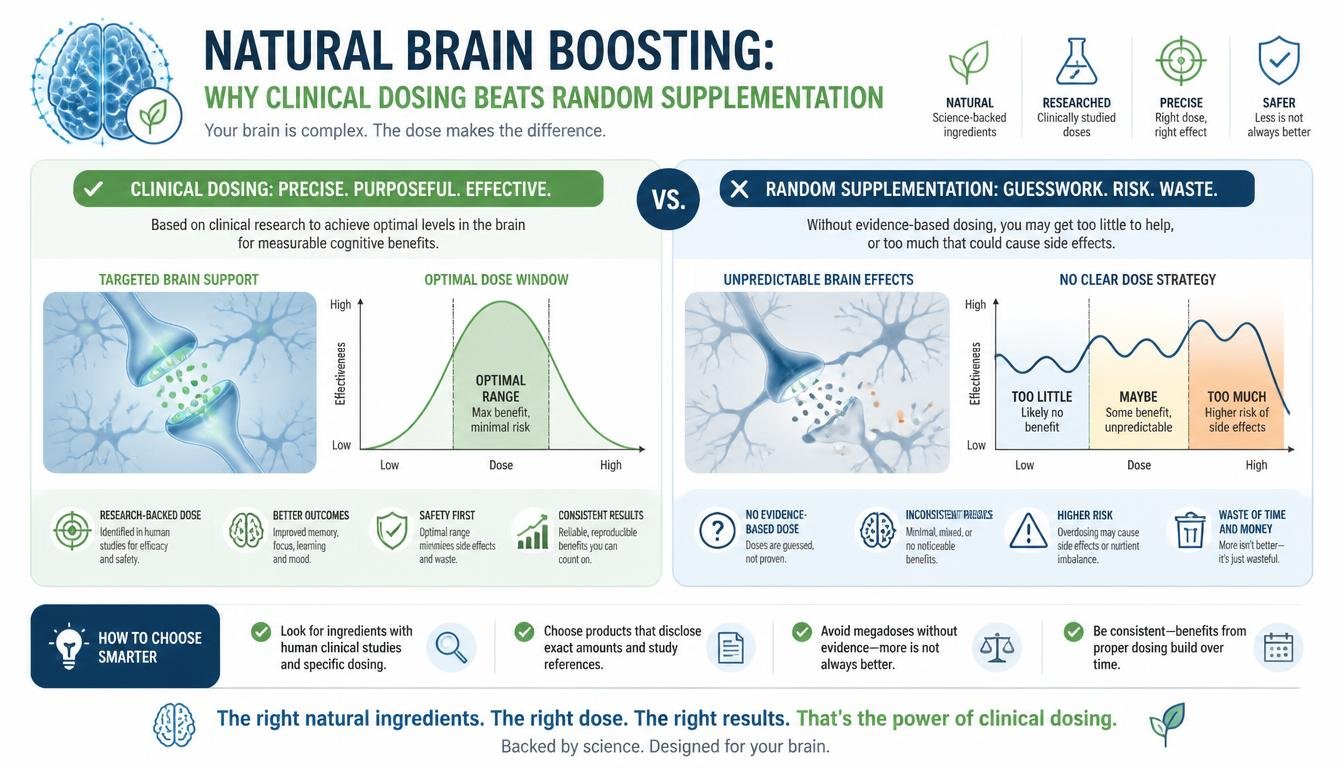
Aerobic exercise, sleep optimization, and diet all support BDNF (brain-derived neurotrophic factor), the protein your brain relies on to grow new connections. Combining that lifestyle foundation with structured brainwave training is one of the most reliable ways to boost brain power naturally, without relying on stimulants or gimmicks.
Some people also layer in manifestation techniques alongside their brainwave sessions, using visualization to reinforce the focus states their EEG feedback is training toward. There’s no strong evidence that manifestation alone changes brain structure, but pairing it with actual neurofeedback dosing gives it something measurable to attach to.
We cover the BDNF side of this in more depth in our stroke rehabilitation services guide, which leans on aerobic exercise and nutrition to prime the brain for recovery.
Curious readers chasing viral wellness trends should also check our breakdown of the Schumann Ignition coherence trend, which separates real brainwave science from overhyped claims.

Professional-grade EEG headsets are driving a massive move toward home-based cognitive and neurofeedback training.
Nobody talks about this enough, but comfort is a real limiting factor for home EEG training.
Testing from the U.S. Army Aeromedical Research Laboratory on research EEG systems worn beneath aviator headgear found that around 30 minutes was the practical ceiling before comfort and signal quality both dropped off.
That matters for home training because most professional-grade protocols are built around short, consistent sessions rather than marathon use. A 20 to 30 minute session, done consistently, beats an hour-long session done sporadically.
Separate research involving 30 participants compared signal quality on consumer-grade devices like Muse2 and Mindwave Mobile2 against research-grade references, and found the gap has closed considerably as consumer hardware has matured heading into 2026.
Did You Know?
The Brain-Computer Interface market is projected to reach $15.14 billion by 2035, growing at 16.32% CAGR, nearly triple the pace of standard fitness trackers.
There isn’t one “best” headset for everyone. The right choice depends heavily on what you’re actually training for.
| Training Goal | What to Prioritize | Related Guide |
|---|---|---|
| Focus and executive function | Adaptive protocols, short daily sessions | Focus training guide |
| Stroke motor recovery | Combined EEG plus motor practice | Brain recovery treatment options |
| Memory maintenance | Consistent dosing over intensity | Memory decline mechanisms |
| Concussion recovery | Remote monitoring, gradual dosing | Long-term concussion protocols |
Whatever headset you choose, the hardware is only half the equation. Without a structured protocol behind it, even the most advanced EEG headset is just an expensive data logger.
This 2026 guide to professional-grade EEG headsets for home-based training keeps coming back to one point: consistency and structure matter more than any single feature on a spec sheet.
Whether you’re rebuilding motor function after a stroke, sharpening executive function for a demanding job, or trying to boost brain power naturally through BDNF-friendly habits and brainwave training, the same rule applies. Pick a protocol first, then find the professional-grade EEG headset that fits it.
We’ll keep updating this guide throughout 2026 as new hardware and protocols reach the home-training market.
Yes, for most people training toward a specific goal like focus, memory, or stroke recovery. Studies show 80% to 90% of neurofeedback clients keep their gains 6 to 12 months after finishing structured training, which makes the investment worthwhile if you stick with the protocol.
Research on wear time under headgear points to around 30 minutes as the practical ceiling before comfort and signal quality drop off. Most home-based neurofeedback protocols are built around 20 to 30 minute sessions done consistently rather than long, occasional sessions.
They can, especially when combined with BDNF-supporting habits like aerobic exercise, sleep, and nutrition. The headset provides the feedback data, but the lifestyle foundation is what actually helps you boost brain power naturally over time.
The gap has narrowed significantly. A study involving 30 participants comparing devices like Muse2 and Mindwave Mobile2 against research-grade references found consumer hardware has closed much of the signal quality gap heading into 2026.
Yes, when the training is structured with dose-controlled sessions and objective progress tracking rather than casual use. Combining EEG-based neurofeedback with motor practice and gamma entrainment tends to produce the strongest home-based rehab results.
There’s no solid evidence that manifestation techniques change brain structure on their own. Pairing visualization practices with actual EEG-based brainwave training gives the practice a measurable target, since the neurofeedback data confirms whether the intended focus state is actually happening.
Smart cognitive wearables are growing at a 33.3% CAGR, outpacing nearly every other hardware category. That growth is fueled by rising awareness of brain health, with 40% of Americans suspecting an undiagnosed condition and increasingly looking for accessible, at-home tools instead of clinic-only options.