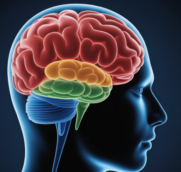

A meta-analysis of tDCS studies aimed specifically at working memory found the statistical power of those trials sat at just 5%, a number so low it is statistically indistinguishable from random data. That is the uncomfortable starting point for anyone researching tDCS for cognitive performance in 2026, and it is exactly why we are writing this guide instead of another glowing product review.
| Question | Quick Answer |
|---|---|
| Does tDCS for cognitive performance actually work? | The evidence is mixed. Small, measurable gains show up when stimulation is paired with active training, not when used passively. |
| What is the safest way to try tDCS at home? | HD-tDCS units with timers and current caps, reviewed in our guide to the safest tDCS kits for focus. |
| How much does a decent tDCS device cost? | Between $99 and $800, depending on precision. See our best tDCS devices for learning and focus breakdown. |
| Is there a non-electrode alternative? | Yes. Genius Switch uses 40Hz gamma audio to target BDNF without electrodes. |
| Can tDCS make focus worse? | Poorly dosed sessions and unrealistic expectations can blunt results or cause fatigue rather than sharpen attention. |
| What should I pair tDCS with for better results? | Structured cognitive training and recovery habits, not passive scrolling. Our synaptic plasticity habits guide covers the non-negotiables. |
| Is tDCS regulated or FDA-approved for focus? | No consumer tDCS device is FDA-cleared for cognitive enhancement in healthy adults as of 2026. It remains an off-label, self-directed intervention. |
Transcranial direct current stimulation sends a low-level current through the scalp to shift the excitability of neurons underneath the electrodes. The theory is straightforward: make it slightly easier for a targeted brain region to fire, then load it with a demanding task, and you get faster consolidation.
In practice, the picture is messier. We treat this the way we treat every claim that crosses our desk: evidence over enthusiasm, not vibes.
That statistic is not a reason to dismiss the technology outright. It is a reason to be precise about which claims are supported and which are marketing.
Standard sponge-electrode units spread current across a wide patch of scalp. That is imprecise, and imprecision is the enemy of measurable results.
High-Definition tDCS (HD-tDCS) uses smaller, more numerous electrodes to concentrate current on a specific cortical target, which reduces unintended stimulation of neighboring regions. We break down which units are worth the money in our guide to the best tDCS devices for enhancing learning and focus.
Our position on tDCS for cognitive performance is simple: precision hardware paired with structured training beats a bargain sponge kit used passively, every time.
Safety is not an afterthought with a low-current device applied to the skull. It is the entire filter we use before recommending anything.
Our detailed review of the safest tDCS kits for focus in 2026 emphasizes current management, session timers, and active engagement during stimulation, meaning you should be doing a demanding task while the current runs, not sitting passively.
Static difficulty, predictable puzzles, and passive scrolling through trivia don’t meet that threshold, and neither does stimulation with no task attached to it.
Commercially available tDCS devices cost less than $200 in many cases, which is part of the problem. Accessibility without oversight means people are experimenting on their own frontal lobes with minimal guidance, and that gap between the published research and the unregulated home market is exactly what we exist to close.

People searching for ways to boost brain power naturally, or trying manifestation techniques to sharpen focus, are chasing the same outcome as the tDCS crowd. The difference is that one path has a biological target and the other does not.
We treat Brain-Derived Neurotrophic Factor as your brain’s “repair protein,” supported by training, movement, and lifestyle, not by wishful thinking. Manifestation techniques feel good, but they do not raise BDNF, do not support structural plasticity, and do not show up in any clinically grounded protocol we would put our name on.
For clients who want a non-electrode route to BDNF activation, Genius Switch uses precision 40Hz gamma audio instead of current through electrodes.

Genius Switch, $39, pairs 40Hz gamma stimulation with botanical nootropics rather than electrodes. It will not “unlock 100% of your brain,” and we would never say it does. It is one tool among several for people who want to boost brain power naturally without strapping current-carrying pads to their scalp.
Here is where the research gets genuinely interesting instead of just cautionary. A recent meta-analysis pulled data from 27 studies and 1,012 participants and found that combining tDCS with active cognitive training produced a small but real short-term improvement in global cognitive performance, with a standardized mean difference of 0.36.
That is not a miracle number. It is a modest, measurable effect, and modest and measurable is exactly the bar we hold ourselves to.
Small effects that replicate matter more than big effects that don’t. The takeaway for anyone shopping for tDCS for cognitive performance is simple: the current is not the intervention on its own. The training loaded on top of it is doing the heavy lifting, and the device is there to lower resistance while you work at the edge of your current ability.
Not everyone gets the same result from the same protocol, and that is not a footnote, it is central to how we design anything.
A study of 121 young adults set out to test whether personal expectations, rather than the stimulation itself, were driving reported outcomes. The results suggest that what you believe going in shapes what you report coming out, which is a real problem for a field already fighting underpowered trials.

Reported cognitive performance improvements by gender
Separate research on collegiate athletes, a population frequently targeted for tDCS cognitive interventions, found that 48% of women and 31% of men in that group reported anxiety and depression symptoms. That matters because mood state and stress load influence how any brain-based intervention performs, tDCS included.
tDCS for cognitive performance is usually marketed as a short-term tool, and that framing is honest as far as it goes. But cognitive longevity is not built in a single 20-minute session.
Structural plasticity and neurogenesis respond to repeated, dosed inputs over months, not one stimulation cycle. That is why we pair any conversation about devices with a conversation about habits.

Our guide to the five lifestyle habits that actually preserve synaptic plasticity covers aerobic exercise dosed at the edge of ability and sleep treated as structural repair time, not a buffer you can skip. If you are stimulating a tired, sedentary brain, the device is working against a stacked deficit.
For readers who are also digitally fried before they even reach for an electrode, our Digital Neuro-Detox 2026 guide is the honest first step, not a tDCS kit.
You need measurable progress, not vibes, and that means tracking something beyond how alert you feel after a session.
Sleep quality is one of the clearest downstream markers of cognitive recovery, since memory consolidation happens largely during deep and REM stages. Our comparison of Oura and Whoop for sleep-based cognitive recovery data looks at which wearable actually gives you usable numbers rather than just a score.
Pairing wearable recovery data with a tDCS and training log gives you something closer to a research-to-practice model instead of guesswork. Research interest in this space is not slowing down either. Scientific output on tDCS for cognitive impairment peaked at 379 published articles in a single recent year, so the evidence base is still actively shifting under our feet.
tDCS is not a substitute for clinical care, and it should never be positioned as one.
Mild cognitive impairment incidence rises sharply with age, reaching over 60 cases per 1,000 people aged 85 and above. That population needs supervised, clinically grounded protocols, not a $99 sponge kit ordered off a marketplace.
For families weighing long-term risk, our breakdown of long-term care insurance for cognitive decline and our comparison of concierge brain health clinics versus traditional neurology are more useful starting points than a home device review.
For healthy adults pairing it with structured training, tDCS for cognitive performance can produce a small, measurable short-term benefit. It is not a standalone fix, and the underlying research base still has real power problems worth knowing about before you buy.
tDCS applies a weak electrical current through scalp electrodes to shift cortical excitability. Genius Switch uses 40Hz gamma audio to target BDNF activation without any electrodes or current at all.
Expect to pay between $99 for a basic sponge unit and $800 for clinical-grade HD-tDCS with precise targeting and safety timers. Mid-range HD-tDCS devices in the $200 to $400 range usually offer the best balance for focus-driven training.
Yes, particularly when sessions are used passively without an accompanying task, or when expectations drive perceived results more than the stimulation itself. Poor dosing and fatigue from overuse can also blunt rather than sharpen attention.
tDCS research is still working out its exact relationship to BDNF, while gamma audio protocols like Genius Switch are built specifically around 40Hz stimulation tied to BDNF signaling. Neither approach replaces exercise and sleep as the primary drivers of BDNF production.
No. Manifestation techniques have no measurable effect on BDNF, structural plasticity, or cortical excitability, and they don’t belong in the same conversation as clinically studied interventions.
Current data suggests responses vary by expectation, mood state, and baseline stress, with reported outcomes differing notably between men and women in studied populations. Anyone with significant anxiety, depression, or an existing neurological condition should get clinical guidance before self-administering tDCS.
tDCS for cognitive performance sits in a strange spot in 2026: cheap enough for anyone to buy, promising enough to keep researchers publishing hundreds of papers a year, and underpowered enough that we cannot in good conscience call it settled science. The honest answer is that it works modestly, only when paired with real training, and only when the device you choose has the precision and safety controls to back it up.
Evidence over enthusiasm remains our filter, whether we are reviewing an HD-tDCS unit, a gamma-audio alternative like Genius Switch, or the habits that keep your BDNF supply doing its job in the background. If you want measurable progress instead of vibes, start with the research, not the marketing copy.